


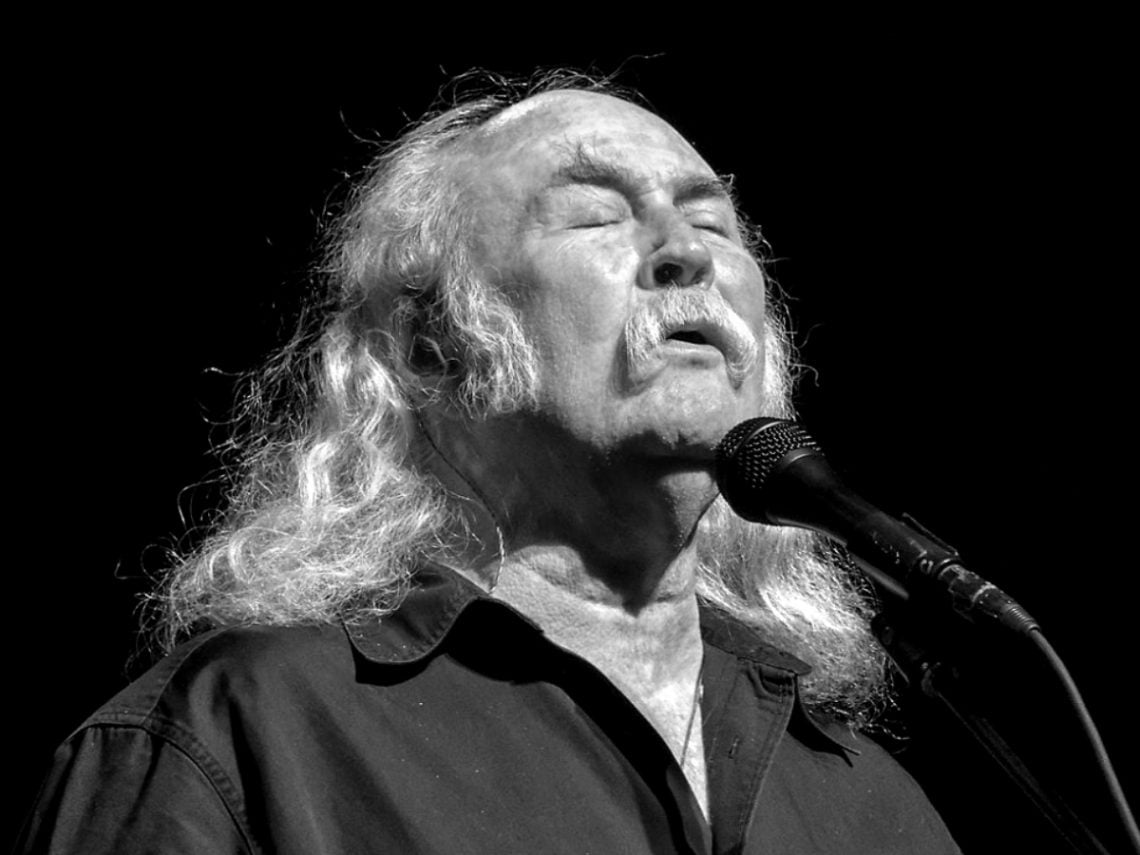
What was the final song David Crosby ever wrote?

While Crosby Stills and Nash, as a collective, were the soundtrack for the barefoot-trodden paths of late 1960s Laurel Canyon, it’s hard to argue that David Crosby was the bohemian heartbeat of the band. He was a defiant hippy (‘Almost Cut My Hair’) and whimsical storyteller (‘Guinnivere’) in equal measures, who provided a sense of shade in the otherwise sunny landscape of Crosby, Stills, and Nash.
By the time the band were ready to release their 1982 album Daylight Again, Crosby had endured more than enough personal trauma to funnel into an anthem. Troubles with both substance abuse and agoraphobia plagued most of his experience of the 1970s, relying on the camaraderie of both his bandmates and fellow musicians to help him manage.
One track on the record acts as somewhat of an anthem of defiance for Crosby, who wrote it during the depths of his struggles. ‘Delta is an uncharacteristically expansive record that allows the Crosby, Stills, and Nash harmonies to soar higher than ever before, in what sounds like a sonic representation of the band pulling Crosby through.
But it was fellow Canyon dweller Jackson Browne who catalysed the song’s recording. After describing his own attention span as that of a “drunken butterfly” in his autobiography Long Time Gone, Crosby explained that “Jackson wouldn’t let me up or let me at the pipe” after hearing the early stages of Delta.
He dragged him to Warren Zevon’s house, put him in front of the piano and in “just stood there” Crosby said. He continued to explain that Browne remained there “looking over my shoulder, holding me at the bench, forcing me, slowly and painfully, to give birth to the song, not the lyrical fragment or the convenient phrase”.
He added: “It was an act of love and great caring; he showed concern for me, for my work, for seeing me get my work done. ‘Delta’ was the last complete song that I wrote for years. I was the child, crazy for the deep. Without Jackson, the song would never have happened.”
Talking to American Songwriter, Crosby further explained the story, explaining: “I was in the middle of a downhill slide involving freebase cocaine. I didn’t especially want to go outside because I didn’t want to bother with anything except taking more drugs”.
He said that Browne acted as somewhat of a disciplinarian, knowing the only way Crosby would get the song completed was if he was forced to finish it. “Whenever I wanted to get up to go to the bathroom and take some more dope, he would say ‘No, no, finish the song,’ and he kept me there until I did it. Now, when we sing it, I thank Jackson for helping me get it out,” Crosby explained.
It’s a song forged in the fires of self-conflict and marks one of Crosby’s finest musical achievements. But more than that, it was an example of the sort of sonic camaraderie that existed within both the Laurel Canyon scene and Crosby Stills and Nash as a band. A song written in dark isolation, brought to life by the soaring vocals of three of music’s most cherished voices.
