


What was the Britpop swastika controversy?

It’s fair to say that the Britpop era never shied away from embroiling itself in a controversy or ten. After all, this was the moment where laddish brutishness, blazing sentiments, and free thinking were all there for the taking – and, frankly, being a bit of a bellend was practically a prerequisite for the job. While the movement took its place in moving political pedestals in the UK, there were some incidents that even the most liberal would rather turn away from, and none more than the swastika controversy.
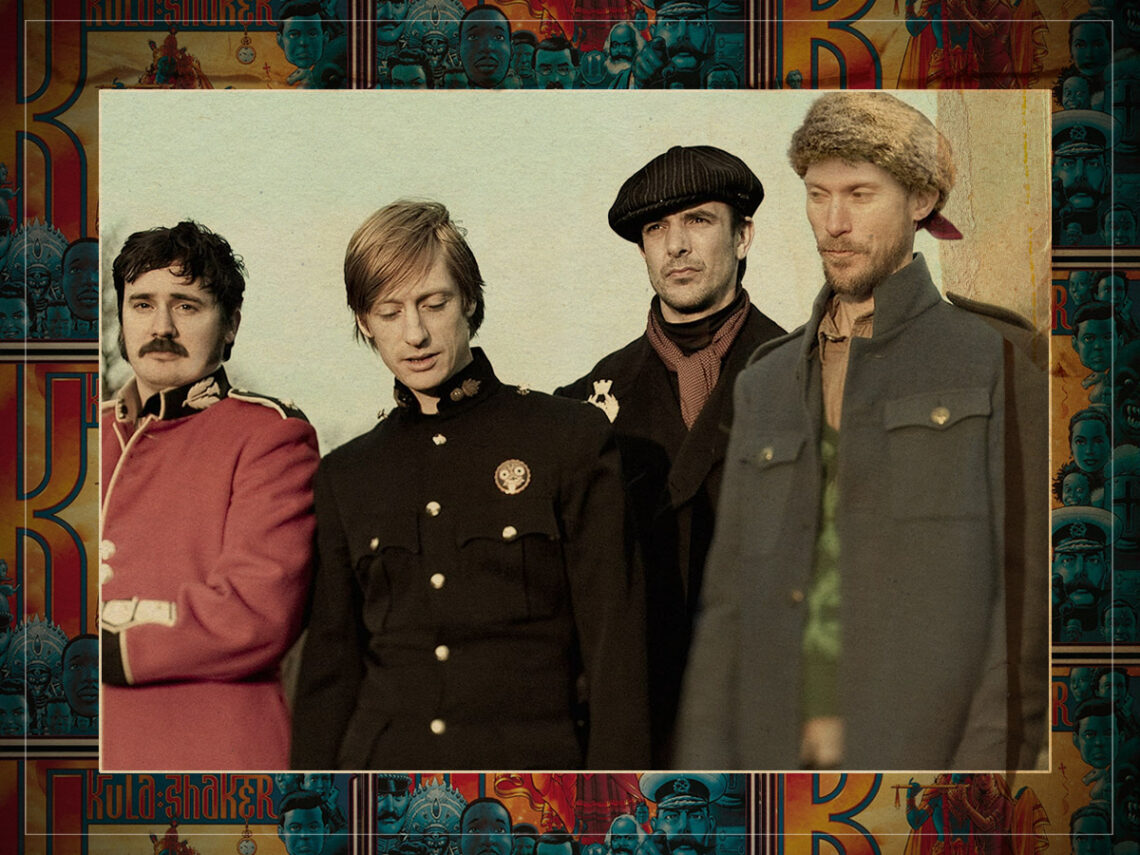
Before anyone jumps to conclusions, there is a relative explanation behind this, but it did cost one band in particular their seismic success, and the fall from grace was more than a little bumpy. Kula Shaker may not be remembered as one of Britpop’s Big Four, but they had certainly been on their way to this level of company, with massive hits like ‘Tattva’ and ‘Hey Dude’, as well as a number one album to boot. That was, until frontman Crispian Mills sent everything down the drain with one ill-informed comment.
The influence of Indian culture and raga rock was pertinent in all that Kula Shaker did, but this wound up landing Mills in some very hot water in 1997 when he claimed in interviews that the swastika was a “brilliant image” with respect to its traditional Indian origins. For those unaware, the swastika was originally a symbol used in the Hindu religion to denote wellbeing and prosperity before it was reappropriated by the Nazis. However, for obvious reasons, when Mills said this, the reaction wasn’t exactly receptive.
Prompting a deluge from the British press, Mills and the rest of the band were exiled to the land of what we would now consider ‘cancel culture’, with The Independent in particular running an especially bruising line that said the frontman “had dabbled with Nazism”. As such, Kula Shaker had a lot of back-pedalling to do in order to reclaim some of their former glory – but that would prove to be a harder task than they imagined.
How did the Britpop swastika controversy affect Kula Shaker?
In response to the media onslaught, Mills commented in defence that: “My comments derive from my long interest in Indian culture, from which the swastika has its origins … I apologise to those who have been offended by my comment and humbly ask that they accept that I am completely against the Nazis, their crimes and any other latter-day form of totalitarianism,” before adding, “I stand for peace, love, generosity and learning.”
However sincere the apology he could muster, ultimately, the damage had already been bestowed upon the band, and it was extremely difficult afterwards to maintain their Britpop heavyweight trajectory. Taking a significant dip in album sales when their sophomore record was subsequently released, the outfit only lasted a few more years before they decided to call it quits.
Looking back on the incident with the benefit of hindsight in 2016, Mills said, “We thought we were smarter than we were … that was the innocence of our youth ploughing into the adult world.” At least with some small modicum of humility, he was able to accept the error of his ways – and as such, the horror tale reached its end with a kind of conclusion. It was a jarring lesson to the rest of the Britpop scene, however, that while some level of controversy is healthy to your career, too much could just derail your entire path.
