


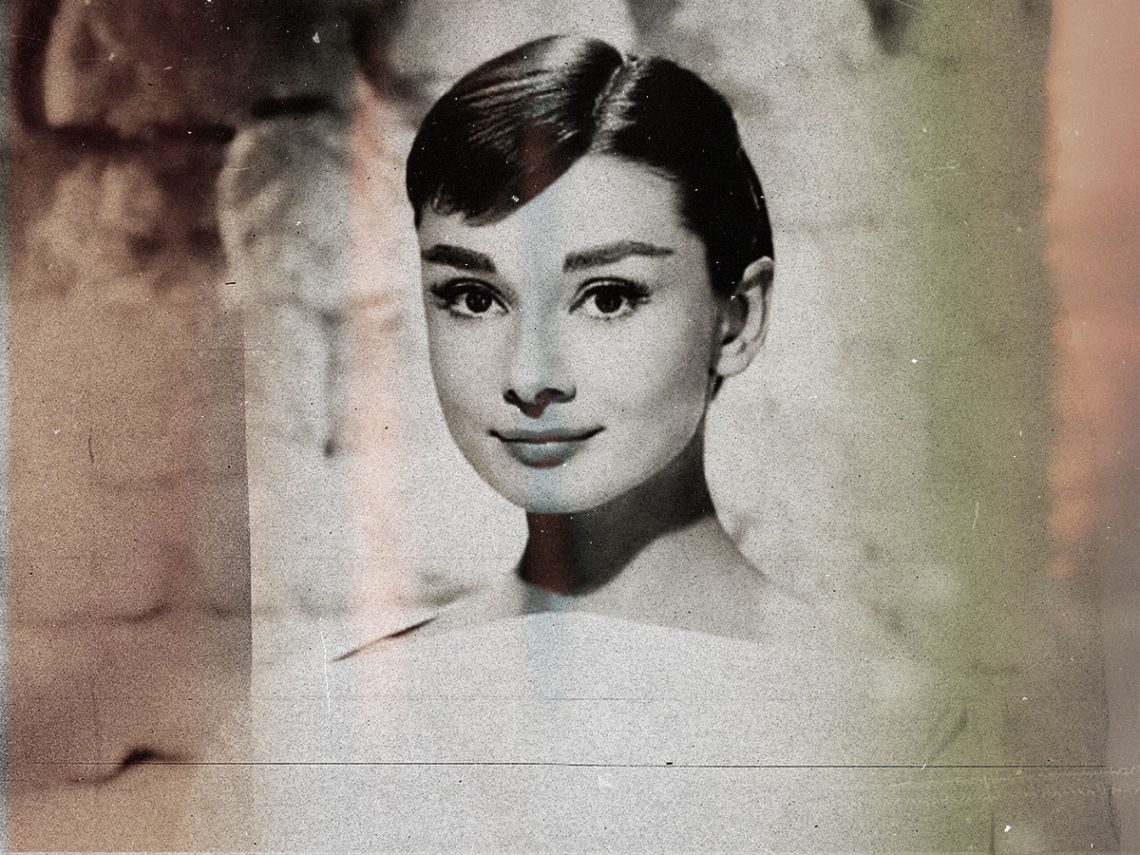
What was Audrey Hepburn’s nationality?

There’s something about cultural icons that makes them feel as if they have no nationality. For some time, The Rolling Stones have been hilariously called one of America’s finest rock bands despite being created in the dark streets of Dartford in Kent. Likewise, countless Hollywood icons have been mistakenly thought of as bred in the shadow of the famous sign only to have their nationality revealed as something completely different. That is exactly what can be said about one of cinema’s most cherishable icons, Audrey Hepburn.
Hepburn’s image in some of cinema’s finest productions has been so intently ingrained onto the cultural landscape that to prise her wondrous visage out of one’s ideals of Hollywood feels wholly wrong. As such, she has often been incorrectly thought of as a US national, or perhaps, owing to her perfect diction, that she might have been born across the pond in England.
Of course, Hepburn’s nationality doesn’t really add to or take anything away from her esteemed career. However, the fact that she represents Hollywood glamour and European cinema’s sophistication is part of her allure on screen. So, while her birthplace is of little consequence in some ways, finding out the nuances of her early life does add a little light to the many layers that make up the legendary star.
Hepburn was born Audrey Kathleen Ruston in Brussels, Belgium, in 1929. She was blessed with a regal demeanour that wooed audiences and can largely be attributed to her parentage. Her father, Joseph Victor Anthony Ruston, was British and naturally gifted with a sense of stiff-upper-lippedness, while her mother, Baroness Ella van Heemstra, was a Dutch aristocrat.
While Hepburn was born in Belgium, she rarely considered herself as Belgian. Instead, her sense of nationality ranged as her childhood was disrupted by World War II and she moved between England, Belgium and the Netherlands, eventually settling and seeing out the remainder of the war in the latter, experiencing the Dutch famine during her time there.
When it comes to where Hepburn likely felt most comfortable, there are a few options worthy of contention. Thanks to her father, she held a British passport and British citizenship, but she would also spend a lot of time in America due to her career. Hepburn’s humanitarian work would also see her visit Africa on multiple occasions, while her home life was most prominently centred in Switzerland.
Ironically, it is this inability to pinpoint Hepburn that likely made her a supreme star. She was indeed able to appeal to an entire global audience and, through her incredible movies, became an icon that transcended borders with ease.
So, what are Audrey Hepburn’s best movies?
In an interview, Hepburn once said of her widespread humanitarian work: “My career sort of helped me get the job. As I have a bit of visibility; I can use that to go on television, or do an interview, or raise funds, or go to hundreds of galas. There is some interest in me because of my career, and I’m thrilled. That’s sort of a bonus now, which I can use for children.”
With her roles in starry productions such as Roman Holiday, where she plays a princess falling for a newspaper reporter or the iconic titular character in Billy Wilder’s Sabrina Hepburn became a huge name in Hollywood. In 1961, she would perhaps land her most iconic role in a film adaptation of Truman Capote’s Breakfast at Tiffany’s.
Performances in Charade and My Fair Lady would only heighten her position as a Hollywood legend, but Hepburn had already confirmed herself as a cinema icon with her previous roles.
