


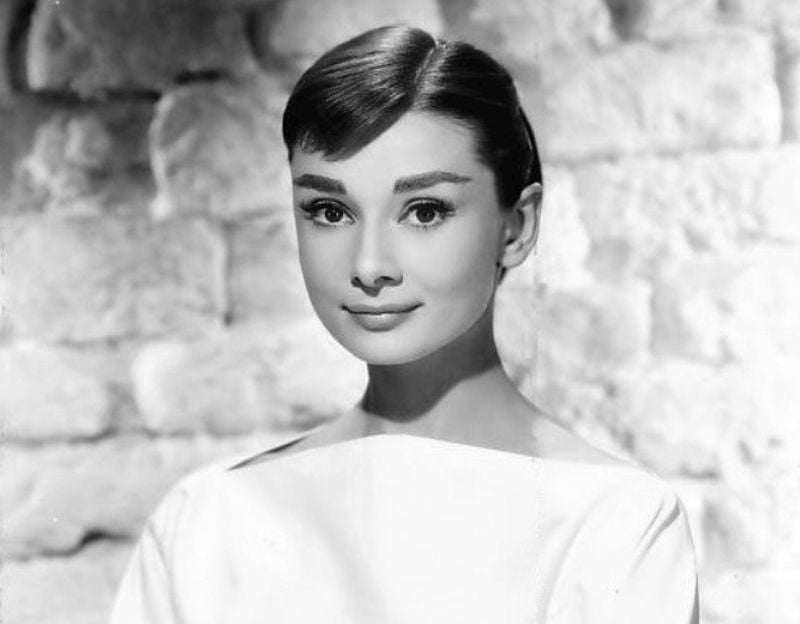
Six definitive films: A beginner’s guide to Audrey Hepburn

British actress Audrey Hepburn is considered by many to be one of the greatest screen legends of all time. Starting her career with theatrical productions, Hepburn achieved widespread acclaim and unprecedented success with classics like Roman Holiday and Breakfast at Tiffany’s among many others. Towards the end of her life, she devoted herself to the aid of marginalised communities and received the Presidential Medal of Freedom for her efforts.
In an interview, Hepburn once said: “My career sort of helped me get the job. As I have a bit of visibility; I can use that to go on television, or do an interview, or raise funds, or go to hundreds of galas. There is some interest in me because of my career, and I’m thrilled. That’s sort of a bonus now which I can use for children.”
While talking about her humanitarian work, the actress elaborated: “I don’t have to tell them what to do because the world is full, I’ve discovered, of kind people. And I’ve also discovered once they know, they give, they help. It’s not knowing that holds them up. Each country has huge problems of its own, which quite rightly they must take care of – the homeless in America, the poor in every country. But I think there’s always enough to give to the countries that are the most needy.”
On the 92nd anniversary of her birth, we revisit the illustrious filmography of Audrey Hepburn as a tribute to her wonderful contributions to the world of cinema.
Audrey Hepburn’s 6 definitive films:
Roman Holiday (William Wyler – 1953)
William Wyler’s 1953 romantic comedy stars Hepburn as a beautiful princess who falls for a news reporter while exploring Rome on her own. For her brilliant performance, she earned an Academy Award for Best Actress along with Golden Globe and BAFTA wins.
The filmmaker expressed his regrets about his production in later interviews: “I should have done Roman Holiday in colour, but it was too late. In those days colour was not as quickly available as it is today. It was 1952, that’s a long time ago.”
Sabrina (Billy Wilder – 1954)
Starring Hepburn and Humphrey Bogart, Sabrina is the story of a chauffeur’s daughter who catches the eye of the boss’ playboy son (played by William Holden). However, things get complicated when his older brother (Bogart) interferes in the proceedings.
While talking about Hepburn, Wilder said: “There was so much inside her, a feeling that communicated. But was she ‘sexy’? Off-camera, she was just an actress. She was very thin, a good person. Sometimes standing on the set she disappeared. But there was something very likeable about her. You trusted her, this tiny person. When she stood before the cameras, she became Miss Audrey Hepburn.”
Breakfast at Tiffany’s (Blake Edwards – 1961)
A film adaptation of Truman Capote’s famous novel, Breakfast at Tiffany’s follows the adventures of an eccentric girl (played by Hepburn) who falls for a struggling writer. The actress thought that the part was very demanding, especially because she was supposed to play an extrovert even though she was an introvert.
In an interview, Hepburn shed some light on her character: “The title comes from the fact that this girl gets a great lift and fun out of walking down Fifth Avenue at the crack of dawn with a breakfast she’s bought in a drugstore and looking in the window at Tiffany’s.”
Charade (Stanley Donen – 1963)
Often referred to as “the best Hitchcock movie that Hitchcock never made“, Charade is a tale of mystery involving a young woman (played by Hepburn) who gets caught up in the murder of her husband. In order to make sense of what’s going on, she asks for help from a charming stranger (Cary Grant).
Donen said: “I certainly adored her: she was a fabulous and glorious actress. She was really unique. After she had passed away, Billy Wilder, who has always been one of my best friends, said, ‘What Audrey Hepburn had, you couldn’t teach, you couldn’t even learn it. God kissed her on the cheek and there she was.'”
My Fair Lady (George Cukor – 1964)
A famous adaptation of George Bernard Shaw’s Pygmalion, George Cukor’s 1964 musical drama is a memorable critique of high society which focuses on the performative in order to pinpoint the hypocrisies. For her performance, Hepburn won the David di Donatello Award for Best Foreign Actress.
Film Historian Robert A. Harris spoke about restoring My Fair Lady: “No one will ever have to open the original cans of My Fair Lady again. The audio in My Fair Lady, it’s the first time on theatrical performances and Blu-ray that people are going to hear the original tracks in 50 years. We were able to capture all of the audio on those original tracks and they won the Academy Award for audio in 1964.”
They All Laughed (Peter Bogdanovich – 1981)
Featuring Hepburn and Ben Gazzara in starring roles, Peter Bogdanovich’s romantic comedy presents the curious case of three private detectives who end up falling in love with the women they are investigating for infidelity. They All Laughed was Hepburn’s final theatrical film in which she took on a lead role.
The filmmaker revealed: “Ben was crazy about her and she was very fond about Ben. He talked about what a wonderful woman she was, how much he cared about her and how wonderful it was to work with her. I told him that I was going to write a part for her in this new picture and that as how that started. I had always liked her as an actress. In fact, the backstory of Audrey’s character closely followed her own backstory.”
