


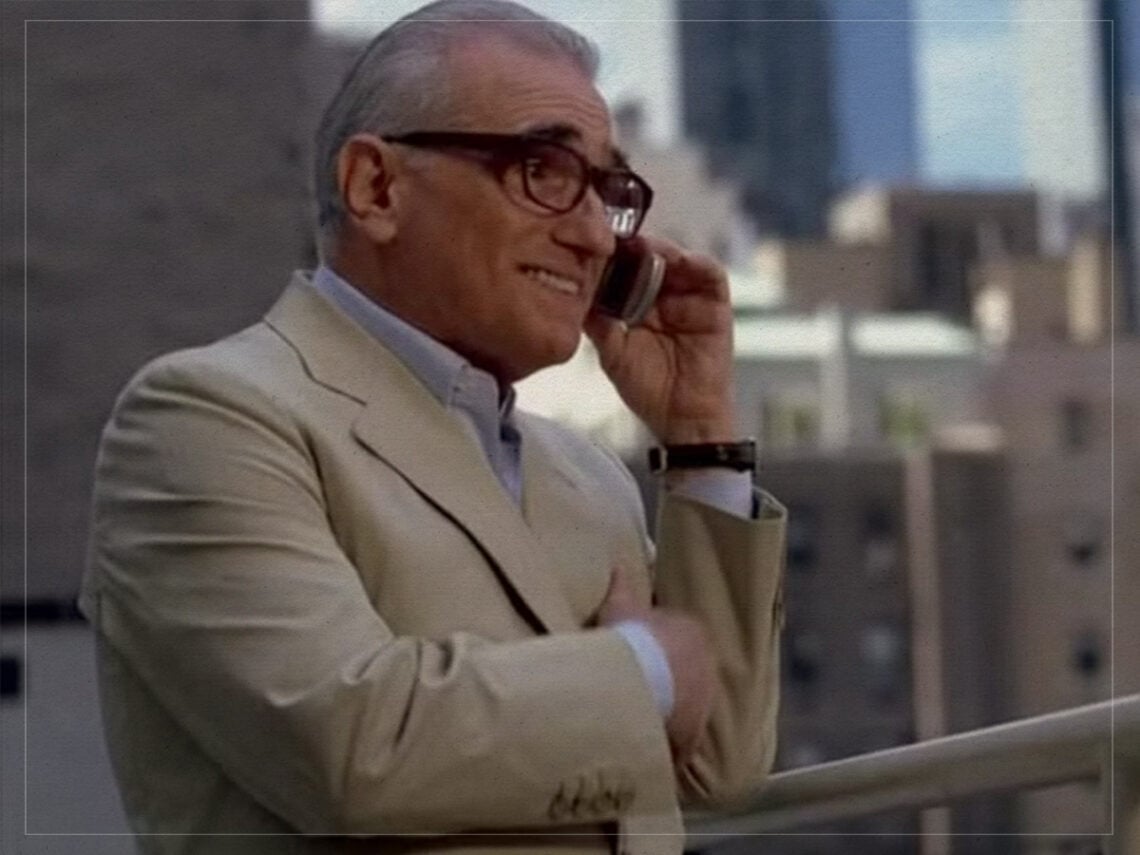
What separates a filmmaker from a “real director”, according to Martin Scorsese

Sometimes the sign of a truly great artist is that they never want to stand still creatively; The Beatles certainly didn’t, David Bowie definitely didn’t, and in the movie world, there are some directors who simply couldn’t ever envisage pumping out the same genre of film over and over again, Martin Scorsese being one of them.
Much as he is deservedly renowned as the undisputed king of the mob movie thanks to the awesome Goodfellas, Mean Streets, Casino and Gangs of New York, Scorsese actually took a big risk toward the start of his career simply because he didn’t want to stand still, because he was determined to become one of the industry’s greats, but in doing so he almost ruined his progress completely.
Scorsese was following in the footsteps of one of his cinematic heroes, Howard Hawks, who over some decades in the Golden Age of Hollywood showed he could make incredible films in almost any genre, from comedies like Gentlemen Prefer Blondes, to gritty gangster films like the original Scarface, to John Wayne westerns like Rio Bravo, to sci-fi and detective movies.
In 1977, at 35 years of age, Scorsese had only directed four movies, but he was flush with the success of his last release, the iconic Taxi Driver with Robert De Niro and Jodie Foster, plus with some other, shall we say, ‘ego-enhancing substances’ and was determined to etch his name into the glamorous history of the most feted Hollywood auteurs.
After making his name echoing the gritty realities of life with 1972’s Mean Streets and Taxi Driver, he decided to show his flexibility and make a lavish musical comedy, again starring De Niro, called New York, New York, but quite simply, it wasn’t what the people wanted, which was more of what he’d done before.
Scorsese recalled the muted reaction to his story of De Niro and Liza Minelli as a pair of post-World War II lovers, saying, “The minute New York, New York came out, there was such ridicule. It made me think, ‘What the hell am I doing here?’ Up to that point, I thought, I’d belonged within the industry and the Hollywood tradition of classic directors. A real director is someone who can do a swashbuckler, then a film noir, then a gangster picture, then a love story.”
He added, “They were pros who could probably have done anything. I always wanted to be that kind of director. But after New York, New York, I realised the studio system was over. There was no way I could get that back or re-create it. I didn’t know what I was going to do with my life.”

Although his movie spawned a song for the ages with the title track, it was a box office disappointment on release, and many of the critics were not impressed at all. The lukewarm reception to the musical worsened Scorsese’s drug habit, although it did pick up several Golden Globe nominations, including one for ‘Best Musical or Comedy’ and one each for the two lead stars.
It would be three years before Scorsese made another feature film, taking time in between to make the farewell documentary for The Band, The Last Waltz. And when he did return to movies, it was with another film that showed the darker side of daily life, in the vein of the movies that had given him stardom. But this being Scorsese, it wasn’t just any film, it was Raging Bull.
