


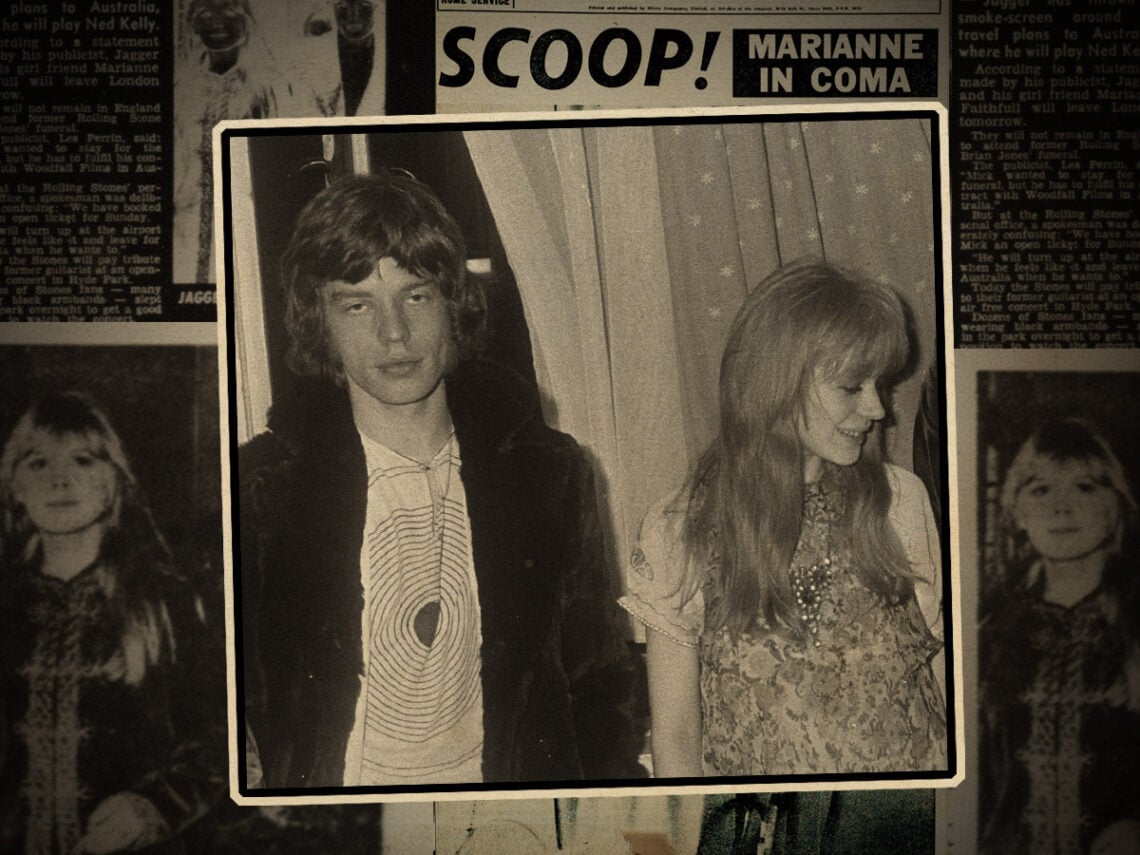
“Couldn’t drag me away”: What happened between Marianne Faithfull and Mick Jagger?

In the long history of rock and roll, especially when it comes to style, one couple always stands above the rest. As one of the most glamorous and chaotic pairings of their time, Mick Jagger and Marianne Faithfull were a power couple like no other, as well as one of the era’s most mysterious break-ups.
However, talking about it can feel tricky. Time and again, both in the past and today, whenever a woman becomes involved with a famous and powerful man, the backlash often falls on her. We saw it with Yoko Ono and John Lennon, and we still see it now whenever someone dates one of the One Direction members. The same treatment was especially clear in the way the press handled Marianne Faithfull.
Despite the long and powerful career she had after him, Faithfull seemed doomed to only ever be referred to by her association with Jagger. No matter what, the topic always came up, demanding that she constantly be diving back into painful memories.
“I can’t say I didn’t have a great time, some of the time. I really did. It was wonderful hanging out with the Stones, and I loved Mick,” she told The Guardian in 2013, though, like every lost love, her thoughts of Jagger included good, bad, hate, but also a lot of love. The kicker is in the complexity, though, that’s what keeps people fascinated by the duo, wondering what happened between the two leaders of the 1960s.
So, what happened between Mick Jagger and Marianne Faithfull?
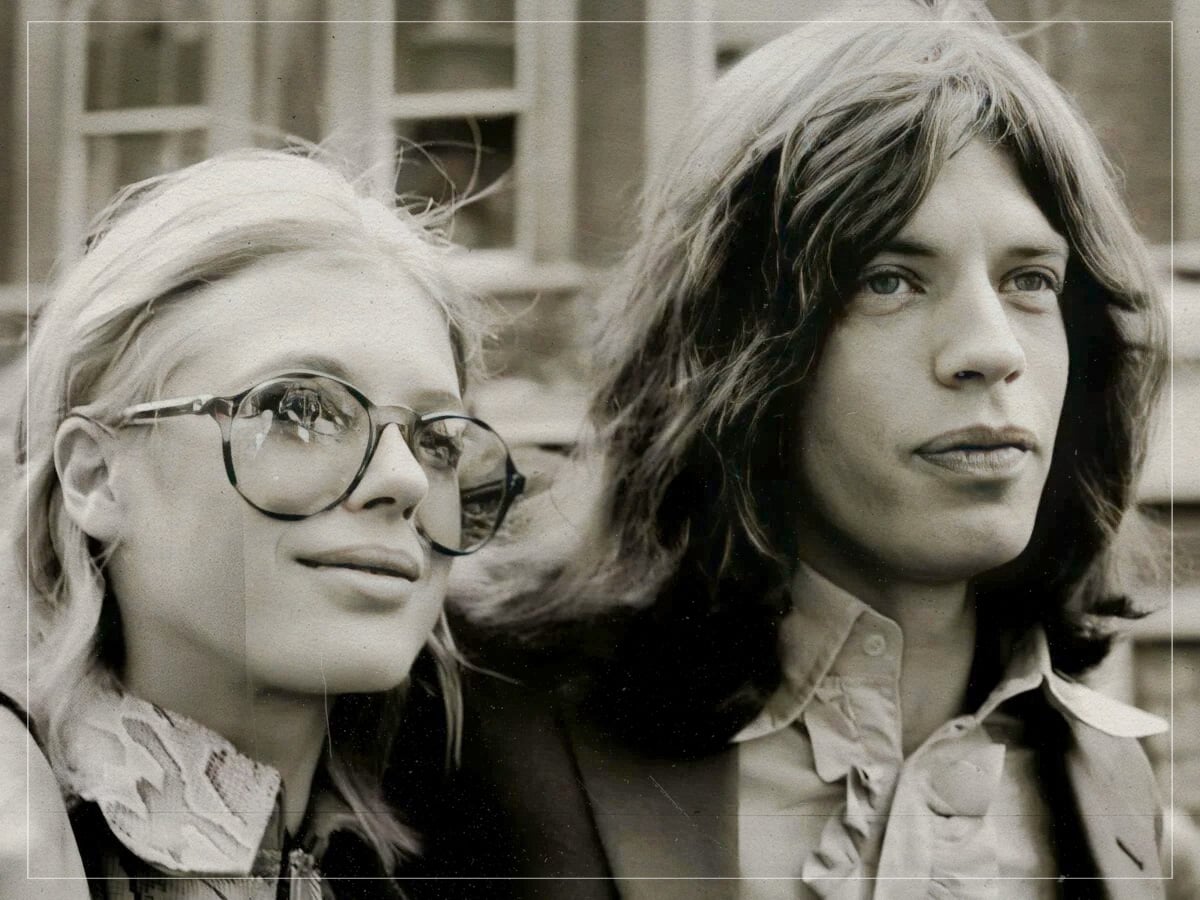
1964: The first meeting
In 1964, Marianne Faithfull was only 17; however, she was already wise way beyond those years, and intelligent enough to rival minds even triple her age. Having grown up in a commune built by intellectual rebels, she was raised around smart free thinkers and encouraged to be the same. She was encouraged to embrace her creativity and her smarts in equal measure, crafting her into the outspoken and articulate powerhouse she’d come to be.
As a teen, she’d already found her love for singing and was performing around cafes and bars in Reading and Cambridge, where she met the artist John Dunbar, who was already running in the rock and roll and beat poetry circles, so when The Rolling Stones had a launch party for their debut album in early 1964, Dunbar and Faithfull got an invite.
Clocking eyes across the room, Jagger put all the moves on Faithfull, including spilling his glass of red wine down her dress. However, as she was crazy about her boyfriend at the time, she rejected the single but did connect with his manager, Andrew Loog Oldham, who promised to make her a star.
June 1964: ‘As Tears Go By’
With the voice of an angel, a beautiful face and the ultimate 1960s style, Oldham obviously kept his word to the star-in-the-making Marianne.
With his management, he convinced Jagger and Keith Richards to pass a song along, giving Faithfull the tune ‘As Tears Go By’. Released in June of the year she first met Jagger, it hit the charts in the UK and instantly made her a name to note in the country’s blossoming folk-rock scene, positioning her in the same sort of crowd as Joan Baez over in the States.
But it was never really a position that felt like her; Faithfull was being branded as a sweet, innocent girl when really, she’d spent her whole life as a wild child. Despite that, it did ensure that she and Jagger stayed in one another’s orbit.
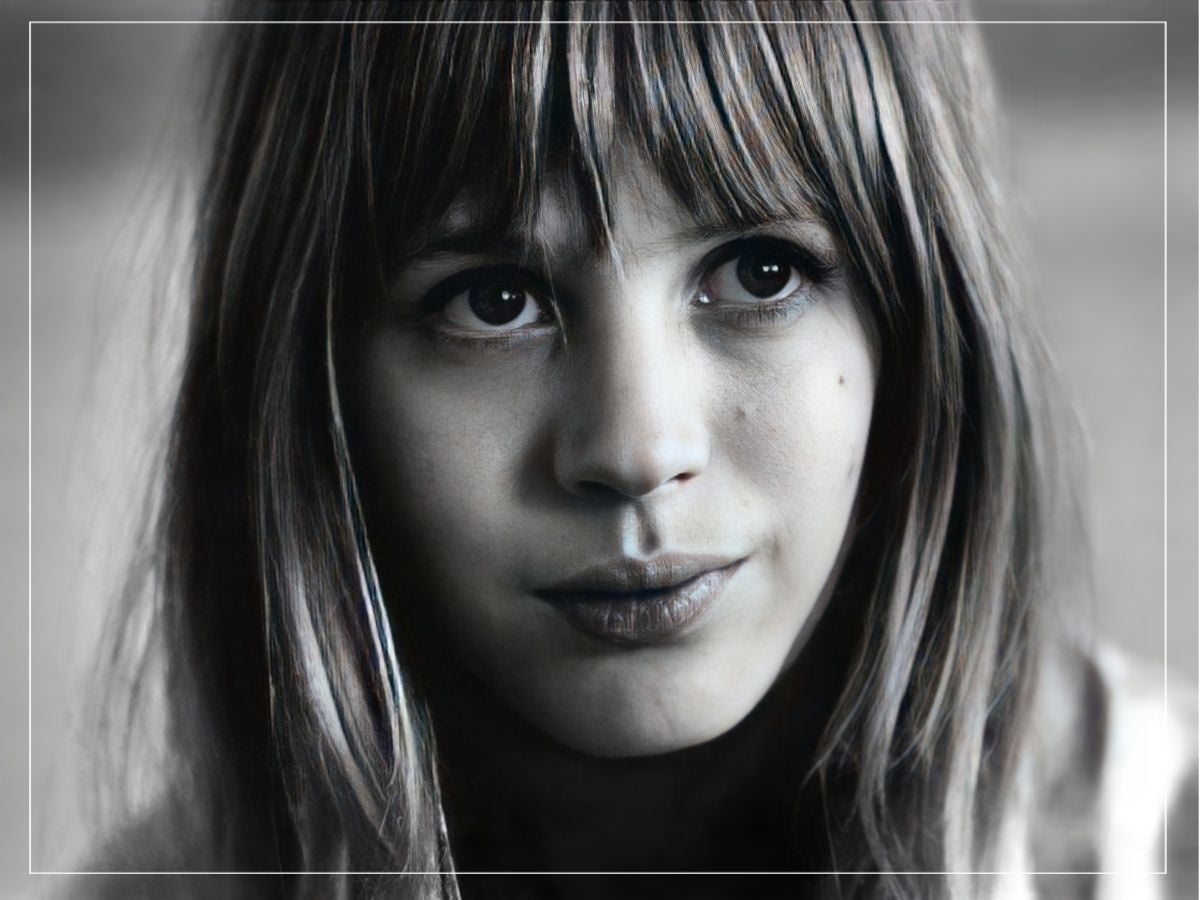
1965: Marianne gets married
That wasn’t going to stop Faithfull from getting married, though, and at 18, she married John Dunbar. Together, they became the power couple of the art scene as he had just opened the hyper-influential Indica Gallery in London, which is where John and Yoko met, and where the Beat crowd gathered when they were in town.
Living together in Kensington, there’s a sense of comfort here as the crowd that hung around the couple was reminiscent of the commune Faithfull was raised in.
They were intellectual rebels, but in her periphery, Mick Jagger was something else altogether, a true and wild rockstar, and that world called to her.
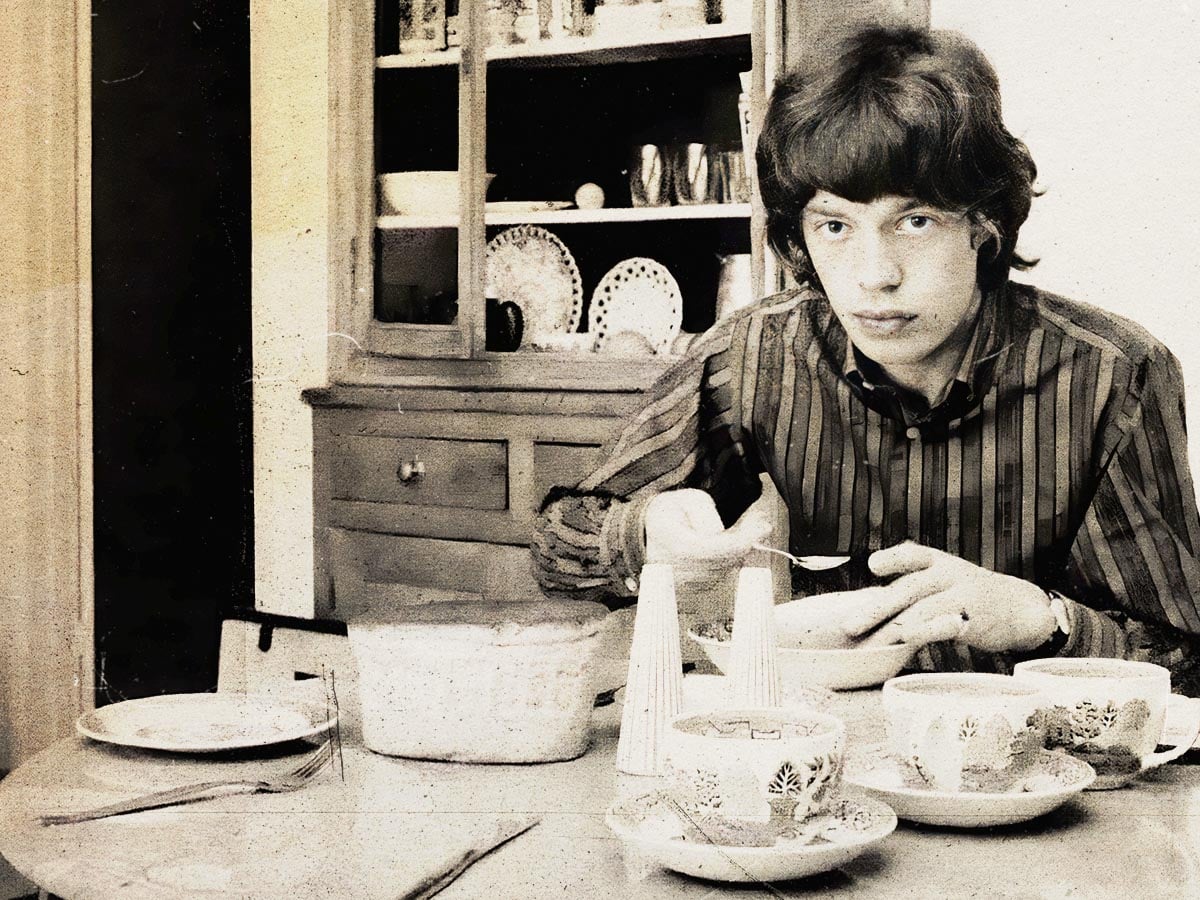
1966: The romance begins
Despite Faithfull and Dunbar welcoming a son, the allure of Jagger couldn’t be held off. At the end of 1965, The Rolling Stones released their own version of ‘As Tears Go By’, and it felt like Jagger stepping up his efforts to win over Faithfull. In early 1966, the rockstar split with his girlfriend, Chrissie Shrimpton, and went all in trying to get the singer, and at some point, early that year, she surrendered.
Growing restless with a life that was beginning to feel too stagnant and domestic, longing to reunite with the wild child inside of her, Faithfull left Dunbar and their son, and ran off with Jagger to begin music’s most chaotic whirlwind romance.
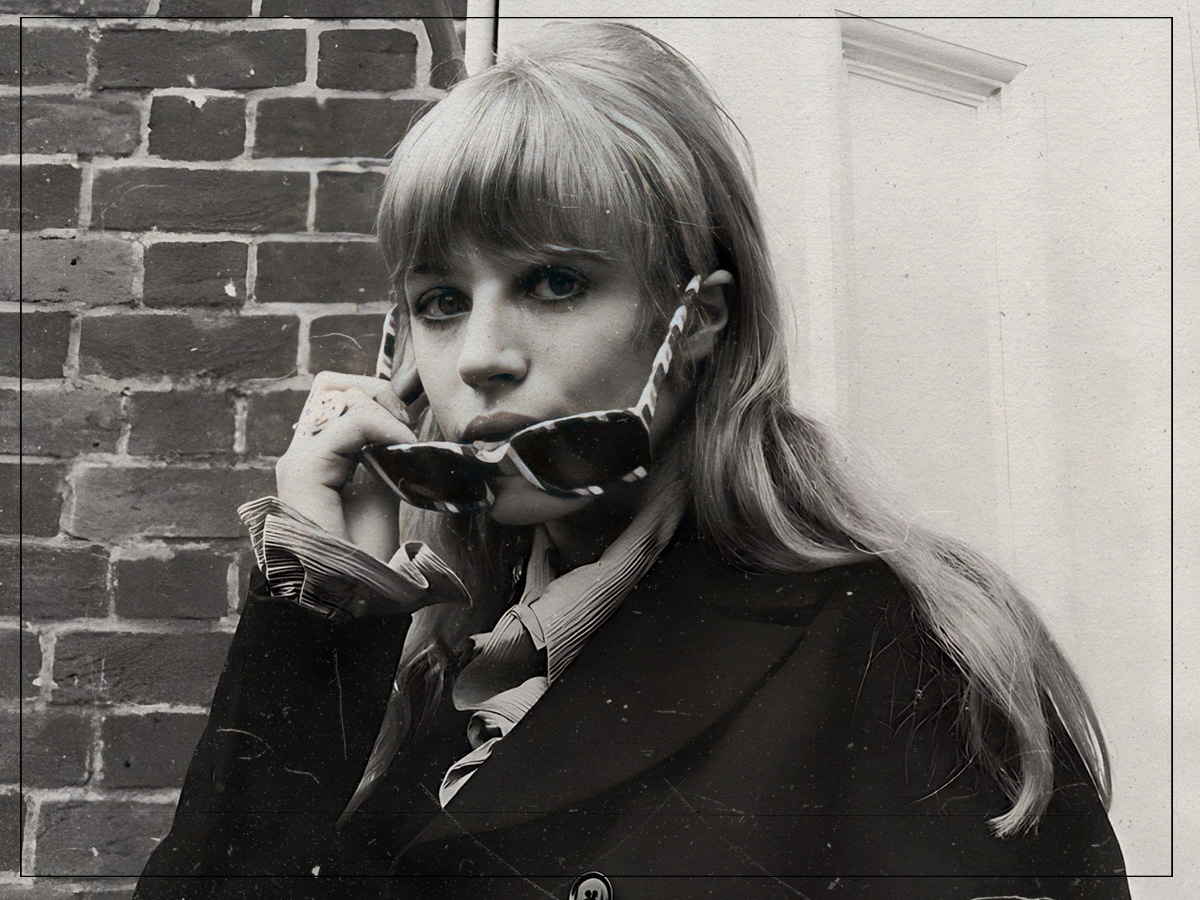
At first, it was bliss; they wrote songs together, went to parties, and went on holiday. She provided backing vocals for some of the band’s hits, and she released several albums herself. This is the time when all the iconic photos of the duo were taken as they were wandering around London in the best outfits, holding hands and looking in love.

1967: The Redlands Bust
However, what goes up always has to come down, and when you’re dealing with a gaggle of addicts, the crash is bound to be brutal. In February 1967, the UK government were on a harsh clamp-down of drugs and the rockstars became their ultimate target. In particular, the Stones became a figure of particular interest as on the 12th of that month, a team of police officers raided Richards’ home. Breaking up a party, there were a whole bunch of people there, including the band, Dennis Hopper, William Burroughs, and many more. It was your standard drugged-up 1960s party, but for some reason, when stories hit the press, they were obsessed with Faithfull.
It had been spun that the police walked into the scene and found her naked, wrapped only in a fur blanket. Then, that spun even further into a completely fabricated myth that they were all having an orgy, and Jagger was apparently eating a Mars Bar out of Faithfull’s vagina. “How the Mars bar got into the story, I don’t know… It shows you what’s in people’s minds,” she ruefully said in one of the many, many, many interviews that asked her about this ridiculous story.
But the damage was done, as the press had tainted her, and for the rest of her career, this stupid myth and the needless targeting of the woman on the scene haunted her.
1968: Performance and the affairs
After that, everything seemed to change. “I could’ve stayed with Mick, and he did love me, but I couldn’t bear it, that world,” Faithfull said about the after-effects of the raid, “I just felt not good enough. Low self-esteem. All the things a drug addict feels. But I don’t think I would’ve felt like that if the bust hadn’t happened. I think we would’ve been fine. Would we have been together today? I don’t know. Why not?”
However, after it all, the relationship seemed splintered, and then in 1968, it got messy, when, during the filming of Performance, Jagger started sleeping with his co-star, and Richards’ girlfriend, Anita Pallenberg.
As revenge, Faithfull and Richards got together, bringing the carnage and the mess to the whole friendship group.

1968–1969: Deaths, drugs and devastation
By the end of the decade, the entire Stones circle was spiralling; Brian Jones was doing so many drugs and behaving so badly that he had to be cut loose, at the same time, Faithfull was also buckling under addiction. While Jagger could put away gear, it didn’t seem to affect him in the same way that it did with the people around him, and so he managed to keep his head, but Faithfull couldn’t.
She was depressed and struggling, and around that time, she found out she was pregnant. In December 1968, it seemed like this could’ve been a turning point and a chance to fix things, but she suffered a miscarriage and lost her and Jagger’s child, whom they’d already named Corrina. Unable to handle the grief, Faithfull overdosed. The story goes that Jagger wrote ‘Wild Horses’ about this moment.
All of this happened just before her appearance at The Rolling Stones Rock and Roll Circus, with the footage of her performance there being tainted by the lost and devastated look in her eyes. In July 1969, when Brian Jones died, it felt like the final blow, and she spiralled further into addiction while Jagger seemed cold about the loss.
1970: The end
By 1970, it was irreparable; Faithfull was lost in heroin addiction, while Jagger and the band were attempting to fix up and move on. In his eyes, that meant moving on without her, and so the couple split.
That same year, she also lost custody of her son as John Dunbar worried more and more about her addictions.
Leaving her completely devastated, Faithfull attempted suicide, and although she survived, it was the start of the most difficult period of her life, leading to worsening addiction and even eventually homelessness.
