

How Keith Richards’ gardener inspired one of The Rolling Stones’ classic songs
Read More


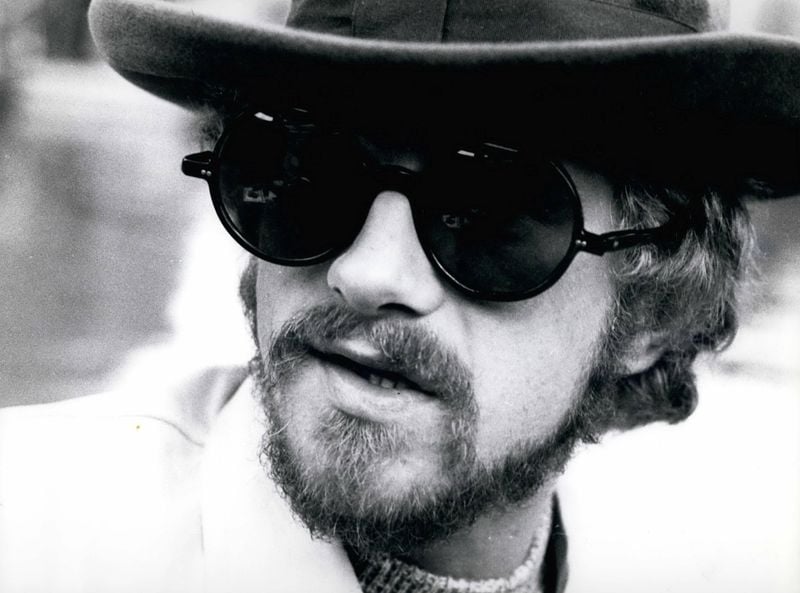
In August 1964, Andrew Loog Oldham modestly stated: “We [referring to management partner Eric Easton] didn’t make the Stones stars, the public did. Three years ago, it was possible for managers to make stars. These days it is the fans who dictate who will be stars. We simply helped draw attention to The Rolling Stones, and the public accepted them.” The humble statement appears to excessively curtail and downplay what was a monumental managerial success. Without the vision and guidance of Oldham and Easton, The Rolling Stones wouldn’t have had their big break when they did.
The Stones first fell under Oldham’s nose in 1963, when the aspiring producer and manager was just 19-years-old. The teenager became a confident manager working first for Mary Quant, the fashion designer, and later for The Beatles under the wings of Brian Epstein as part of the famous manager’s NEMS organisation.
In April 1963, Oldham was advised by Peter Jones, a journalist at the Record Mirror, to go and check out this intriguing rhythm and blues group, The Rolling Stones. Sure enough, Oldham agreed and went to see the Stones play at the Crawdaddy Club in Richmond. Oldham later recalled that he saw something in the group from the very first moment he laid eyes on them.
That night, Oldham had attended the gig with Easton, with whom he shared an office on Regent Street. As Oldham remembered of their first meeting with the Stones, “I called Mick [Jagger] over to meet Eric. Brian [Jones] came up and joined in. We simply had a chat, sizing each other up. Brian put himself forward as the leader of the group, and the rest seemed to accept this.” He later said, “I was probably 48 hours ahead of the rest of the business in getting there. That’s the way God planned it.”
The managers and the band seemed to get on well; within a few days, Oldham and Easton signed on to become the managers for The Rolling Stones and secured a record deal with Decca. Aged just 19 at the time, Oldham was younger than all of the band members and had to convince his mother to bear witness and co-sign the group as he was below the age of majority.
After Oldham took over as the band’s manager, he decided to mimic the methods Brian Epstein had employed to popularise The Beatles. Early on, he got the band wearing suits on stage and in press shots. Within weeks, The Stones had released their first single, ‘Come On’.
A few months later, in April 1964, the band released their eponymous debut record. On the LP’s sleeve, the five-piece can be seen in their dashing Sunday best in a shot taken by Nicholas Wright that was unmistakably similar to those taken for Beatles covers, especially when compared to With The Beatles (1963). The unique detail regarding the marketing of the Stones’ debut LP was that, apart from the Decca logo, there was no writing to introduce the band or the album name. This minimalist approach was commonplace by the close of the decade (The Beatles’ “White Album”), but at the time, it was unheard of in popular music, especially for debut records – this design concept was Oldham’s idea.
Oldham hustled the debut record into the charts, and the Stones began to feel the first tingling sensations of fame. Aside from Oldham’s tenacity in promoting the band, he seemed to make difficult decisions look like a leisurely walk in the park. This was shown especially when he swiftly dismissed founding member and pianist Ian Stewart simply because he didn’t fit the image. As Keith Richards recalled of Oldham’s reasoning, “six is too many faces for the fans to remember”.
Oldham encouraged Richards and Jagger to write their own songs and helped to shape the early incarnation of the group by following Epstein’s example yet avoiding pastiche by creating a bad-boy image for The Stones. They rapidly became the group parents despised, and teenagers loved. As Oldham once put it, “When The Beatles were having hit records and bridging the generation gap, The Stones were saying, you either like us or f**k off.”
To exemplify the previous point, Epstein introduced The Beatles as “my popular music combo”. Meanwhile, Oldham famously coined the divisive headline, “Would you let your daughter sleep with a Rolling Stone?” The headline appeared in Melody Maker, but they censored “sleep” to “go”.
By the mid-1960s, The Rolling Stones were worldwide stars and a perfectly viable alternative to The Beatles. In 1967, during the recording of the band’s answer to The Beatles’ Sgt. Pepper LP, Their Satanic Majesties Request, Oldham left his post as manager of the Stones. As he once recalled, it was simply a case of “my work here is done.”
This explanation makes sense since he was a cultivator of dreams, “not money,” as Oldham once explained. However, there were catalysing factors that seemed to have fuelled the decision to part from his biggest career success. At the time, just like most people involved in the rock ‘n’ roll business, Oldham was enduring the adverse effects of a party-heavy lifestyle governed by heavy drinking and drug use. As he later explained, “[Managing the Stones] was never tough until I could not keep a handle on myself. Then I had to leave.”
All the latest stories about The Beatles from the independent voice of culture.
Straight to your inbox.
