


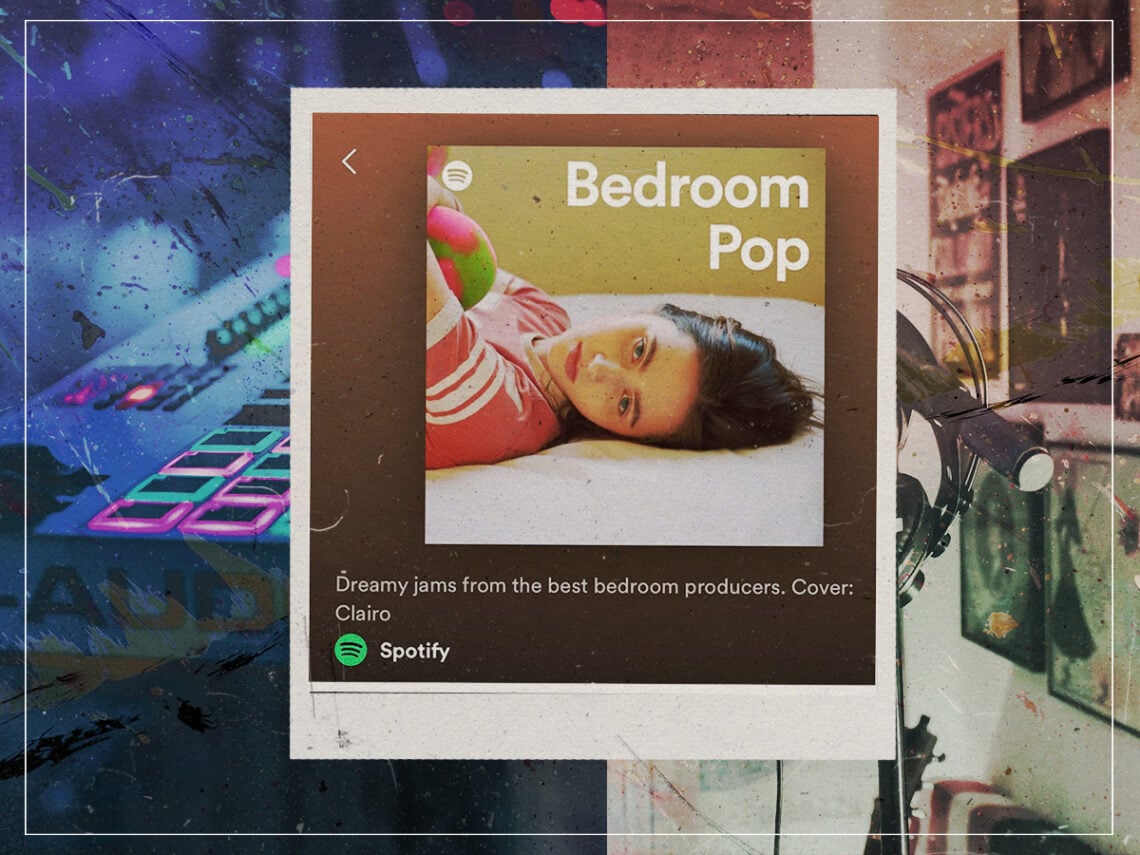
What is bedroom pop? An introduction to music’s youngest genre

Over the last eight years, a new term has entered the popular music lexicon: bedroom pop. As it happens, this may just be the genre of music that best defines modern youth culture.
Its name is, effectively, derived from where it’s made. That seemingly superficial aspect of the genre is revolutionary in itself. Up until 20 years ago, if you were making music in your bedroom, then it would only be heard by a disgruntled neighbour.
However, the advent of laptop-based home recording meant that suddenly, musicians could turn on, tune in and drop out in a brand new sense. Their listeners could do much the same, cosying up with the humble sounds of bedroom demos in the comfort of their digital headspaces.
Bedroom pop’s entry into the vernacular of popular music surpassed its actual beginnings as an underground phenomenon of the social media and streaming age. Its rise has confounded the music industry’s traditional players. A crop of digitally literate Gen Z musicians—some, like Steve Lacy and Rex Orange County, as young as 15—have seemingly bypassed the industry completely.
They make, record, release and promote their music almost entirely online. They know their way around software like GarageBand better than most producers and various online platforms, from YouTube and Spotify to SoundCloud and Bandcamp, far better than record company moguls.
The music they make is generally lo-fi, heavily digitised, and synth-based. It’s cheap and easy to produce. It is so easy, in fact, that they can produce it entirely in their own cluttered abodes. The likes of Clairo and Paul Cherry still shun the studio and record from home on occasion, even after developing a fanbase numbering in the millions.

“Really freeing”
In getting their music out there via direct-to-audience online channels, successful bedroom pop artists establish an immediate connection with their listeners. Their DIY approach, which extends to homemade music videos and stylised lowercase or capitalised names and abbreviations, also creates the impression that they’re just doing what anyone could if they wanted.
They are music stars no longer separated from their fans, raised on a pedestal beyond the reach of ordinary young people. They are real, identifiable and human. Their songs stake this same claim, focusing on the every day in soft tones fit for a phone on a bedside table more than a thronging mass of festival-goers.
“The ability to make a wide spectrum of music in your own home, without other musicians, without crazy money, without having to go to a studio, is really freeing,” Ryan Dann, the bedroom-based creative behind The Holland Patent Public Library, told us last year. “A lot of people who make this type of music aren’t really even looking to go touring either. All those things have played into the rise of it.”
This is not just an art form of convenience, either. It feeds into the age we live in. “I think that it’s relevant for a couple of reasons,” Dann explains. “First, the zeitgeist, to me, is ‘information’. We’re just drenched in it. The timeline is just like a water spigot that’s blasting at our face constantly. Which I think actually makes real reality a bit like when you step out of a movie, and you’re back into a vivified world, and you’re like, ‘Oh, wow, look, there’s stuff around me.’”
Bedroom pop is a symptom not just of the modern world but, more directly, of the modern music industry. Performing and recording music in more traditional ways has become so prohibitively expensive and inaccessible that many aren’t left with any other option. Touring costs are now astronomical, while practice spaces and live venues are closing left and right. The pandemic only accelerated this process.
So, traditional routes to putting music into the world are closed on the one hand, and digital channels for recording and self-promotion are opening up on the other. And what do you end up with? Bedroom pop.

So, what are bedroom pop songs about?
Another aspect of bedroom pop’s contemporary appeal is the themes it tackles. Young music fans were engaged by bedroom pop artists openly discussing mental health issues long before this was normalised among mainstream artists. As SadGirl vocalist Misha Lindes says, “I think all these songs are about the cognitive dissonance [we] face on a day-to-day basis.”
A huge proportion of young people feel alienated by the world around them and experience loneliness or intense social pressures. And 18 to 25-year-olds are now twice as likely to suffer from anxiety and depression as any other age group. Bedroom pop artists address these issues head-on in a way that other music genres don’t, exposing their vulnerabilities in unfiltered, everyday terms. Their words reassure adolescent listeners that their feelings are normal and they’re not alone in suffering from them.
Some songs like Boy Pablo’s ‘Everytime’ and TEMPOREX’s ‘Let’s Keep It Virtually’ deal with other topical subjects, too, such as the trappings of social media, remote communication and romance in the virtual sphere. These things go hand-in-hand with the problems many teenagers face communicating their emotions and are intertwined with the anxiety epidemic among the youth of today.
As well as an outlet for sharing mental health concerns in the face of social alienation, bedroom pop has become a space for young artists who otherwise wouldn’t be given the chance to make the music they enjoy. The genre leads the way in breaking down the racial, cultural and gender segregation still prevalent across other forms of pop music, particularly those in which ethnic minorities are hugely underrepresented.
Zoomers of East Asian, South Asian, and Latin American heritage, such as Rocco, spilltab, Cuco, Boy Pablo and Hyphen, have simply gone ahead and made their own music. They didn’t need to wait for the industry to pigeonhole them according to their ethnicity. They just released it, and people listened.
The same goes for image, gender and sexual identity. Remi Wolf, for example, has freely written and released songs about her bisexuality from the days of her early demo recordings.
You can’t imagine many major record labels today going for a teenage singer-songwriter who dressed like Gus Dapperton before he was famous, despite his knack for writing a catchy tune. His bowl haircut dyed various shades of neon and androgynous clothing might work as a stunt for Harry Styles but would be deemed too daring for someone just starting out in the industry. But Dapperton forged his path, with his distinctive look helping to cement his iconic among bedroom poppers everywhere.
Meanwhile, Liverpool duo Her’s deliberately play with sexual ambiguity in their song ‘Harvey’, which was for a long time their most streamed track on Spotify. They sing that they’re “crazy” for the titular character, exclaiming longingly, “Oh, boy!” As it turns out, Harvey’s actually a giant invisible rabbit from a 1950s B-movie, but most listeners don’t know that. They don’t care about the band’s gender or sexuality – they take the music at face value. This kind of thinking typifies the generation attracted to bedroom pop.

What does the genre sound like, then?
In addition to breaking down racial and gender stereotypes, bedroom pop often transgresses the boundaries between musical genres. You regularly hear artists of the genre incorporating an eclectic palette of sounds into their music. It’s a case of whatever works, with nothing off the table.
Steve Lacy, for instance, has cited all of Paramore, Vampire Weekend, Dirty Projectors, and Weezer as key influences. His music tells us that he has many more, vastly different from these examples. In his self-released debut EP, we hear echoes of Nile Rodgers and Wah Wah Watson’s funk guitar but elements of King Krule’s jazz-tinged, washed-out lo-fi licks as well.
In general, though, you can identify common threads running through the music of a lot of bedroom pop. It sounds like escapist, teenage fantasy, with dreamy upper-range synth or guitar patterns modulating into world-weary minor-key sighs. The recording is almost always lo-fi, and the songs are usually short and self-contained, with minimal backing tracks that seem almost deliberately artificial. Drum parts are typically looped machine cuts, if they’re there at all.
Take Ruru’s gorgeous ballad ‘In My Own Skin’, for example, which begins with a Mac DeMarco-inspired synth hook before the singer harmonises with herself about “skipping breakfast just to be in bed” and “the gap in the chest”. She breaks our hearts with a minor-chord switch-up in the chorus, letting us know that what she does best is “trip on my own two feet again” before Mac’s synths return to ease the pain.
DeMarco’s syrupy guitar jangles are all over many bedroom pop songs, too. The Canadian slacker’s arrival on the scene in the early 2010s, purporting to have brought with him a new sound he termed “jizz jazz”, laid the blueprint for less rock-oriented young bedroom pop artists to follow.
Then again, so did veteran Dutch songwriter Benny Sings, whose well-crafted melodies placed over sparse electronic instrumentation find an echo throughout the genre. Sings has also collaborated with several bedroom pop artists on some of their biggest songs, including Rex Orange County and Remi Wolf.

But does “bedroom pop” have to be made in your bedroom?
The short answer is no. Bedroom pop got its name because many of its pioneering artists were so young that they had nowhere else to write and record music apart from their childhood bedrooms. But the truth is, most successful “bedroom pop” artists don’t end up recording the songs you hear in their bedrooms. And many don’t even start that way.
Bedroom pop is more about the DIY ethic of the digital age. In that sense, it shares an unlikely similarity with punk rock, maybe the most pervasive DIY movement in modern music’s recent history.
Except that punk was about angrily rebelling against and negating the established order by proactively looking to destroy it. On the other hand, bedroom pop is about rejecting the status quo primarily by escaping it. Turning away from the ugly world outside and embracing innocence, self-love, self-care, and positive affirmations.
Songs of the genre may often articulate adolescent struggles with navigating the modern world, not least due to mental issues which seem ubiquitous in young lives today. Yet they do so in such a personal and intimate way that many listeners finish a track feeling heard and understood for the first time.
Bedroom pop’s real secret weapon isn’t where it’s made or its sidestepping of the corporate world. It’s the ability to identify with its fans profoundly and directly. And isn’t that the key to all great music?
The ultimate introduction to bedroom pop:
- ‘Uno’ – Rex Orange County
- ‘Dark Red’ – Steve Lacy
- ‘In My Own Skin’ – Ruru
- ‘Everytime’ – Boy Pablo
- ‘Pretty Girl’ – Clairo
- ‘Who Am I But Someone’ – Kate Bollinger
- ‘My Favourite Fish’ – Gus Dapperton
- ‘Electric U’ – Kid Bloom
- ‘Daddy Blue’ – Brad Stank
- ‘Big Brown Eyes’ – Benny Sings
- ‘Fine Madeline’ – Plums
- ‘wurst demo ever’ – Ruru
- ‘Opendoors’ – Jitwam
- ‘Dystopian Peter Crouch’ – Hyphen
- ‘Shy’ – Hether
- ‘Liz’ – Remi Wolf
- ‘Glue Song’ – beabadoobee
- ‘Friends’ – levitation room
- ‘Loving U’ – Me and My Sandcastle
- ‘Prune, You Talk Funny’ – Gus Dapperton
- ‘Sweet to Me’ – Summer Salt
- ‘Show Me How’ – Men I Trust
- ‘hold me, never let go’ – Rocco
- ‘Alive, Dreaming’ – Mellow Fellow
- ‘Watching Internet Videos’ – Holland Patent Public Library
- ‘Little Queenie’ – SadGirl
- ‘Your Letter’ – Paul Cherry
- ‘Happen Twice’ – Mark Whalen
- ‘Garden of Veggies’ – Fantasy Guys
- ‘Cotton Candy’ – spilltab
- ‘Sunflower’ – Rex Orange County
- ‘Goodie Bag’ – Still Woozy
- ‘Spring Spring’ – Wendy Wander
- ‘Nice Boys’ – TEMPOREX
- ‘If I Say I Love You’ – The Dinosaur’s Skin
- ‘Photo’ – RICEWINE
- ‘Harvey’ – Her’s
- ‘As the World Caves In – Matt Maltese
- ‘From the Subway Train’ – Vansire
- ‘Lover Is a Day’ – Cuco
