


Has the rise of ‘bedroom pop’ impacted the live venue crisis?

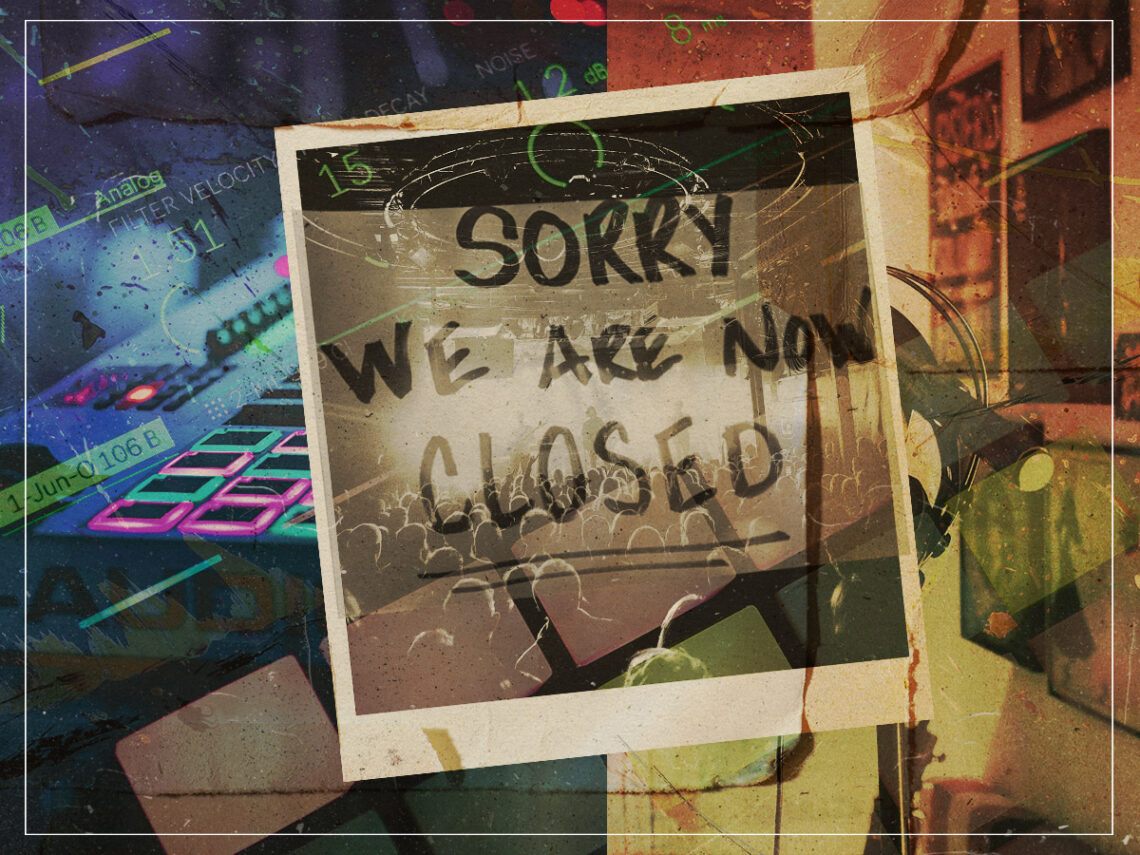
In 2023, a grand total of 125 music venues closed in the UK. This alarming number continues a trend that has set fears of an existential threat to live music in motion. Simply put, musicians need places to play. That is the bottom line that no ideology can fix. Further investment is required, and with none forthcoming from the government, it seems it will fall on an already cash-strapped public to do what they can.
However, perhaps part of the problem is that the aforementioned bottom line is becoming increasingly dated. In 2023, some musicians don’t need places to play, record, or even be part of any traditional music ecosystem. Now, the bulk of music in the world is both produced and consumed in our bedrooms. Surely, that puts venues at risk?
Ryan Dann is one such musician. He makes beautiful ambient music under the moniker Holland Patent Public Library. He once had aspirations to be a filmmaker, but the increasingly bruising ‘business’ side of show business put him off that pursuit. So, he turned to his laptop for a more autonomous mode of creativity. “The ability to make a wide spectrum of music in your own home, without other musicians, without crazy money, without having to go to a studio, is really freeing,” Dann tells Far Out.
This extends to the live setting, too. “A lot of people who make this type of music aren’t really even looking to go touring either. All those things have played into the rise of it,” he adds. And the rise is rampant. There is a video on YouTube titled ‘4 Hours of Ambient Study Music to Concentrate’ that has almost 15 million views. Another four-hour video on the same channel has 41m views. For context, the video for the latest single by the Arctic Monkeys, the band many have touted as the perfect model for progression through the live music pyramid, has 3.9m.
So, for artists who find the modern ‘industry’ side of creativity somewhat overbearing, starting a bedroom-based project is becoming steadily more appealing. While studying music or ambient records doesn’t seem to be much of a threat to venues as they largely occupy a separate space in our lives, the problem arises when the trend extends to pop—typically the most commercial and lucrative realm of music.
Spotify’s ‘Bedroom Pop’ playlist has 1.1m followers, proving how wildly popular the genre is currently. Many of its fans are also in the 16-25 demographic, which has previously kept venues profitable in previous generations.
While there is, of course, nothing inherently wrong with the genre, and indeed, many of the leading artists from the bedroom pop rise do tour extensively, it is simply not a genre that you envisage in a live capacity while listening. It is, by virtue of its own design, meant to be both created and consumed in bedrooms. Its soft, synth-driven vulnerabilities and ‘solo artist’ constitution pair better with a book and a bathtub rather than a pint and a moshpit.

So, if this is a leading genre that many of the footloose youth who have traditionally gone to gigs frequently are listening to, then perhaps this is playing into the decline of so-called grassroots spaces. The point is a more nuanced one than simply saying the kids are listening to bedroom pop and not going to gigs, so ‘live shows’ have been cut out of modern music consumption. More people are going to gigs than ever before, and many of them are going to see bedroom pop artists, too.
However, there is a slight asterisk to the sentiment of live shows that may have changed. From a young artist’s perspective, it is easy to see how trying to create a viral TikTok that exposes you to a billion people without leaving the house may well be a more worthwhile pursuit than playing for free in front of 20 people in the hopes of selling a T-shirt that you have to pay duties on. Likewise, for a 21-year-old in the gig economy, it is easy to see how curling up with a book and a bit of bedroom pop in the background after a 12-hour shift at a job that sees you as instantly disposable is more appealing than going to a gig that you can’t afford.
Of course, the main problems facing live music are patently apparent, and to suggest one of those is the rise of bedroom pop is admittedly frivolous. However, it is still there in the welter. Our lives themselves have been thrown into flux by the current economic crisis. Culture has always responded to these crises accordingly. In the 1970s the angry growl of punk was so tailored for live reverie that many bands barely bothered to even record.
However, these days, we’re worn down beyond the point of anger, and we want to be placated. Thus, we are seeing the inverse. So, we consume music like never before, eating through songs at a veracious rate of over 20 hours per week. To reach that figure, we’re listening on Monday morning commutes, we’re listening while we work, we’re listening constantly… and we’re listening in rabbit holes that make it hard for venues to curate consistency.
Moreover, certain genres don’t lend themselves well to the sort of consumption we now engage with – and those that do are often not quite the type that cry out for a live setting. So, when it comes to clocking off time, we’re all music-ed out, and quickly rushing off to a local venue is a luxury that many are forgoing.
Recognising this and the other barriers to progressing the profits and sustainability of sacred music venues is an important step to take while funding remains elusive. These spaces are bastions of community, all the more important in an age where we seemingly become increasingly insular, evidenced even by the forms of music we now listen to. We need to make those two work in harmony. Beyond any economic factors, that is also part of the challenge.
