


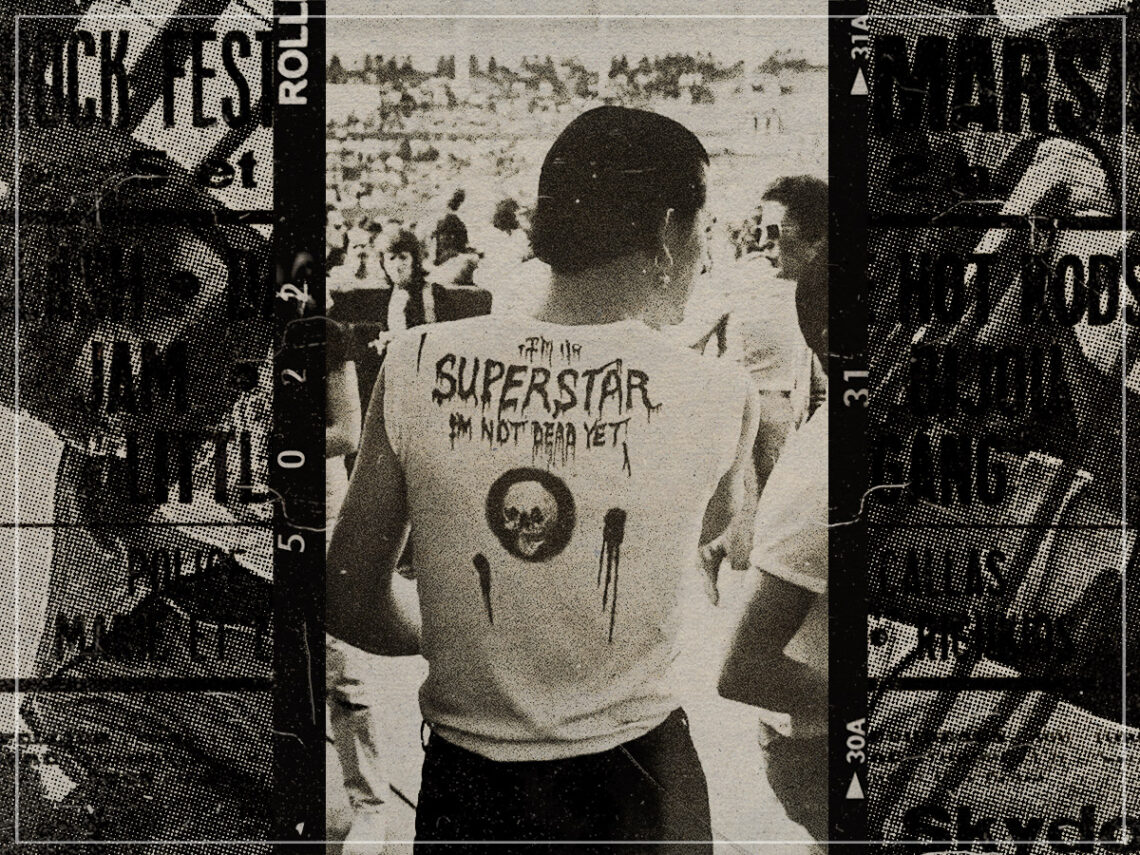
Live at the Plumaçon: what happened at Europe’s first punk festival?

In the tumultuous years of 1976 to 1977, an extraordinary and rebellious moment in the history of punk rock unfolded, and surprisingly, it didn’t occur in the UK or the USA. Instead, it happened in the unassuming city of Mont de Marsan, a place nestled in the deep southwestern region of France, primarily known for its bullfighting traditions and the annual Fete de Madeline.
Aside from its pleasant and picturesque appeal among tourists, Mont de Marsan significantly impacted punk history by hosting the very first punk rock festival in Europe, not just once but twice. The inaugural festival took place in 1976, a full month before many UK venues, like the 100 Club, had even opened their doors to the punk flood. However, despite the conservative President Giscard d’Estaing imposing a blanket ban on music festivals throughout the country, it was an unstoppable force.
The whole venture was a testament to the audacious efforts of a man named Marc Zermati, who orchestrated this entirely groundbreaking movement in the heart of the commune. Zermati’s vision and determination defied the restrictions of the time and cemented the location as a place in the pantheon of punk rock.
L’Arenes de Plumaçon, originally a bullfighting ring, was selected as the venue, and the festival was billed as the first-ever Punk Rock Festival in Europe. Although not exclusively punk, some might argue, Eddie and the Hot Rods and Pink Fairies took the headline spots, and the crowd featured goers with longer hair and wider flares than you might typically associate with a punk rocker. However, the true punk essence of the weekend was epitomised by The Damned, a band that had pioneered various aspects of the movement as a whole.
Interestingly, the Sex Pistols were allegedly invited but declined to attend, reportedly due to Eddie and the Hot Rods headlining and some prior disagreements with Zermati. Nonetheless, the first event was a huge success, especially considering the cultural circumstances, with the festival’s attendees numbering somewhere between 600 and 1400. Among them was also a young Ian Curtis, who had made the journey all the way from Manchester with his wife, Deborah.
For die-hard punk fans, the lineup of the second festival is likely to be even more gratifying, with the return of The Damned being a notable highlight, accompanied by other esteemed British musical acts such as The Police, The Clash, and Dr Feelgood. While The Police took on more of an opening act role, and Eddie and the Hot Rods headlined on that Sunday, the diverse gathering of British bands shared the stage with brilliant French outfits like Strychnine, Marie et les Garçons, and Asphalt Jungle. The audience was also in for a delightful surprise when Lou Reed graced the arena with his performance on the Monday night.
The second festival in the bullring drew around 4,000 attendees, who gathered under the scorching Landes sun to witness the unmatched musical scenes. In 1978, the authorities thwarted the festival, leading to its ‘relocation’ to La Rochelle. The organisers had to wait until the arrival of the new mayor, Philippe Labeyrie, in 1983 to revive the festival in Mont-de-Marsan for three more editions, held in 1984, 1985, and 1986.
This incarnation leaned more towards rock, with punk somewhat falling out of fashion, as acts like The Pogues and Nina Hagen took to the stage. Unfortunately, without financial support from the city, the festival eventually ceased to exist after its fifth edition. However, in the summer of 2016, a special concert featuring Eddie and the Hot Rods and Bijou was held on Mont-de-Marsan’s Town Hall Square, commemorating the 40th anniversary of the inaugural festival.
At its zenith, the earlier events harboured the impending punk wave preceding the UK and US movements. Photographer and filmmaker Jean Gaumy, in one of his final ventures before joining Magnum, was also in attendance. “The punk movement was not really my thing, but my interest in all these nascent movements motivated me,” he said. “I wanted to see. I went. And I saw.” Gaumy’s photographs capture many young people sporting their DIY punk attire, along with bands who were present in the building: some of his shots feature Sting and Paul Simonon amid the thriving scene.
Although not as widely recognised as the UK or US punk scenes, France’s influence in the punk movement remains subtle yet substantial, with DIY talents like Metal Urban, Marie et les Garçons, Stinky Toys, Metal Urbain, Bijou, and Starshooter leading the way. This scene gradually developed its distinctive identity, guided by numerous key figures who propelled the movement, and eventually, it merged with other influential forces on the global stage. However, when we rewind the clock, we uncover the pioneering impact of that inaugural festival in Mont de Marsan, where countless music enthusiasts eagerly anticipated the fiery rise of punk.

Never Miss A Beat
The Far Out Punk Newsletter
All the latest Punk content from the independent voice of culture.
Straight to your inbox.