


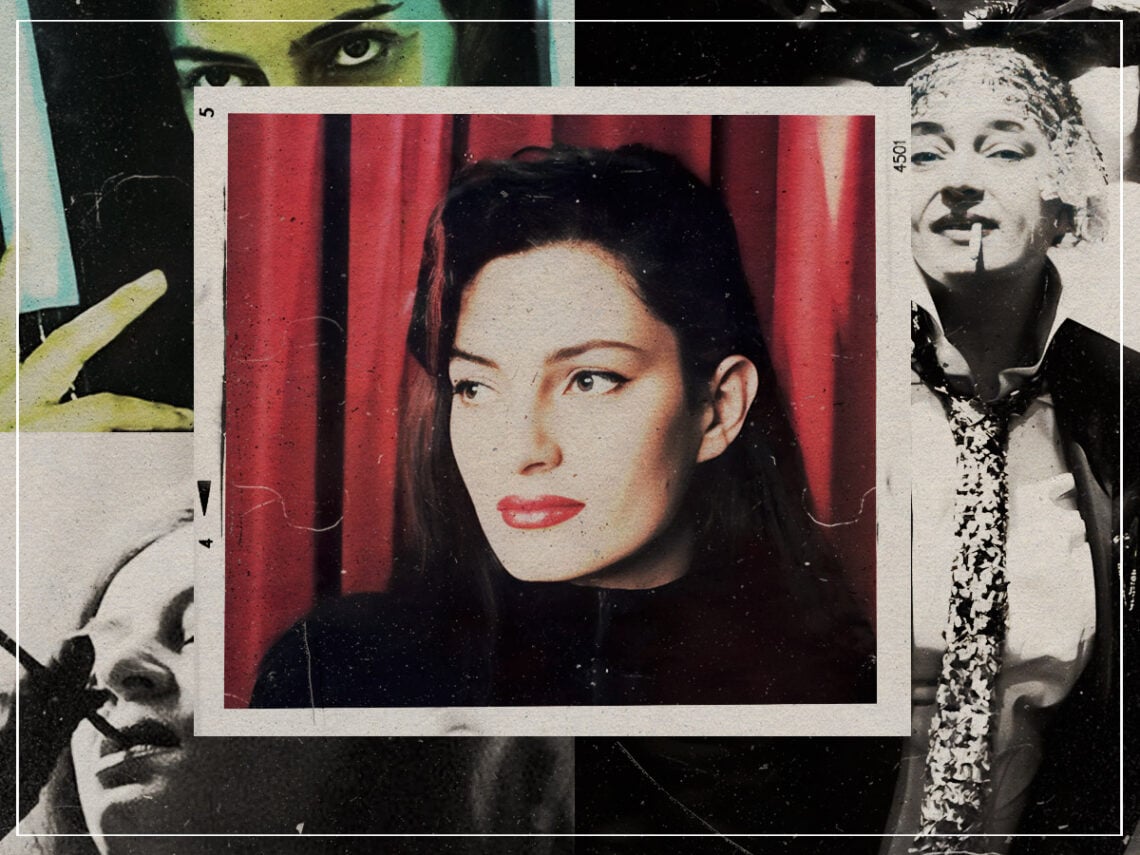
Anne Pigalle: becoming a bohemian chanteuse in France’s punk scene

When people typically envision the French aesthetic, they often conjure images of Parisian chic. Yet, beyond the borders of conventional music-inspired fashion, in the underground subculture of 1970s punk, there thrived a scene that celebrated France’s ‘The Last Chanteuse’, also known as Anne Pigalle.
As a child, Pigalle developed an early taste for jazz due to her father being a jazz musician. However, this soon became displaced with a love for rock and all things alternative, along with the burgeoning punk scene. Pigalle soon began to showcase her musical talent as a member of an all-female punk band and cultivated meaningful relationships with notable punk icons in the vibrant Parisian space.
Emerging as a notable influencer within the movement, Pigalle immersed herself in France’s distinctive flavour of punk. While not as extensively documented or widespread as the punk scenes in the US or UK, France’s version of the scene began to take shape following the influence of prominent figureheads such as the Sex Pistols and The Clash. France established its own offshoot of movement in its own right, with pioneering DIY talent like Metal Urban, Marie et les Garçons, Stinky Toys, Metal Urbain, Bijou, and Starshooter taking the lead.
Like a moth to a flame, Pigalle was drawn to subcultures that challenged societal elites, and punk in France was perceived at the time as an extension of the Parisian inclination to resist the bourgeoisie, the clergy, and the established order. And so, along with many esteemed other names, Pigalle attended Sex Pistols’ international debut performance at the Chalet Du Lac club in Paris.
Afterwards, Pigalle described the gig as a significant life-changing experience: “When punk first came to France that weekend everyone thought it was a British thing, but when I spoke to Glen Matlock he said ‘No one country invented punk. It all happened at the same time’. That made me think I could be part of this too. That we all could!”
After a year of playing clubs and writing music with Metal Urbain, she moved to London to chase her dream. At a time when the punk rock movement was in full swing in the UK, London was at the epicentre, and it attracted artists, musicians, and performers from around the world.
Due to her distinctive musical approach and endearing charm, she gradually amassed a devoted following as a prominent figure and collaborated with renowned producers and composers, like Michael Nyman and Adrian Sherwood, while venturing into cabaret performances and gracing the stages of various clubs. By doing so, Pigalle established her individual style, which blended elements of cabaret, chanson, and burlesque, setting her apart from the conventional punk rockers of the time.
Pigalle continued to incorporate elements of punk and new wave into her music and performances, leading to a pivotal moment when she signed a recording contract with Trevor Horn’s ZTT record label and released her debut album, Everything Could Be So Perfect. This saw several singles gain popularity, including the 1985 release of ‘Why Does It Have To Be This Way’. Everything Could Be So Perfect fused Pigalle’s theatricality with ZTT’s extravagant production values, resulting in an intentionally polarising affair akin to punk sensibilities. Pigalle, a staunch believer in crafting music that challenges normalised thinking, deliberately incorporated political and societal stances into her album to create and encourage a range of different audience reactions.
In the 1990s, Pigalle moved to Los Angeles, where she collaborated on film projects with the late Donald Cammell. Then, she returned to London and delved into music production, erotic poetry, and painting. Her artistic works have graced the walls of prestigious art galleries and exhibitions, including the renowned Michael Hoppen Gallery. However, her own musical ventures were far from over, as 2011 saw the release of a number of singles, followed by another set of singles and erotic poems released in 2013 called Madame Sex.
As someone who has revolutionised many factions of art and left her mark on different corners of punk spaces, it’s safe to say that Pigalle has lived multiple lives. She even says that her experiences are enough to fill five books – and she shows no signs of slowing down just yet. Following the release of her album, Ecstase, in 2018, she resides in Soho as a painter, poet, and performance artist and often participates in festivals and concerts.
Most recently, she was involved in a commemoration concert for Henri Paul Tortosa, the guitarist for Johnny Thunders and The Maniacs, following a succession of similar appearances paying tribute to various prominent figures in the punk and rock spaces.
While Pigalle may not have achieved the same level of mainstream recognition as some of the iconic punk bands of the era, her willingness to embrace punk’s spirit of rebellion and artistic experimentation contributed to her reputation as an early figure in the French punk rock scene. Being a prominent figurehead of the scene is noteworthy in itself, but Pigalle’s enduring journey, evolving into a respected and accomplished figure spanning the realms of art, poetry, and music in the subsequent years, stands as a genuine testament to her exceptional talent and influence.

Never Miss A Beat
The Far Out Punk Newsletter
All the latest Punk content from the independent voice of culture.
Straight to your inbox.