


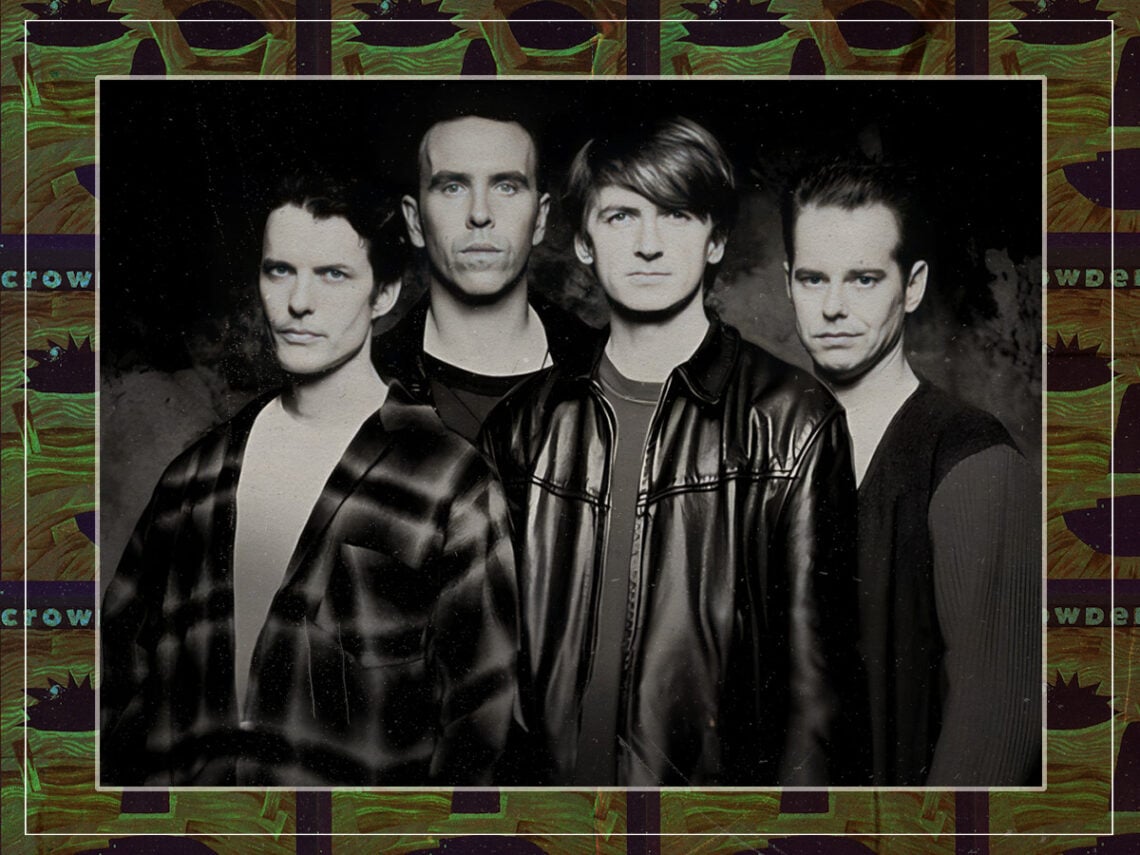
What does “always take the weather with you” from the Crowded House song mean?

“It’s agony.” That’s how Crowded House singer-songwriter Neil Finn described coming up with a song from scratch. And yet he and brother Tim appeared to have a knack for it, carving out their own niche in rock music by embellishing 1970s-style soft-rock songwriting with jangly guitars and pristine close harmonies.
Their 1992 hit ‘Weather with You’ epitomises these qualities, and then some. The single charted in the top ten in the Netherlands, Finn’s native New Zealand, and also the UK, which is arguably the best indicator of its success.
Since then, the song has become a staple of TV soundtracks whenever a show wants to signify a change of weather. For years, it appeared on rainy days at the Wimbledon Tennis Championships. In 2015, it was also included in the weather-based disaster movie Everest – but make of that what you will.
But what does the song’s chorus actually mean? When Finn wrote, “Everywhere you go, you always take the weather with you”, was he really just talking about the weather?
Is the “weather” a metaphor?
According to the story of the song that Neil Finn wrote for Performing Musician, the process of writing it started with the first line, “Walking ‘round the room singing ‘Stormy Weather’”. The track referred to here is the jazz standard written by Harold Arlen and Ted Koehler in 1933.
“Tim had the first line,” Finn recalled. “We started doing the strum that you hear at the beginning of the song. I came up with the little guitar figure, and the rest of the song fell from there.”
And so, the words of the piece seem to have simply come to the two brothers naturally without much thought, akin to the process Finn has described when talking about writing the band’s second album single ‘When You Come’. Tim Finn just happened to be walking around a room singing ‘Stormy Weather’, and they ended up writing a track about the weather. Is that it?
Well, not quite. The third line of the piece suggests there’s more to the idea of “weather” in the song. “Well, it’s the same room,” the band sings, “but everything’s different”. They’re alluding to the room in which the subject of the track is walking around, which seems like it used to be a happier place. Now, everything’s different because they’re singing about stormy weather.
In this way, weather is used as a metaphor for the mood of the song’s protagonist. The chorus line simply means that “everywhere [they] go”, their surroundings will feel different depending on their emotional state. They can go wherever they like, but they can’t run from their feelings.
As Neil Finn surmises nicely, “Ultimately, the theme of the song is, of course, that you are creating your own weather.” Weather being shorthand for the conditions in which you live, whether internally or externally. “You are making your own environment, always.”
