


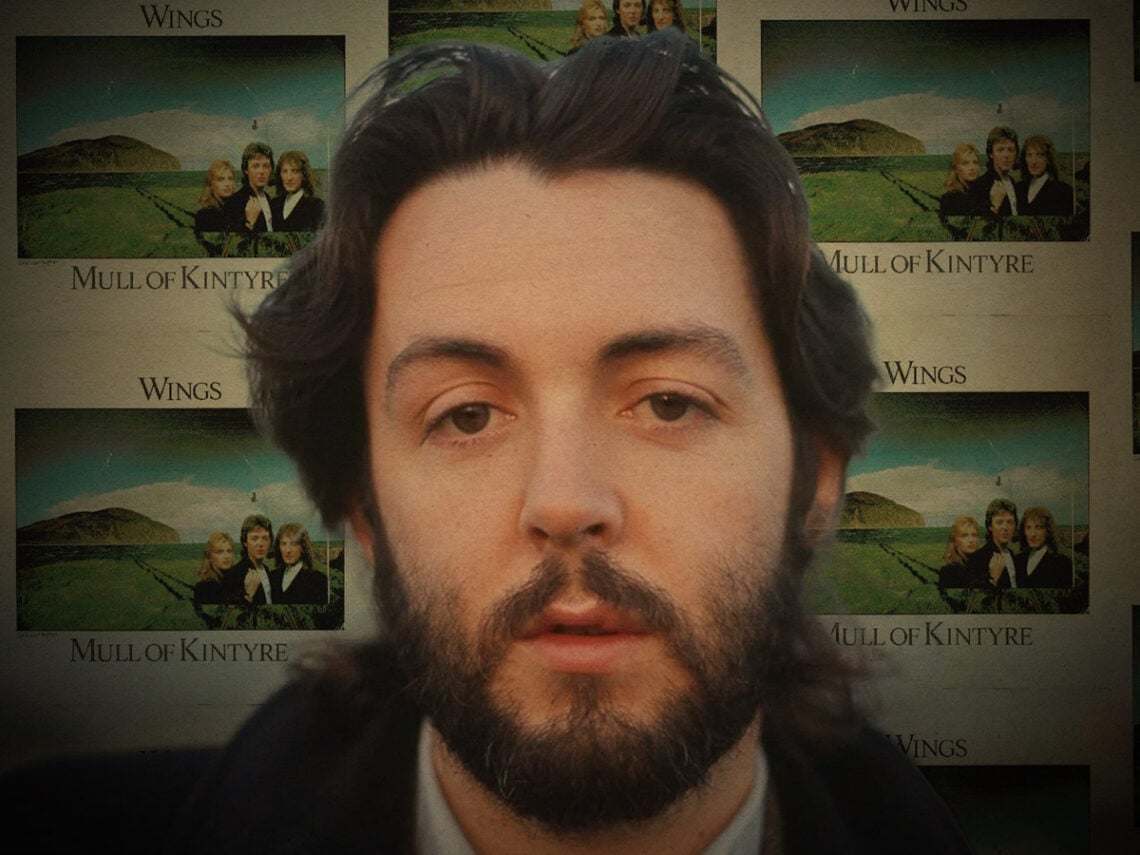
What took Paul McCartney to Kintyre, Scotland?

The 1970s marked a new dawn for Paul McCartney.
Free of the expectations that began to weigh heavily on him, as one of the leaders of The Beatles, McCartney could enter the ‘70s with a fresh slate and explore the sweet melodic style of his songwriting, without any internal judgement.
But at the same time, that liberation faced an inevitable sense of pressure that came with trying to follow up on the work of his band, which wasn’t only the most influential of the ‘60s, but in history altogether. How could McCartney possibly back up his songwriting genius when the three people who helped him craft it were no longer there?
Well, quite comfortably in actual fact. After Macca got plenty of ideas and feelings off his chest, with his 1971 solo effort RAM, he decided to form Wings, along with his wife Linda and Denny Laine, who supported McCartney on guitar and vocals. With McCartney firmly at the helm, he found himself an outfit that allowed him to be the unchallenged songwriter he wanted to be, without having to deal with the narrative of solodom after The Beatles.
Back in the safety of a group setup, McCartney thrived, and Wings became one of the biggest-selling bands of the decade. Despite the 1970s being an era when musical diversity was at its absolute peak, with a host of brilliant artists stepping forward with new music that has since been regarded as the very best, it was a Wings single that sold the most.
Their hit ‘Mull Of Kintyre’ was the biggest-selling single of the 1970s, despite representing something of a sonic change for McCartney, with the ex-Beatle using it as a tribute to the beautiful Kintyre peninsula in southwest Scotland.
“I wrote the song when I realised there were no new Scottish songs being written,” he explained. “It was a great experience recording it with the local pipe band and really exciting to see the amazing success it had in the charts at the time, so those memories mean I still love it and it’s a very special song for me.”
But how did Paul McCartney end up in Kintyre?
Simply put, the rugged coastline of Scotland’s countryside offered something of a peaceful escape for McCartney, who had spent most of the previous decade living under the watchful eye of the world’s media.
Anticipating the feeling of claustrophobia that might continue on after The Beatles’ break-up, McCartney travelled north of the border in 1966, when he bought High Park Farm. As Beatlemania continued to intensify, as did the troubles he faced with his own band members, McCartney regularly travelled to the farm, where he began to rediscover himself and what his identity was away from the band.
It was a humble tonic for one of the most beloved rock stars, and ultimately helped shape the future of his career in more ways than the single song represents. It provided a much-needed sense of peace that helped shape the rejuvenated second chapter of McCartney’s career, and so penning a track in its honour felt like the very least he could do.

Never Miss A Beat
The Far Out Beatles Newsletter
All the latest stories about The Beatles from the independent voice of culture.
Straight to your inbox.