


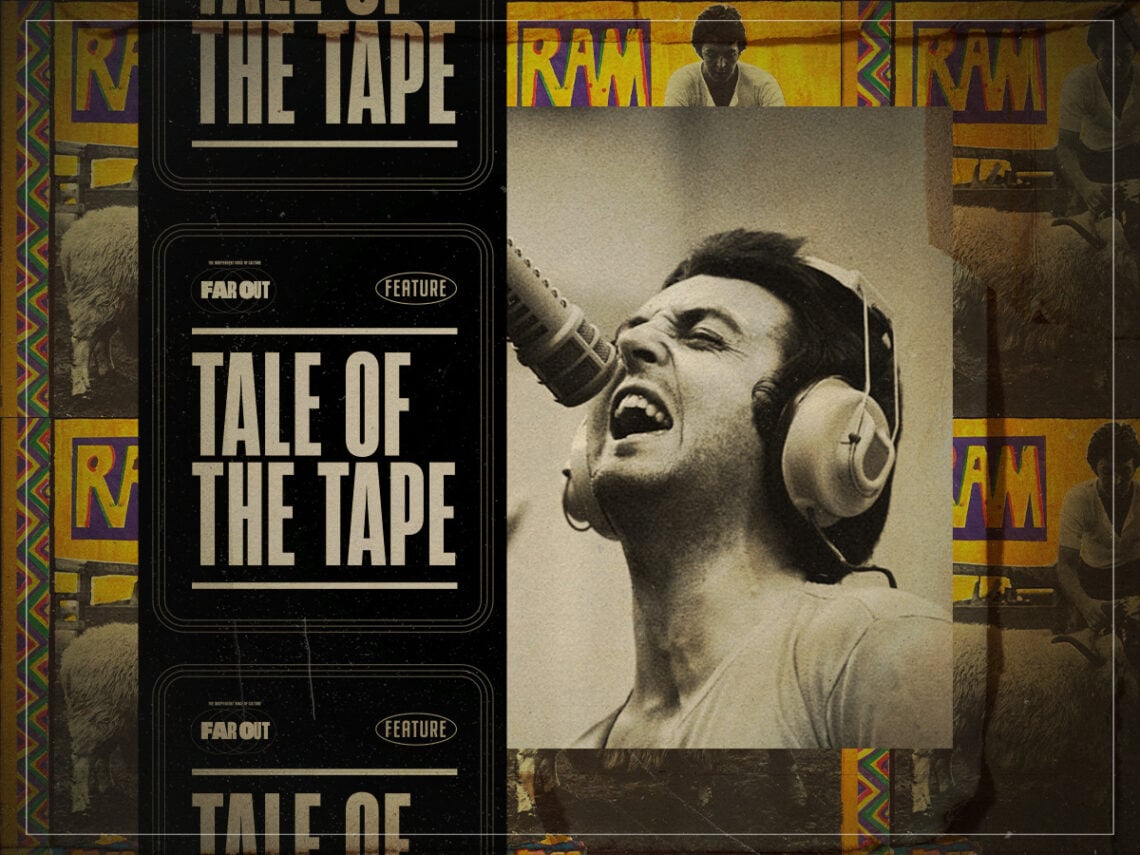
Tale of the Tape: The story behind Paul McCartney’s pioneering album, ‘Ram’

There could have been a reality in which Paul McCartney simply quit and disappeared in 1970. After the breakup of The Beatles, the artist genuinely wasn’t sure if he’d continue, but he did, reluctantly on McCartney, and joyously on Ram.
To understand Ram, you have to understand McCartney first. You also have to understand the breakdown of The Beatles, during which McCartney felt his oldest friends and closest confidantes turn on him.
“I said, ‘Well, this is like bloody Julius Caesar, and I’m being stabbed in the back,’” McCartney said when the rest of the band outvoted him to sign Allen Klein as their new manager. Having been warned about Klein’s corrupt nature, McCartney refused to let their music fall into his hands and likely be devalued into worthlessness.
“The only way for me to save The Beatles and Apple, and to release Get Back by Peter Jackson, which allowed us to release Anthology and all these great remasters of all the great Beatles records, was to sue the band,” McCartney told GQ in 2020. It worked and it was the right move in the long run, protecting the group’s legacy, but it obviously did some personal damage. By the time they split, amidst the context of these fights, McCartney felt like he had nothing – no friends and no will to be creative.
That’s why McCartney was made completely alone in his home studio. He told no one he was doing it and got no one involved. He basically just wanted to check and see if he could make music, having only ever done it in the context of The Beatles and alongside those people. It wasn’t a joyful process as much as it was simply an experiment with McCartney saying, “I was like a professor in his laboratory. Very simple [set-up], as basic as you can get.”
Ram couldn’t be more different. While there would still be a while before McCartney started Wings, there’s the sense that the idea for it sparked right here, as he seemed to suddenly realise that he didn’t really want to be a solo artist. He wanted to be in a band.
That’s partly why the album is credited to Paul and Linda McCartney together, as they began collaborating and writing together. To make it even more proper, they also went out to a studio this time, leaving behind the comfort and seclusion of the McCartney home to instead fly to New York. The couple also enlisted a full rock band again, rather than Paul simply doing it alone.
Under the false guise of needing musicians for a TV jingle, they auditioned players, bringing in guitarists David Spinozza and Hugh McCracken, and the future Wings drummer Denny Seiwell. Then the album was made like that – a full band in a room together, playing it loud and capturing that energy on tape.
“If you ever get a block, just steamroll through it and fix it later,” McCartney told a journalist about the record, declaring like a mantra for moving onwards and upwards, or for pushing through hard times, “Ram on!” To him, the album represented that. With its bright coloured colour and infectiously fun energy, it’s an album that seems to come back to life and revive McCartney as a musician genuinely excited about what he was doing.
