


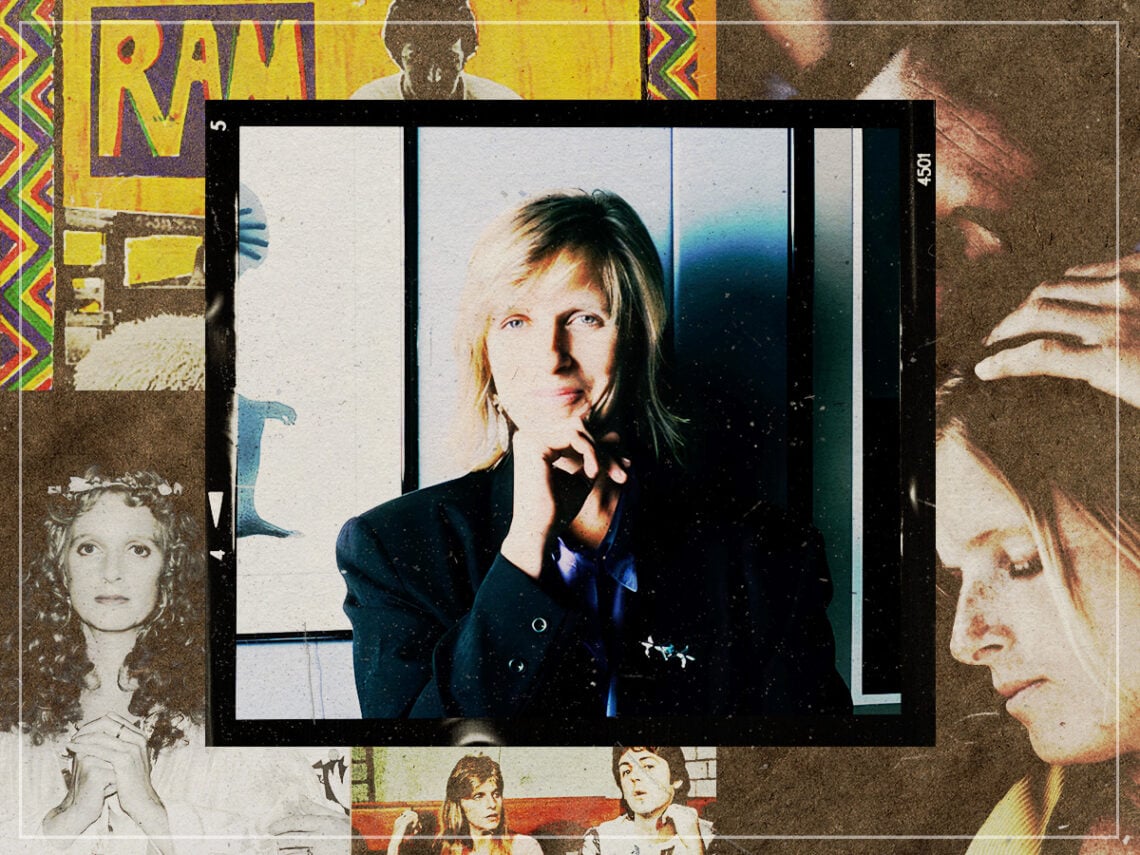
Linda McCartney: a misogynistically maligned progenitor of indie music

The connection between the world of The Beatles and misogyny has been a topic of conversation for years. Mostly surrounding the treatment of Yoko Ono, with an enduring claim that she was the reason behind the band’s split rather than the long-running tensions within the group and the general exhaustion of the four members. That alone is a clear thread of misogyny that runs through the band’s cultural position. However, the role of Linda McCartney and her vital work within Paul McCartney’s solo efforts is another place in which misogyny has its claws, consistently causing her talents to be overlooked.
Married in March 1969, Paul and Linda McCartney’s relationship was always rich with collaboration. Before meeting The Beatles, Linda was a prolific photographer working for Town & Country and Rolling Stone before becoming the unofficial resident photographer at Fillmore East, where she shot the likes of Aretha Franklin, Janis Joplin, Bob Dylan and more. When Linda met Paul McCartney in 1967 while on a photography assignment in London, it was this talent and independence that caught his eye, as he stated in his 1997 biography that Linda “was an artist”.
Early on, the songs Paul McCartney wrote for Linda came in the shape of ‘Maybe I’m Amazed’ and The Beatles track ‘Two Of Us’. But quickly, the material started to be written in collaboration with Linda rather than inspiration. After The Beatles split, McCartney taught Linda how to play the keyboard, and the duo wrote and recorded the brilliant 1971 album Ram.
A fact all too forgotten is that Ram is not a Paul McCartney solo album. Ram is an album created by Paul and Linda McCartney arm in arm, credited as a duo because of Linda McCartney’s essential contribution. Becoming known as one of the most influential indie albums of all time, Linda’s role in the record is painfully overlooked.
Throughout the project, Linda McCartney’s backing vocals bring colour to the album, adding new and exciting layers to Paul’s distinct style and sound. On half of the record’s songs, Linda also has writing credits. In fact, Linda has writing credits on 86 songs from Wings and Paul McCartney’s solo career, including hits such as ‘Live and Let Die’ and ‘Band On The Run’, despite a top googled question about the artist being “Did Linda McCartney really write songs?”
The debate and constant ignorance towards Linda McCartney’s musical contributions even led to a lawsuit. Paul McCartney’s official debut solo single post-Beatles, ‘Another Day’, was embroiled in a legal battle due to Linda’s contributions. With the songwriting credited to ‘Mr and Mrs McCartney’ having been written during the duo’s Ram sessions, Lew Grade of McCartney’s music publishers, Northern Song, saw the accreditation as nothing but an attempt to secure more publishing royalties.
Paul McCartney discussed the debate with Rolling Stone, stating: “Lew Grade suddenly saw his songwriting concessions – which he’s just paid an awful lot of money for, virtually to get hold of John and I – he suddenly saw that I was now claiming that I was writing half of my stuff with Linda, and that if I was writing half of it she was entitled to a pure half of it, no matter whether she was a recognised songwriter or not.”
But McCartney’s viewpoint on crediting is simple and fair. He continued: “I thought that whoever I worked with, no matter what the method of collaboration was, that person, if they did help me on the song, should have a portion of the song for helping me.”
Paul and Linda McCartney were hit with a lawsuit by Northern Songs and Maclen Music to the sum of $1,050,000 for violating an exclusive rights agreement with the song ‘Another Day’. Refusing to believe Linda McCartney could contribute to the creation of the material, the lawsuit is a marked act of misogyny and another event in a long history of Linda McCartney’s artistry being overlooked.
Eventually, the lawsuit was settled amicably, and the couple signed a publishing contract together, which allowed for the duo to be co-credited for their collaborative work. However, Linda McCartney’s contribution to the world of rock and the birth of indie is too often lost to misogyny, shamefully overlooked in her husband’s shadow.
One listen to ‘Another Day’, and you can hear something different from Paul McCartney’s earlier efforts within The Beatles. Playing around with rhythms more, adding unique breakdowns and tempo changes while Linda McCartney’s vocals bring contrast and interest – the track is a masterpiece of early indie-folk. It’s the same masterful construction that you hear on Linda McCartney’s solo album Wide Prairie, which was released posthumously in 1998.
Unafraid to experiment with different genres and sounds, tracks like ‘Seaside Woman’ speak to an artist with a clear vision and playful prowess. From the ballad of ‘Endless Nights’ to the country twang of ‘Wide Prairie’, you can hear the starts of several strains of early indie here. In fact, ‘I Got Up’ could easily be mistaken for a Talking Heads song. ‘Oriental Nightfish’, with its sparse spoken word lyrics, feels aligned with the current post-punk scene. Elsewhere, you can hear melodies and musical details that connect Linda McCartney to modern indie acts like Big Thief, Julia Jacklin and St Vincent.
While Linda McCartney never seemed interested in performing without her husband, she deserves credit as an artist in her own right rather than just a tag to the name of Paul McCartney. No matter how big or small her contribution might have been, the enduring questioning of whether Linda McCartney actually wrote songs or simply supported Paul McCartney’s creative process is nothing but misogyny in play, belittling the work of an evidently musically-minded and creative woman.
