


‘Going Underground’: were The Jam really a punk band?

The boundaries of the punk genre are either incredibly broad or unforgivingly narrow, depending on who you ask. In the early days of the scene, virtually any band who played fast and loud, with lots of distortion, was cast under the umbrella of punk. In the decades that have followed, punk has grown a definitive DIY ethos and anti-capitalist stance – spurred on by politically active groups like Crass and Dead Kennedys. However, one group within punk’s history remains something of an anomaly: The Jam.
First formed in 1972 by a then-teenage Paul Weller, The Jam predated punk in the UK by a fair few years. If you go by the idiom, ‘If it looks like a punk band and sounds like a punk band, then it probably is a punk band’, you are no closer to finding out whether The Jam were, indeed, a punk outfit. In terms of sound, the early tracks recorded by Weller’s outfit certainly seemed to fit within the canon of punk groups. Furthermore, the band would regularly appear at grassroots venues like The Roxy Club or The Electric Circus, which were cornerstones of the punk scene at the time.
If you look at the lyrical content of many Jam tracks, you can draw obvious parallels to the politically disenfranchised and furious energy of punk. Tracks like ‘The Eton Rifles’ and ‘Going Underground’ took aim at the political establishment in ways that many self-confessed punk outfits failed to do. As their discography developed, the band began to feature more and more soul influences, which can be seen most obviously within their final single, ‘Beat Surrender’.
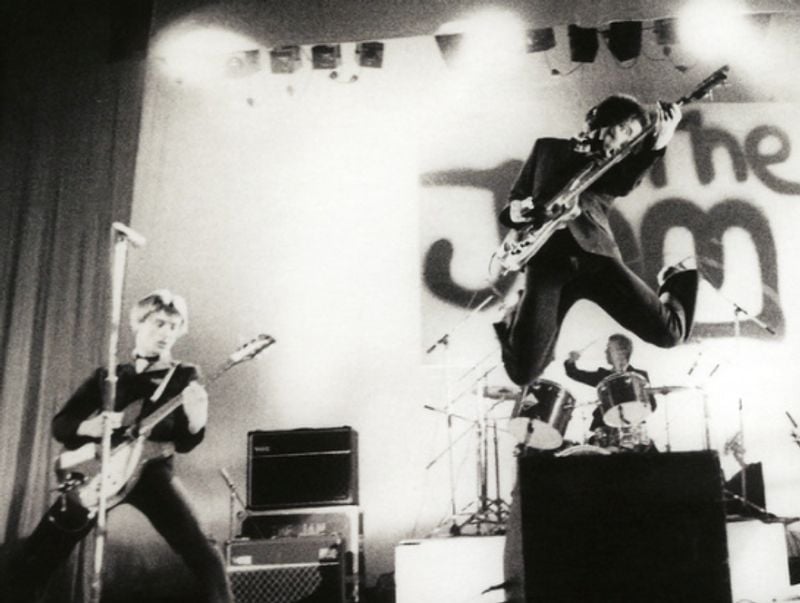
They might have sounded like a punk band, but The Jam certainly did not look like a punk outfit. When the scene was largely concerned with safety pins, bondage trousers and wild hairstyles, Weller and company favoured Italian suits, clean-cut hairstyles and retro-inspired imagery. In fact, The Jam took the majority of their inspiration not from the revolutionary sounds of Iggy Pop or the Sex Pistols but from the 1960s modernist subculture, particularly banks like The Small Faces or The Kinks.
Of course, they were not the only ones in the punk scene to take inspiration from groups like The Kinks. Although punk made a big deal of destroying the past and starting afresh, many punk bands adopted techniques and styles pioneered by the likes of The Who or The Kinks. The Jam, however, were perhaps the only group in the scene that readily admitted those influences, even covering the classic Kinks track ‘David Watts’.
If you were to ask Paul Weller himself, the frontman seems to have something of a love-hate relationship with the punk moniker. In 2017, he told Yahoo Entertainment that punk was “Exciting, yeah, because it was our generation’s time,” explaining, “Punk happened, and for me and a lot of people, it felt like: ‘This is our time! This is our chance to make something of our generation, to make a statement of some kind!’”.
In contrast, the songwriter had previously argued that punk was a futile movement, arguing in The Independent that punk’s legacy has been overrated: “Pink Floyd are still the biggest band in the world, along with The Rolling Stones. So what’s changed?”.
The likelihood is that The Jam were not entirely a punk band. Having formed prior to the emergence of the genre, with influences that differed from the punk norm, it seems pretty likely that The Jam would have happened with or without the influence of punk. However, that is not to say that Weller’s outfit owes nothing to the revolutionary quality of punk. Although the band quickly outgrew the narrow boundaries of punk, favouring soul and Motown, the scene gave The Jam the opportunity to play iconic gig venues in London, moving on from the dingy working men’s clubs of Woking, as well as developing Weller’s politically-charged songwriting.

Never Miss A Beat
The Far Out Punk Newsletter
All the latest Punk content from the independent voice of culture.
Straight to your inbox.