


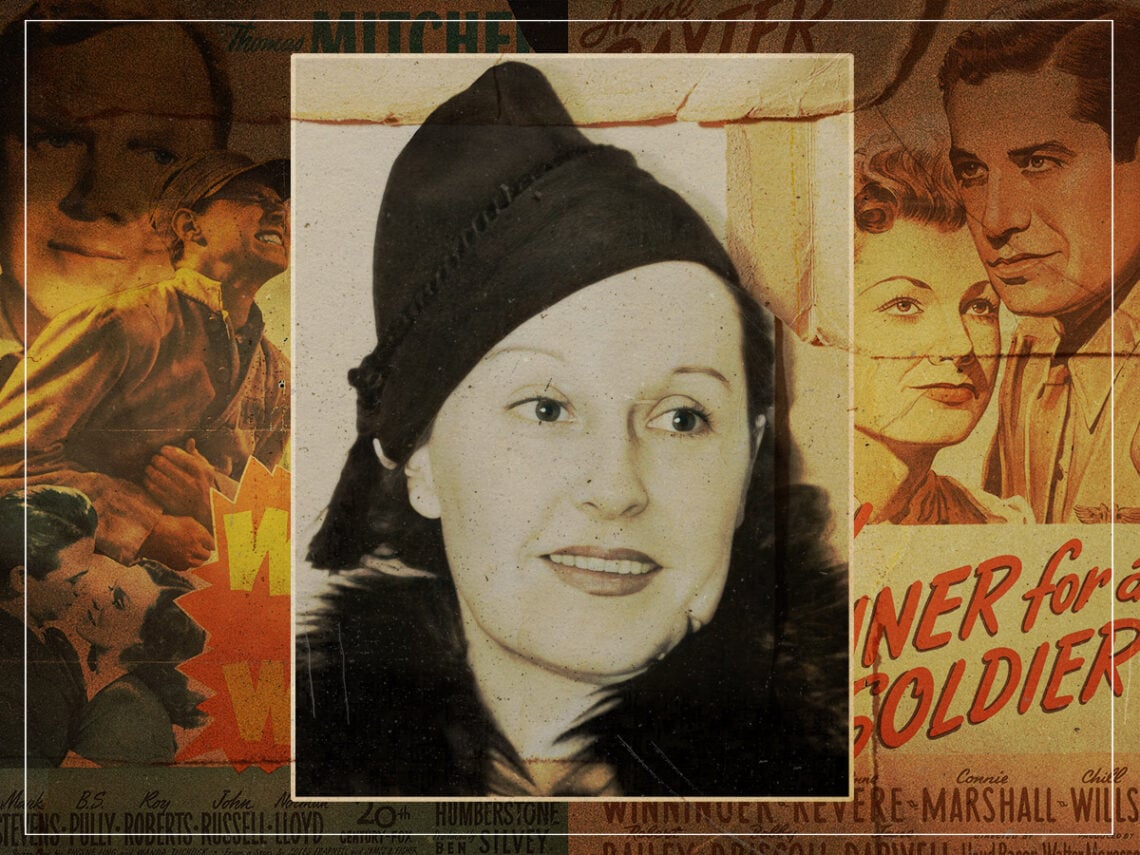
Wanda Tuchock: one of Hollywood’s earliest female filmmakers

Cinema was a groundbreaking invention, yet it quickly became something to be capitalised upon and used as a conduit to convey and perpetuate the hegemonic mode of thinking to the mainstream. This meant that, under a patriarchal society, men soon dominated cinema in directorial and screenwriting roles, with very few women being afforded opportunities to be creative.
During the early days of cinema, women were incredibly marginalised in day-to-day life, unable to vote and access the same kinds of jobs that men could, largely assigned to roles in the domestic sphere instead. Thus, very few women were active during cinema’s infancy, and even now, the amount of female directors is drastically smaller than the number of male directors. Sexism has always been one of the most prevalent issues in Hollywood, which has always favoured the perspectives of men. While the first filmmaker to make a narrative piece of cinema was actually a woman, Alice Guy-Blaché, there were very few active female directors for decades to come.
In the 1930s, just three women in Hollywood directed a film, the most notably being Dorothy Arzner, alongside Dorothy Davenport and Wanda Tuchock. It’s shocking that so few women were given the opportunity to have such an important creative filmmaking role, but these women became pioneers, emblems of encouragement and proof that women can be filmmakers – there are just more obstacles to tackle.
Tuchock only directed two films in her lifetime, but she wrote many more, beginning in the silent era. She made her screenwriting debut with King Vidor’s Show People in 1928, which came just after sound cinema had begun to emerge. Thus, the movie isn’t totally silent – it uses synchronised sound – but there is no dialogue between the actors. Then, as sound started to become the norm, Tuchock provided the scenario for Vidor’s Hallelujah, one of the earliest movies to feature an all-black cast. She kept up a working relationship with him during the start of her career, also working on movies like Not So Dumb and Billy the Kid with him.
Tuchock began to land further writing jobs over the coming years, contributing to movies like George Cukor’s Little Women and John S. Robertson’s Little Orphan Annie. However, in 1934, she managed to earn her first directorial credit, which she shared with George Nicholls, Jr. The film was called Finishing School, and Tuchock co-wrote it with Laird Doyle, with David Hempstead and Louis Weitzenkorn helping to formulate the story.
Made before the Hays Code cracked down on any allusions to sex, drugs and violence on screen, Finishing School features moments which strongly imply that the characters are about to have sex and other suggestive scenes that would not have been able to be shown in the coming years. Ginger Rogers plays a character who encourages protagonist Virginia, played by Frances Dee, not to be so uptight. It’s a fun romantic comedy, but due to its thematic explorations, the Catholic organisation Legion of Decency openly condemned it.
The filmmaker didn’t direct again until 1952, making a 13-minute short, which is somewhat of an educational piece about road safety. The fact that Tuchock directed so little – and was never able to direct a feature on her own – reflects the rife sexism in the industry that prevented women from having creative freedom. Still, it is important to celebrate the achievements of female directors working in the early days of Hollywood, who helped pave the way for future generations.
