


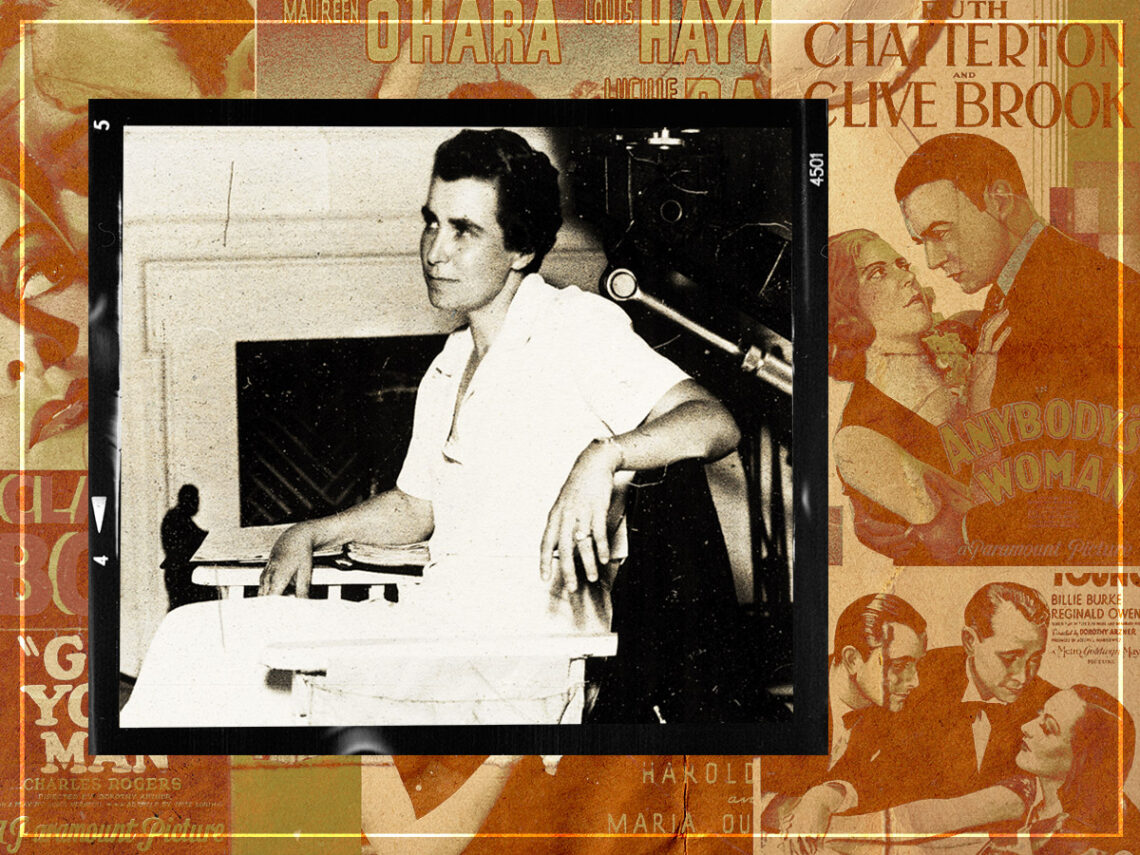
Dorothy Arzner: a queer feminist Hollywood pioneer

It’s no secret that Hollywood has continuously sidelined female filmmakers, making it harder for women to break into the industry and be given the same opportunities as their male counterparts. While there are now more female directors than ever before, progress towards a more inclusive industry has been incredibly slow, and there’s still a long way to go. Thus, it’s essential to look back at the women that paved the way for modern female filmmakers, such as Dorothy Arzner, who used her power to challenge patriarchal norms as far back as the 1920s.
Arzner got her start in the industry typing up scripts, although she soon realised that “If one was going to be in this movie business, one should be a director because he was the one who told everyone else what to do”. However, Arzner ended up becoming an editor, although she didn’t abandon her goal of becoming a director. Eventually, she was offered the chance to direct a film with Columbia, which would mean leaving her long-term post at Paramount. Defiantly, she battled to direct a movie for Paramount, resulting in 1927’s Fashions for Women. The silent film is now lost, but it was incredibly successful at the time of release, marking the start of a prolific career for Arzner as one of Hollywood’s most idiosyncratic voices.
Through the late 1920s, Arzner directed several silent movies before helming Paramount’s first talkie, Manhattan Cocktail. She also made the talkie The Wild Party, which marked Clara Bow’s speaking debut. During production, the director invented the boom mic to allow Bow more freedom, something that is now a staple of every modern film production. Until 1943, Arzner directed a film almost every year before retiring from filmmaking.
Her work predominantly focused on women, often with queer undertones, which, at the time, was revolutionary. Arzner was openly gay and often wore masculine outfits, such as suits, which pushed the conventions of femininity that were set firmly in place at the time. Unfortunately, her identity and sexuality might have been the reason for her early retirement from directing, with the industry becoming increasingly difficult for marginalised figures.
Still, during her time as a feature director, Arzner centred many of her movies around female characters and their relationships with other women, which often came at the expense of male characters. Shannon Kelley from UCLA Film and Television Archives explains: “Dorothy reveals what interested her most – woman bonding with each other and sometimes to the exclusion of men, which is part of a women’s lived experience, not just lesbians.”
For decades, Arzner’s movies have spoken to women of all sexual orientations. At the crux of her work is a celebration of womanhood in whatever form that might come. She often rejected traditional femininity and invited audiences to read between the lines; for example, Katherine Hepburn dons masculine outfits and flies planes in 1933’s Christopher Strong. She refused to play by convention, consequently creating a body of work that allowed women the chance to be understood, their struggles under the grasp of patriarchy made visible. In Christopher Strong, Arzner is bold in her criticisms of gender roles and dynamics, suggesting that many men treat women as objects rather than autonomous individuals.
After Arzner directed her last film, First Comes Courage, which followed one of her most acclaimed works, the magnificent Dance, Girl, Dance, she made a few commercials and training videos for the Women’s Army Corps. Moreover, during the 1960s, she taught at UCLA, where she acted as a mentor to Francis Ford Coppola, who would soon go on to direct The Godfather series.
Clearly, Arzner’s influence on cinema has been monumental, yet she sadly remains a footnote in the history of Hollywood, despite being one of the only working female directors at the time. Therefore, it’s necessary to reflect on the barriers she broke down for women in the film industry and celebrate her fantastic body of work.
