


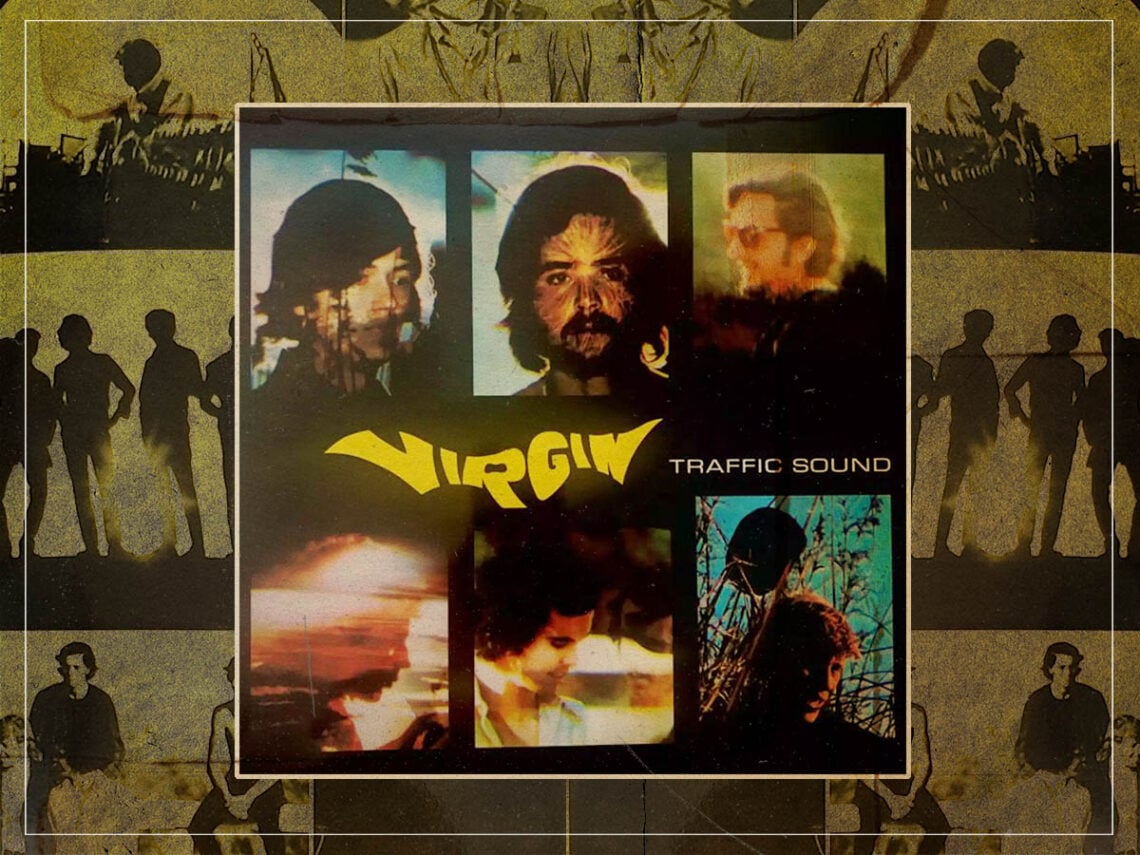
‘Virgin’: How Traffic Sound created the greatest hard rock album you’ve never heard

Picture a hard rock band, and you probably think of a group like Led Zeppelin, Black Sabbath, or Deep Purple. After all, it was these bands that were regularly renowned for pioneering the hard rock genre during the late 1960s and early 1970s, laying the foundations for all future hard rock and metal artists. Outside the world of abrasive post-industrial hard rock in Britain, however, there is a whole host of other artists equally deserving of praise, like the Peruvian outfit Traffic Sound.
Forged in 1967, in the wake of the hippie counterculture movement which had enveloped much of South America, Traffic Sound started out life as a stunning psychedelic rock outfit, performing covers of popular American songs by the likes of Jimi Hendrix before morphing into one of Peru’s premier rock outfits in their own write. Penning a plethora of innovative hippie anthems which blended a rich history of Peruvian folk and psychedelia with American rock sensibilities, the band quickly found an audience in their home nation, as well as a cult following abroad.
While their debut record, A Bailar Go-Go, remains an indisputable highlight of 1960s Latin psychedelia, it was the band’s progression that made them a rock and roll force to be reckoned with. For their sophomore record, 1969’s Virgin, the group leaned much further into their own sound and range of influences, cutting down the number of cover songs and focusing intently on crafting new, original material.
On the face of it, Virgin follows a similar suit to the band’s debut, awash with the distinctive sounds of mind-bending, countercultural Latin psychedelic rock. If you scratch beneath the surface, however, the record contains a broad spectrum of sounds and influences. From gentle, folk-adjacent psychedelia on songs like ‘Last Song’, to the wall-of-sound funk of ‘Meshkalina’, the album is among the most diverse and captivating offerings of the entire decade, yet it remains a fairly obscure gem, particularly within the hard rock era.
After all, when Virgin was first released in 1969, the genre of hard rock was still in its infancy. The distorted tones and defiant attitude of songs like ‘Jews Caboose’ and ‘Meshkalina’ certainly have more in common with the hard rock and progressive scene of the United Kingdom than anything else coming out of Peru during that period.
The song ‘Tell The World I’m Alive’ echoes the prog rock of groups like Pink Floyd during a period when mainstream audiences had not fully recognised the brilliance of that group. Throughout it all, though, Traffic Sound manage to imbue these tracks with a sound that is inseparable from their diverse surroundings in Peru.
1969, the year of Virgin’s release, was a pivotal year for the development of hard rock. Led Zeppelin had released their debut at the beginning of the year, first introducing mainstream audiences to the abrasive, distorted rock tones that would go on to dominate the entire genre over the following decades, while Black Sabbath were a few months from the release of their debut in February 1970.
You could argue, therefore, that Traffic Sound predicted the inherent sound of hard rock and its rise in popularity without having heard any of the early groups who are so often hailed as pioneers of the genre. It is difficult to argue that Virgin had quite the same impact on the development of the genre as either of those other groups, particularly given the fact that the record was not released anywhere outside of Peru until 1997, when it was reissued for the US market. However, not that more music fans are being turned on to the trailblazing sounds of the Peruvian outfit, Virgin should be heralded as a fantastic early example of hard rock mastery.
Overlooking the genius of Virgin back in the 1960s could be forgiven, particularly for those who were not deeply entrenched in the counterculture scene of Peru. Now, however, with various reissues and reappraisals of the band’s work flying around, there is no excuse for any self-respecting hard rock fanatic to omit the seminal record from their collections.
