


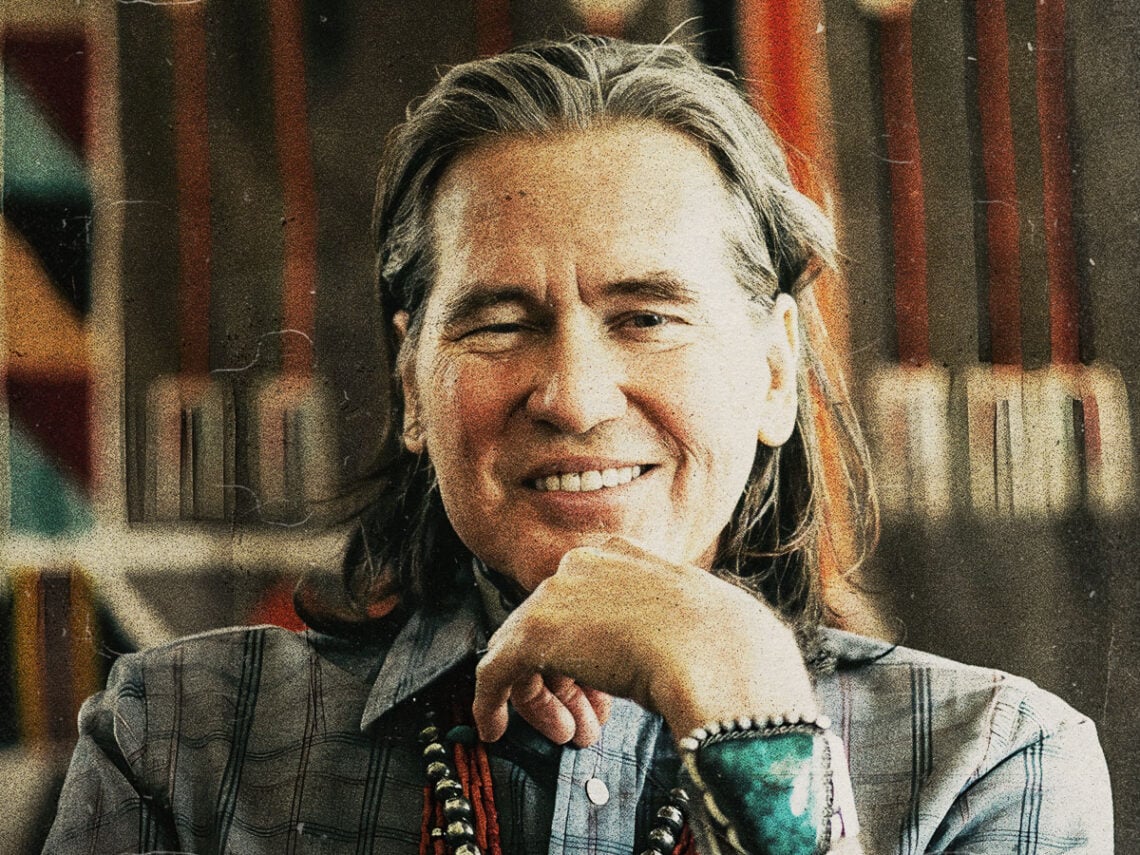
How the eclectic influences of Val Kilmer shaped his career for better and worse

It’s impossible to call Val Kilmer a bad actor when there’s plenty of evidence to the contrary, but it’s a lot easier to sit there with a straight face and suggest he could have been a much bigger star and enjoyed an even bigger career if he didn’t keep getting in his own way.
A precociously talented performer, Kilmer was the youngest person to ever be accepted into the prestigious Julliard’s drama programme. He wasted little time making his mark on cinema after debuting in riotous style by headlining the classic parody Top Secret! from the deranged geniuses behind Airplane!.
His third feature made him a star when Top Gun took flight at the box office, his fourth reaffirmed his credentials as a leading man when Willow turned a tidy profit, and the sixth showcased his dramatic chops when he effortlessly embodied Jim Morrison in Oliver Stone’s The Doors. The biopic may have been flawed as a whole, but his performance most definitely was not.
It appeared as though he was a made man when he was picked to replace Michael Keaton as the ‘Dark Knight’ in Joel Schumacher’s Batman Forever, with 1995 set to be the banner year of his career after he also sizzled in Michael Mann’s classic crime thriller Heat. Unfortunately, once somebody is slapped with the ‘difficult’ tag, it becomes very hard to shake off.
There’s no harm in an actor taking their craft seriously, but Kilmer’s behaviour often descended into outright pettiness. Whether he was throwing barbs in the direction of Schumacher, causing chaos with or against Marlon Brando on the set of The Island of Dr Moreau, or big-leaguing Tom Sizemore on Red Planet, by the late 2000s, he was nowhere near a mainstream concern.
Titles like Shane Black’s Kiss Kiss Bang Bang, Werner Herzog’s Bad Lieutenant: Port of Call New Orleans, and Jonathan Hensleigh’s underrated biographical crime thriller Kill the Irishman showed that he still had plenty to offer. Still, there are only so many times somebody can shoot themselves in the foot before the wound becomes fatal.
It’s fitting that Brando would be one of the biggest influences on Kilmer’s career, then, because he, too, had a habit of making life difficult for anyone unfortunate to get on his bad side. Looking a little deeper, the one-time Batman’s entire career can be extrapolated from the names he regaled to Vanity Fair as being among his favourites.
When pressed, Kilmer rattled off “Brando, Katharine Hepburn, Spencer Tracy, John Gielgud, Burt Lancaster, Paul Muni, Charles Laughton” as his touchstones. “For their beauty, I loved Ava Gardner and Rita Hayworth. Greta Garbo,” he added. “I also really loved Orson Welles.”
Brando was inspired by Paul Muni, who himself inspired Kilmer, with the two of them partnering up to make The Island of Dr Moreau one of the most notoriously difficult shoots in Hollywood history. Everyone wanted to be like Brando, but Kilmer seemed to pick up several of his worst instincts in trying to emulate his idol.
Orson Welles was another prickly customer who wasn’t one for suffering fools regardless of the damage it could end up doing to his own standing, so it makes sense that Kilmer would see him as a kindred spirit. Singling out Ava Gardner, Rita Hayworth, and Greta Garbo for their aesthetic values might seem hollow at first, but it’s worth pointing out studios tried their hardest to pigeonhole Kilmer as a pretty boy before he made a point of taking on more complex and challenging parts.
John Gielgud, Burt Lancaster, and Charles Laughton all began their performative careers on the stage just like Kilmer did, and much like he did, they made swift work of conquering the screen once they levelled up. It’s an eclectic array of names, icons, legends, and inspirations, but in their own unique way, every single one of them played a part in shaping Kilmer into the man and actor he’d become, for better or worse.
