


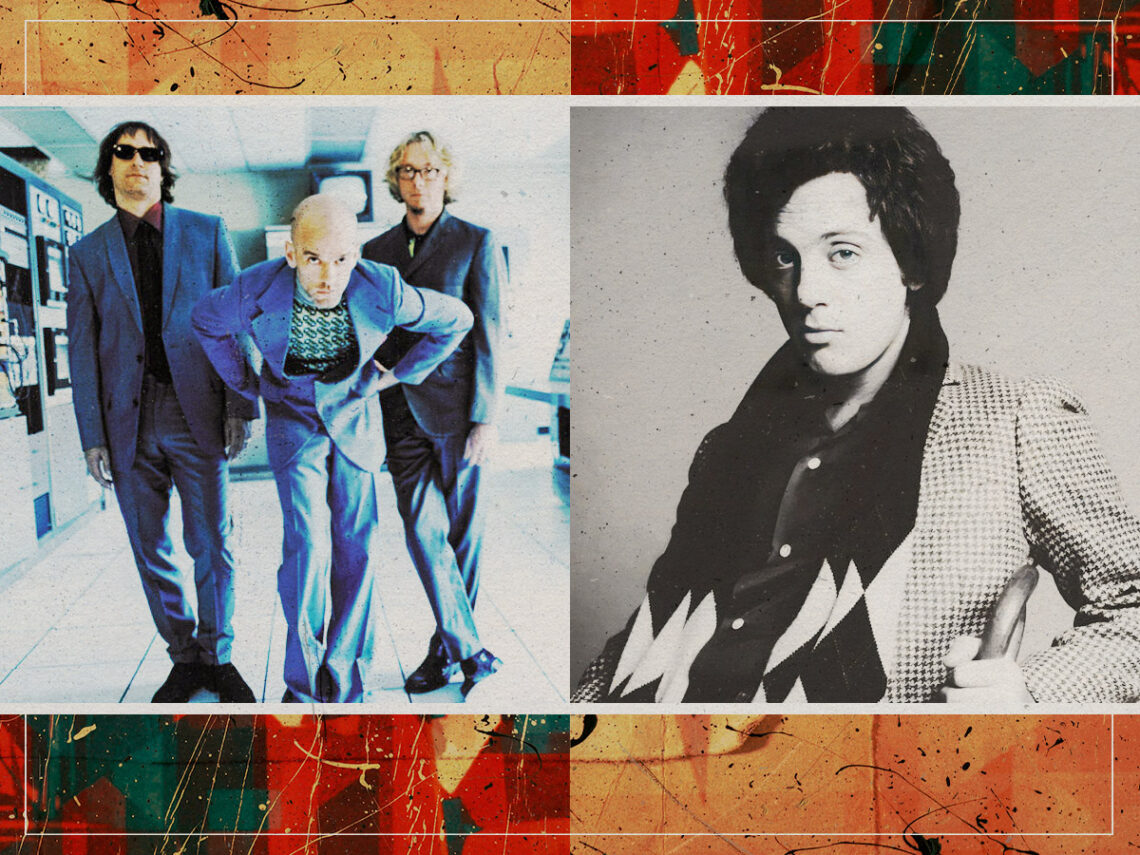
R.E.M. vs Billy Joel: Comparing upbeat dreams of the apocalypse

The end is nigh. Maybe. If you’ve been paying attention, the end has been nigh for over 100 years. However, in the grand scheme of music, 100 years isn’t very long at all. The ongoing loom of the apocalypse has been an inspiration for music throughout this period, and as the four horsemen continue to saddle up, listeners ponder over upcoming destruction with a song in their hearts.
The approach to making music that signifies destruction is interesting, as the composer’s mind can make a song change from being resentful about dying to happy about living. Take, for instance, ‘Nuclear War’ by Sun Ra, one of the most chaotic and looming instances of the end of the world ever committed to sound. This takes the fear that encroaches upon everyone at the prospect of nuclear destruction and perfectly puts it to music.
Contrast that with a track like Prince’s ‘1999’, and you have a song that warns of upcoming destruction but also tells the listener not to worry about it. While Prince thought the world would end at the turn of the millennia, he also knew that he could do nothing about it. As such, rather than dwell on death in 2000, he instead opted to party like it was ‘1999’.
Two of the most famous songs about the apocalypse take a similar approach to Prince as opposed to Sun Ra. ‘It’s The End of the World As We Know It’ and ‘We Didn’t Start the Fire’ are two of the most popular and recognisable songs about the apocalypse, linked both in their themes and the joyful way they’re presented. It almost feels like rebellion, taking a stand against the end of the world by acknowledging it so gleefully.
The two songs have a lot in common but also details that set them apart. They both overload the listener with information, which almost feels as though it contributes to the upbeat and fun nature of the instrumentation. The bands say, “Here is everything that has led to the end of the world; there was nothing we could do about it, so don’t worry.”

That being said, the lyrics which the artists use are entirely separate from one another, both in their reason for being written and the thought process behind the writer. When played side by side, the listener’s reaction may be quite similar; however, when you dissect the lyrics, the feelings invoked vary massively.
Released in 1987, R.E.M.’s hit song ‘It’s the End of the World As We Know It (And I Feel Fine)’ is one of their biggest. With a beaming dive headfirst into the end of days, the band managed to make a track that has us acknowledge a shared fear gloriously. The most notable part of the song is the catchy chorus, which proclaims repeatedly, “It’s the end of the world as we know it.” However, the lyrics in the verse give this song a definitive tone in that nothing connects them.
When asked about the lyrics, Michael Stipe said, “The words come from everywhere. I’m extremely aware of everything around me, whether I am in a sleeping state, awake, dream-state or just in a day-to-day life.”
He provided an example, “There’s a part in ‘It’s The End Of The World As We Know It’ that came from a dream where I was at Lester Bangs birthday party and I was the only person there whose initials weren’t L.B. So there was Lenny Bruce, Leonid Brezhnev, Leonard Bernstein…sSo that ended up in the song along with a lot of stuff I’d seen when I was flipping TV channels.” He concluded by saying the lyrics were a “collection of streams of consciousness”.
This differs from Billy Joel’s offering, who writes with serious intent on his 1989 track ‘We Didn’t Start The Fire’. The lyrics here, just as jam-packed as R.E.M.’s outing, talk about specific moments in time that Billy Joel believed were passed to his generation by the last. This inheritance of doom formed the foundation for the entire track. “I started with Harry Truman because in 1949, the year I was born, Harry Truman was president,” said Joel, “From there, it kind of wrote itself”.
This distinction between the lyrics, as one song is born from randomness and the other from problems inherited by a generation that didn’t ask for them, means that two contrasting attitudes come to the same conclusion. R.E.M. says, “There was nothing anybody could do,” while Billy Joel says, “Someone could have done something, but they didn’t.”
Either way, the result is the same, as both songs shrug off the apocalypse as inevitable and welcome it with a song as upbeat and fun as it is hopeless.
