


‘Union County’ review: a grim, authentic portrayal of addiction

The Sundance Film Festival is an event that spotlights important issues, but it also offers established stars a chance to give more grounded performances. Union County is the rare film that does both.
The entertainment industry has a mixed track record when it comes to representing addiction issues. It’s often that even a well-intentioned film about the recovery process can end up broadcasting unhelpful messages, and it’s hard not to depict such critical topics without romanticising them in some way. While theoretically it might be more helpful to make a documentary, in which there is no pretence of manufactured drama, acquiring the access and audience needed to make a successful work of non-fiction can be an even greater challenge.
Union County is the rare film that is fictional, but is deeply rooted in reality. While not directly based on a true story, the film was made with the cooperation of a real drug court in Ohio, which was consulted for accuracy. Many of the members of the program appeared in the film as actors; Union County isn’t a true story, but it mirrors the experiences of many addicts who struggled to find support through the state-mandated recovery programs.
To place a more recognisable face within a cast of non-actors could have been jarring, but Union County found a star willing to accept those challenges in Will Poulter. While Poulter has always been a committed actor, his best work has been in either small roles (The Revenant, Warfare) or in films that were criminally underseen (On Swift Horses, Detroit). Union County is the first film to truly take advantage of his capabilities as a star, as Poulter’s ability to disappear within the character renders Union County even more realistic.
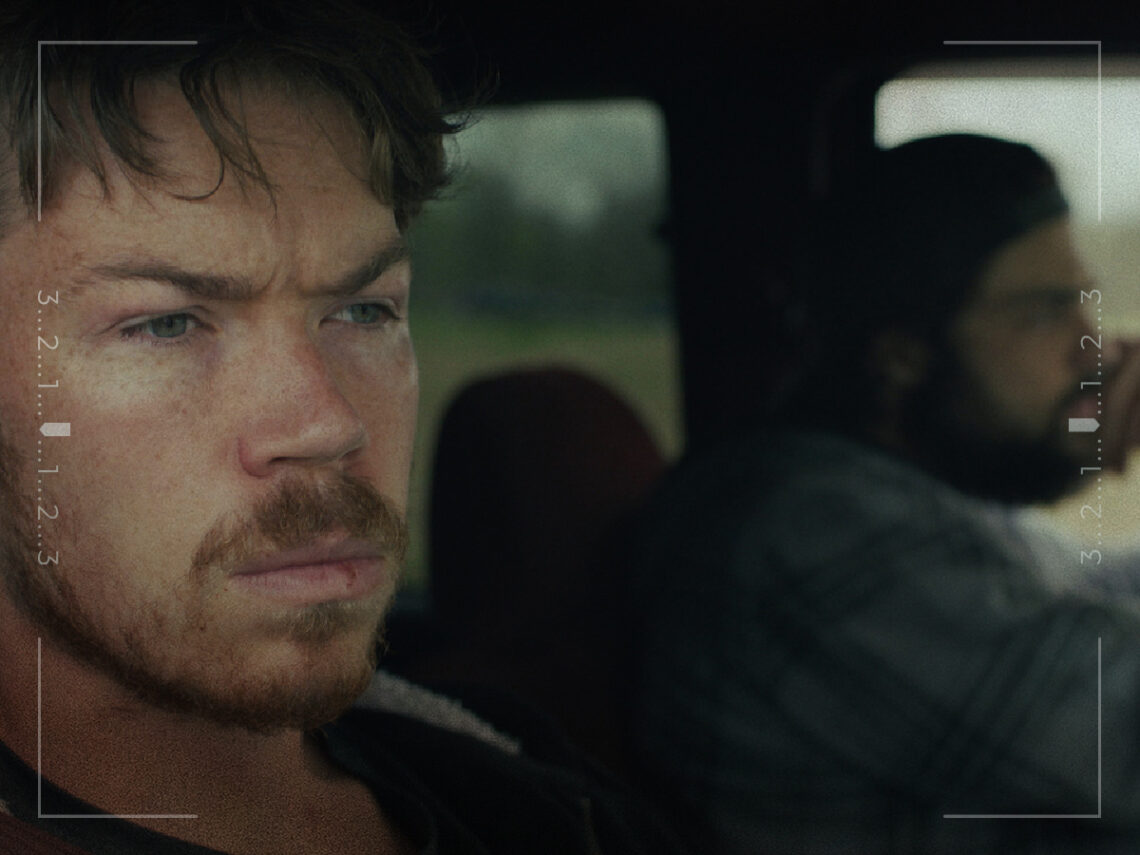
Poulter stars as Cody Parsons, a recovering drug addict who has begun attending a program that will give him a chance to start anew. Cody is homeless and unemployed, but he’s offered both a place at the men’s shelter and a job at a local lumber mill if he can stay clean and pass the weekly urine tests. Also attending the sessions is his foster brother, Jack (Noah Centineo), who has been in the program for much longer, even if the effects haven’t materialised yet. While Cody tries to present himself with a professional demeanour and contain his emotions, Jack verges between being effortlessly charismatic and erratically dangerous.
Union County doesn’t claim to be about the entire recovery process, as its sole focus is on the first steps of starting over. It’s within this difficult period where Cody goes through moments of reflection; although he’s been promised that getting sober will eventually start making his life better, it’s hard to see those long term goals when not using is such an immediate challenge. Poulter’s performance is reactive, as Cody is a character who doesn’t trust himself to have the appropriate response to fear or stress. It’s a film that lingers in moments of discomfort, as the pressure is on Cody at every moment to simply not indulge in his worst impulses.
Although Hollywood is often accused of being out of touch with blue-collar America, Union County is committed to showing the community that forms to offer Cody a way out. It’s not only the judges, counsellors, and fellow attendees in the program that extend their support, but people like Anna (Elise Kibler), a young woman who offers him love unconditionally. The slow pacing and lack of an omnipresent score aren’t just a stylistic choice on the part of writer/director Adam Meeks, but a means of isolating the performances.
Poulter’s work is phenomenal because it isn’t showy; Cody is such an internalised, reflective character that his rare outbursts hit like an emotional ton of bricks. As for Centineo, who co-starred with Poulter in Alex Garland’s Warfare, it’s the best acting that he’s ever done; Union County doesn’t need expositional monologues to explain what the history between the foster brothers are, and it’s particularly unnerving to see how Jack is inadvertently pulling Cody in the wrong direction.
The conclusion of Union County, while blunt, is the only way the story could end whilst being self-contained; it’s not a particularly easy watch, but not one that is short on hope, either. While sales have been slow with this year’s Sundance lineup, Union County is a film that has the potential to make a real impact.
