


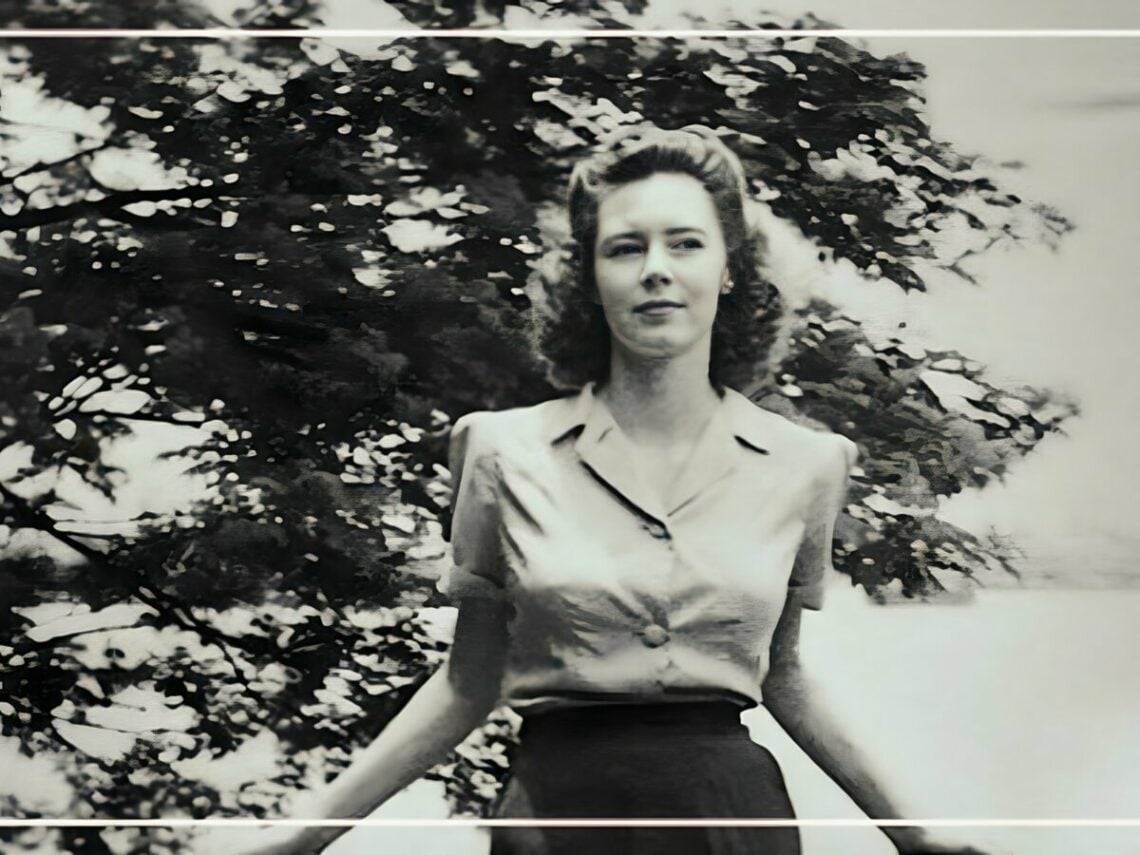
Uncovering the music of Molly Drake, the mother of Nick Drake

English musician Nick Drake was a troubled soul, falling into a profoundly isolating depression in his final years, leading him to spend most of his time alone. He often withdrew from communicating with others; rather, he used music as a medium to express himself. Over the course of his short career, Drake released three albums, including his most celebrated record, Pink Moon. The folk tunes, often dealing with themes of sadness, loss, nature and mortality, highlight Drake’s intensely introspective and meditative personality, seemingly spending more time looking inwards than enjoying his life.
Unfortunately, Drake’s music never received the attention it deserved in his lifetime, only gaining popularity decades after his death in 1974. Due to Drake’s lack of interviews, little was known of the musician for a long time, with fans desperate to know more about his life and main musical inspirations. In 2007, a compilation album titled Family Tree was released, shedding greater insight into Drake’s musical upbringing. It contained two songs by Molly Drake, his mother. Fans soon realised how intrinsic Molly’s music was to the formation of Nick’s, regardless of whether he would’ve admitted to this or not.
A few years later, in 2013, a collection of Molly’s work was released on CD, comprised mainly of reel-to-reel tracks recorded at home in the 1950s with the help of her husband, Rodney. Molly was a passionate writer of poetry, yet she was never concerned with sharing her work with the public. Her creative endeavours were a private practice, an outlet, and nothing more, rarely singing her compositions for others. However, the recordings, released with the approval of her daughter, actor Gabrielle, reveal a woman full of complex meditations on life, happiness and memory, illuminated by rich natural imagery.
Drake was undoubtedly influenced by his mother’s way with words, with his producer Joe Boyd even suggesting that her music is “the missing link in the Nick Drake story”. Her soft poetic piano ballads deserve to be heard, especially by fans of her son. Her words are simple yet weighty, exploring universal themes with such grace and refinement that they become indelible upon listening. Yet, Molly once wrote in her notebook: “To me a poem is not a forever thing, nor the statement of long held views, but the product of a moment so suddenly and hurtingly felt that it has to burst out into words.”
Although each song might encapsulate a fleeting moment, desperately in need of being immortalised, Molly’s songs all share common themes – ones which clearly inspired her son. Her preoccupation with nature, grounding her in her surroundings and evoking a sense of greater connection, is something we see in Nick’s work. From her metaphorical comparisons between birds and happiness to her evocative descriptions of pastoral settings, Molly’s words are delightful to both read and hear.
Molly harnessed a healthy blend of optimism and uncertainty within her work, giving it an added layer of relatability. In one of her finest compositions, ‘I Remember’, Molly explores a one-sided relationship, singing, “when I had thought that we were ‘we’/ But we were ‘you and me.'” Whereas she appreciates memory here, “and now we can be grateful for the gift of memory/ For I remember having fun,” on other songs such as ‘Do You Ever Remember?’, she seems much more distrusting, “so I won’t try to remember/ For that way leads to regret.”
After hearing ‘Poor Boy’ from her son’s album Bryter Layter, Molly even penned a song in response entitled ‘Poor Mum’, which sees her address the themes carved out by Nick. In a later Guardian article, Gabrielle revealed: “I don’t think Nick even knew she wrote that song. But, yes, she’s saying: ‘You’ve got those emotions. Well, I got ’em too actually. We’re not just sitting here in the background.'”
Molly was devastated when her only son passed away, whom she had passionately encouraged to pursue his dreams. She was one of Nick’s biggest supporters, and her hopeful nature is best reflected in her song ‘Dream Your Dreams’. She sings: “Dream your dreams if it’s the last thing you do/ Never mind if they don’t ever come true/ Something grows from them at sight and gleaming/ The seed of magic lies in all our dreaming.”
