


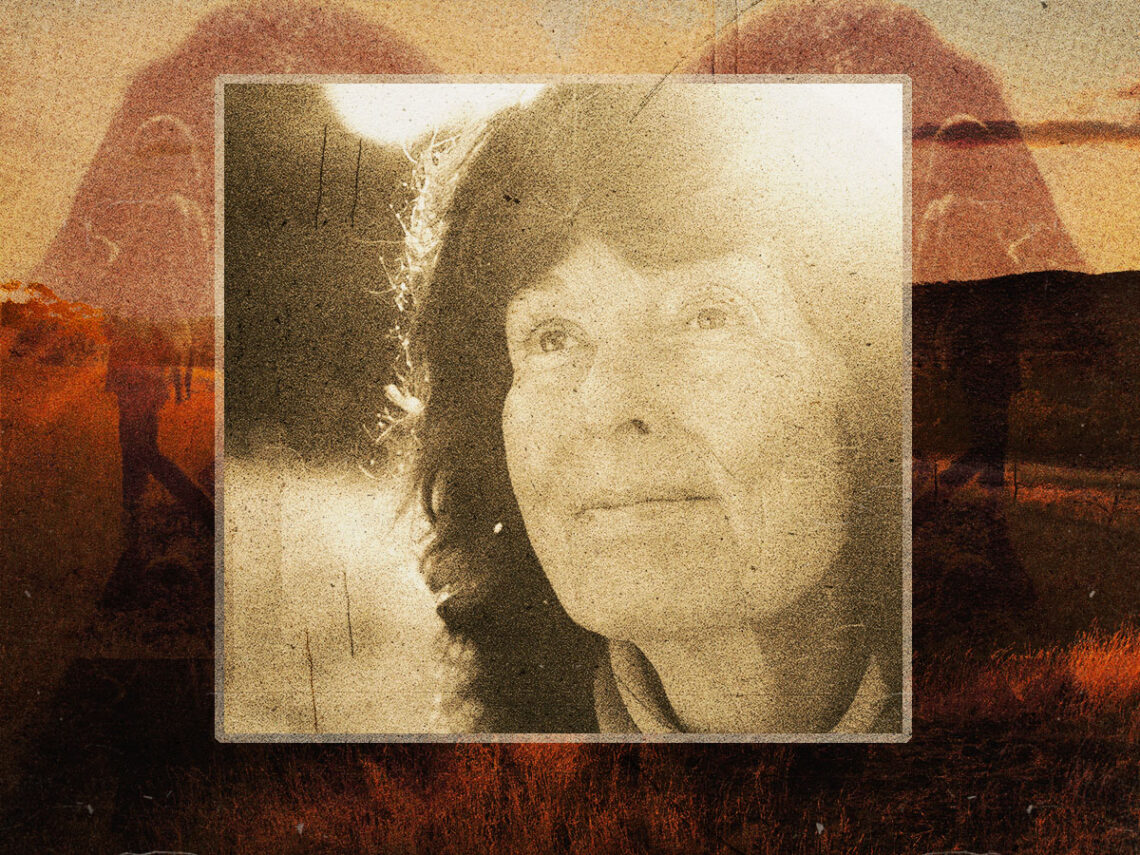
The unconventional music career of rediscovered folk icon Linda Perhacs

Multiple female folk artists emerged in the late 1960s and early ’70s before quickly fading into obscurity, their music going largely unknown for decades until the age of the internet. Failed by the music industry and deemed uncommercial, artists such as Connie Converse and Vashti Bunyan struggled to find an audience for their delicate, introspective songs, only be become future cult favourites.
Another member of this club is Linda Perhacs, who abandoned her music career shortly after releasing her debut album, Parallelograms, in 1970. However, it wasn’t until the late 1990s that enthusiastic record collectors stumbled upon the album, leading to its reissue on CD and vinyl. Soon enough, her music was championed by artists ranging from Julia Holter to Daft Punk. In 2014, when in her 70s, Perhacs returned to the music industry again, releasing her second album, The Soul of All Natural Things, proving that it is never too late to pursue your interests.
Growing up, Perhacs was obsessed with performing songs, revealing that when she was five, Perhacs “spontaneously started to create pieces of music that, in retrospect, were pretty complex and pretty sophisticated. It just kind of came out”. However, she embarked on a dental career, knowing it would bring financial security, relocating to Topanga Canyon with her husband. Immersing themselves in the natural world, Perhacs began to write music informed by the landscapes around her. “I went deep into nature,” she explained, adding: “I definitely wasn’t interacting with huge rock concerts at that time, and I’m sorry for it because I’m sure they were wonderful, but I just needed quiet”.
However, Perhacs found herself in luck when one of her dental clients, the composer Leonard Rosenman, asked her about her interests, sensing that “there was more going on in my life” than just dentistry. After explaining her love for writing songs, he asked to hear them. “I gave him a little homemade tape and he called me the very next morning, and said, ‘How soon can you get here? Those are beautiful.'”
Soon enough, the young singer had secured a deal to record an album with Universal Studios, “It was like a miracle now that I think about it.” Perhacs felt a spiritual connection to making music, believing it connected her with the universe. She explained: “It was like reconnecting with the me that was really me in other forms of life. I’m very convinced now that this is not my only physical life, I’m sure that I’ve had other lives, because music exploded too fast and it exploded in too definitive a way, and it was just too well done”.
The resulting album, Parallelograms, is absolutely stunning, blending gentle folk arrangements with psychedelic experimentation. The title track is a haunting, kaleidoscopic masterpiece, drawing the listener in with its layered vocals and forays into avant-garde exploration. Elsewhere, Perhacs lays down the quietly devastating ‘Hey, Who Really Cares?’, in which she sings hopeless lines such as “I need someone to talk to/ And no one else will spare me the time”. On ‘Chimacum Rain’, Perhacs addresses her need to leave her marriage: “The song is about the dilemma between your love for someone and your realisation that there must be a parting,” she explained.
Not only is Perhacs’ voice effortlessly beautiful, but her descriptions of nature, loneliness and the complexities of love and life are also extraordinary. Whether she’s channelling her inner country star on the silky smooth ‘Paper Mountain Man’ or taking us on a hallucinatory, sun-drenched journey on ‘Moons and Cattails’, Perhacs never falters. It’s hard to believe that Parallelograms was received without the care it deserved, with its vinyl release pressed so poorly that Perhacs “threw my copy of my own record away”.
Luckily, the record was rediscovered, and Perhacs began making music again over 40 years later, releasing The Soul of All Natural Things with the help of producers Chris Price and Fernando Perdomo. She has also collaborated with Devendra Banhart multiple times, a prominent champion of the similarly rediscovered Vashti Bunyan. In 2017, Perhacs shared her third album, I’m A Harmony, aided by Perdomo and Wilco’s Pat Sansone.
Holter summarises Perhacs’ brilliance best, stating: “Linda is a fierce and disciplined, yet open-minded, visionary. She’s probably a musical virtuoso, with an incredible vocal range and a discerning ear, and she likes to try out different sets of harmonies and wild timbres. But she always has a story to tell and takes the message as seriously as the music”.
