


Six Definitive Songs: The ultimate beginner’s guide to Daft Punk

Daft Punk, the iconic French electronic music duo, have announced the decision to call it quits after 28 years together. The band, famed for some of the most iconic pop songs of all time, were formed in Paris in 1993 by Guy-Manuel de Homem-Christo and Thomas Bangalter.
Announcing their shock decision to split, Daft Punk revealed the news as part of an eight-minute video titled ‘Epilogue’. With speculation about their future up in the air, longtime publicist Kathryn Frazier confirmed the news to Pitchfork. However, the reasoning for their decision to call an end to Daft Punk has not yet been confirmed.
Thriving at the top of the music industry since their emergence in the early-1990s, Daft Punk built the foundations of their music as part of the bustling French house movement and didn’t look back. Together, the duo managed to successfully blend elements of funk, disco and techno with core trends within the rock and indie music sector.
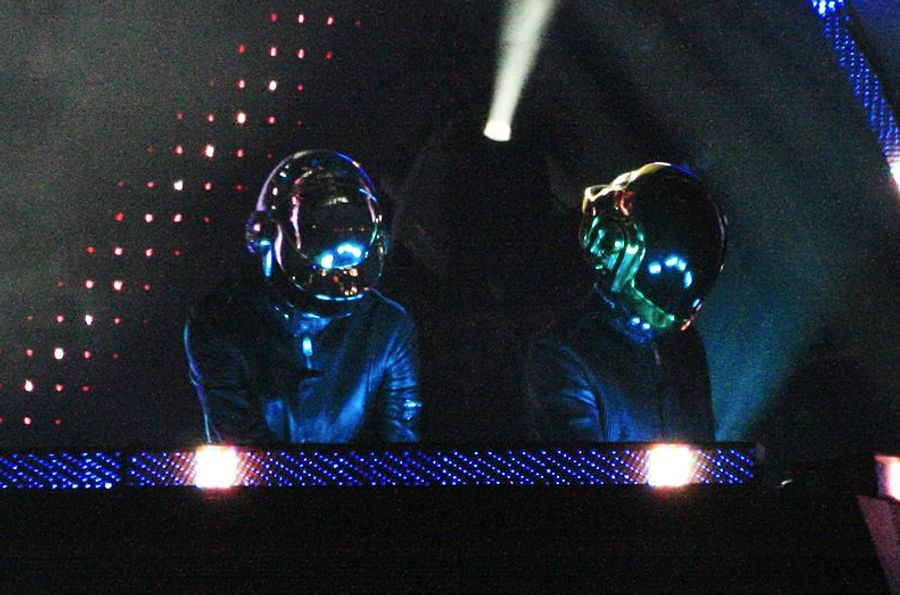
As if their experimental musical output wasn’t enough, Daft Punk managed to build an aura of mysticism around their band, donning ornate helmets and gloves with stylish ease. Taking on the persona of robots in the public since 1999, Daft Punk will be remembered as one of the all-time artistic greats both for their music and their live stage presence. In 2013, as part of an interview with Rolling Stone, the duo clarified that the reasoning of the masks was to explore the “line between fiction and reality” and create “fictional personas that exist in real life.”
This feature takes a look at how these two Parisians became the most-talked-about artists on the planet and became the biggest enigma in modern music. What a wild ride it has been over the last 28-years since their formation and, here, we are celebrating six of their most career-defining tracks that helped build this legendary legacy they leave. Let’s dive in!
Daft Punk’s six definitive songs:
‘Da Funk’
‘Da Funk’ isn’t your typical debut single, but then again, Daft Punk were never your typical group. The 1995 track is an eight-minute-long instrumental that is euphoric from the start to the very end. Although the group had been together for two years before the track, ‘Da Funk’ got the ball rolling with their career. Word soon spread in the dance scene about the song and gradually elevated their status from obscure Parisian DJs to one of the hottest dance acts on the planet.
In an interview with Swedish magazine Pop #23, Thomas Bangalter revealed that ‘Da Funk’ was influenced by the American G-funk scene. “It was around the time Warren G’s ‘Regulate’ was released and we wanted to make some sort of gangsta rap and tried to murk our sounds as much as possible,” he commented. “However, no one has ever compared it to hip hop. We’ve heard that the drums sound like Queen and The Clash, the melody is reminiscent of Giorgio Moroder, and the synthesisers sound like electro and thousand of other comparisons. No one agrees with us that it sounds like hip hop.”
‘Around The World’
Daft Punk’s had a year to remember in 1997 saw them become phenomenon’s, thanks largely to the success of their first major hit, the infectious ‘Around The World’. This track was the French duo’s second single from their debut studio effort, Homework, and quickly became an international club hit, reaching number one on the dance charts in Canada, the United Kingdom, and the United States.
The beauty in ‘Around The World’ derives largely from the sheer simplicity of the lyrics, which is just the one line, ‘Around The World’, which features the album version of the track 144 times and 80 times in the condensed radio edit. The song oozes futurism, and immediately Daft Punk soon were enigmas, with ‘Around The World’ being confirmation that they were here to stay.
‘One More Time’
‘One More Time’ was released in November 2000 and saw Daft Punk create one of the decade’s finest songs within the first year. The song would define the noughties thanks to achieving that rare balance of managing to be both a hit with critics and a chart-topping anthem that saw Daft Punk become the messiahs of modern music. Although, some at the time criticised the auto-tuned vocal used in the track.
Still, the vocal technique has dominated the 20-years since ‘One More Time’ and their early adoption of this method is a testament to their unshakeable pioneering instincts. “Creation is interaction,” Bangalter said about the criticism. “The healthy thing is that people either loved it or hated it. At least people were not neutral. The worst thing when you make art is for people to not even be moved by it. Love and hate are interesting because it’s deep and intense. It’s one side of our music that people might be sensitive to and others might not.”
‘Harder, Better, Faster, Stronger’
‘Harder, Better, Faster, Stronger’ is perhaps the most iconic song on the list and sums up Daft Punk’s greatness wrapped up within three and a half minutes. The track is based around a sampled keyboard riff sampled from Edwin Birdsong’s obscure 1979 song ‘Cola Bottle Baby’, which they completely reimagined into this magical new beast. In 2016, Birdsong said: “I recorded [Cola Bottle Baby] 30 years ago, and here come some guys from France. I asked them, ‘Where did you find the music?’ And they said, ‘I was going through bins, and it popped out.’ I’m blessed, and I continue to be blessed by opening my arms to God every day.”
Just like how Daft Punk reimagined Birdsong’s track for ‘Harder, Better, Faster, Stronger’, Kanye West would do the same with their version for his 2007 track, ‘Stronger’. West even included Daft Punk’s robotic characters in the video for his song and had the duo perform with him at the 2008 Grammy Awards.
‘Technologic’
‘Technologic’ was Daft Punk’s second single from their third album, 2005’s Human After All, and the record saw the band fall out of favour for the first time in their decade long career. Everything they had touched previously was a dancefloor filler and, more importantly, saw Daft Punk setting the tone for the culture.
The album was remarkably scorned when it was released, and it wasn’t until Daft Punk brought songs like ‘Technologic’ alive on their 2007 tour that people realised that they were utterly magnificent. The duo also refused to do any press in the build-up to the release, which explains some of the derisory reviews that the record received from almost across the board. Over the years, opinion has thankfully changed on the album, and it is viewed as a masterpiece – although still not on the same pedestal as their faultless first two records.
‘Get Lucky’
In 2013, after eight-years away and the public eating their words that they uttered about Human After All, everybody was crying out for new music from the Parisian dance heroes who answered people’s prayers in the most emphatic way possible with ‘Get Lucky’.
The track was an immovable fixture from the top of the chart across the summer of 2013 and landed Daft Punk the biggest hit of their career. The song broke Spotify streaming records on the day of its release by achieving the highest number of streams on the streaming giant within 24 hours in both the UK and US.
Daft Punk didn’t even see the song becoming a hit and thought that ‘Lose Yourself To Dance’ would be the stand-out hit from the record, with ‘Get Lucky’ building the hype for that release. However, the public was so elated to hear that Daft Punk had returned that the track immediately became unavoidable and was everywhere you looked. ‘Get Lucky’ is seen as one of the defining pop songs of the modern era and is reminiscent of hits from pop music’s golden years.
