


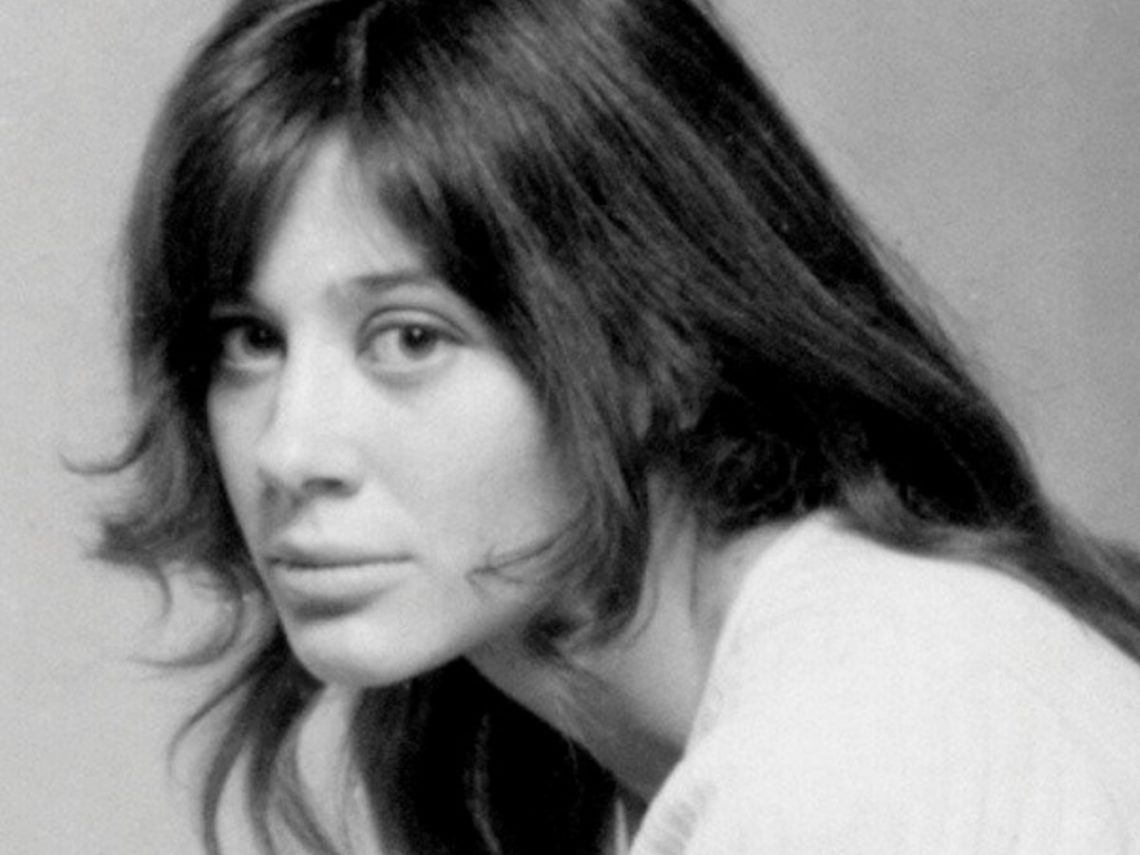
How Vashti Bunyan found success 30 years after abandoning her music career

Born in 1945, Vashti Bunyan had a comfortable yet sheltered upbringing, living in London. After a short stint at the Ruskin School of Drawing and Fine Art, Bunyan was expelled for focusing too much of her attention towards music. At 19, she was sent to New York to help look after her sister’s children, where she discovered folk music, namely a copy of The Freewheelin’ Bob Dylan. “If in 1964 I had been brave and free, […] I might have sought out the musicians playing there at the time,” Bunyan wrote in her memoir, Wayward.
Nevertheless, Bunyan returned to London bursting with “ambition to become a wandering troubadour with my guitar over my back”. After wandering the streets of Soho looking for producers to hear her sing, the budding musician was frequently told she didn’t sound commercial enough. Eventually, she was spotted by an agent, Monte Mackey, who heard Bunyan singing at a party hosted by her old neighbours. She put Bunyan in contact with Andrew Loog Oldham, the 21-year-old manager of The Rolling Stones and ex-manager of Marianne Faithfull.
Although Oldham took an interest in Bunyan’s uniquely mellow and introspective singing voice, he attempted to mould her into the new Faithfull. He gave her a Mick Jagger and Keith Richards-penned track, ‘Some Things Just Stick In Your Mind’, to perform as her first single, relegating Bunyan’s ‘I Want To Be Alone’ to the B-side. “I was not happy,” she recalled. The single flopped, and Bunyan became disillusioned with music, not wanting to become a manufactured musician unable to play her own compositions. She decided to ditch music and start a new life with her then-boyfriend Robert Lewis.
Popular folk artist Donovan, a mutual friend, announced that he was setting up a commune, and Bunyan and Lewis were set on joining him. The pair sold their only valuable possession, an old grandfather clock, which earned them enough to buy a wagon and a black horse named Bess. Now the couple could stop living in fields and take to the road, determined to live away from modernity with minimal possessions. When Bunyan started her journey, she walked barefoot through the streets of swinging sixties-era London wearing a vintage nightgown with unbrushed hair. She asserts that her decision “was not a statement of any kind”. Bunyan wanted to escape her current life: “I wanted to get back that feeling of childlike wonder, to remember what it was like to find the world extraordinary, about there being so much to learn.”
Throughout Bunyan’s journey, she gained new pets, friends, and eventually children. Once the couple arrived at Donovan’s Skye commune, they realised that living there would be more complicated than they anticipated. Taking a break from her trip to visit home, Bunyan met Joe Boyd, best known for recording with Pink Floyd, Nick Drake and Fairport Convention. He promised to record an album with her once her travels were complete, and by 1970, her debut album, Just Another Diamond Day, was released. Most of the songs had been written during her travels, referring to them as “the dreaming in verges of grimy roads”.

Bunyan was assisted by musicians such as Robert Kirby, John James, Dave Swarbrick and Simon Nichol from Fairport Convention and Robin Williamson of the Incredible String Band. Unfortunately, the album went unnoticed and faded into obscurity. As a new mother, Bunyan could not heavily promote the record, and it only shifted a few hundred copies. Disillusioned with music once again, Bunyan gave up her dreams of being a successful musician and focused on raising children and living far away from city life. “My voice made me think of sorrow and confusion,” she said. “I didn’t even sing to my children.”
However, in the late 1990s, Bunyan, equipped with an internet connection, was made aware of a growing interest in her debut album. From here, the musician was put into contact with people interested in getting her music heard, and Just Another Diamond Day received a remaster. The album was reissued in 2000, exposing her work to artists such as Devendra Banhart, who has since become a close friend and collaborator of Bunyan’s.
In 2005, Bunyan felt ready to create music again, recording Lookaftering with the assistance of Max Richter. Over the decade, Bunyan’s popularity grew, and she finally achieved the success she had desired decades before. After applying to a local college to enrol in a music software course, she was told she was “too old” to join, so she taught herself. Her third album, Heartleap, was released in 2014 and was “written, recorded, edited, produced, arranged, and most played” by Bunyan.
Since then, Bunyan has released a beautiful memoir detailing her life on the road and the experience of her music being rediscovered. Bunyan’s inspiring story is one of courage and strength, demonstrating that living authentically is always the best decision you can make. Bunyan has inspired plenty of twenty-first-century artists since the rerelease of Just Another Diamond Day, a sublime record that still deserves to be heard by more listeners.
