


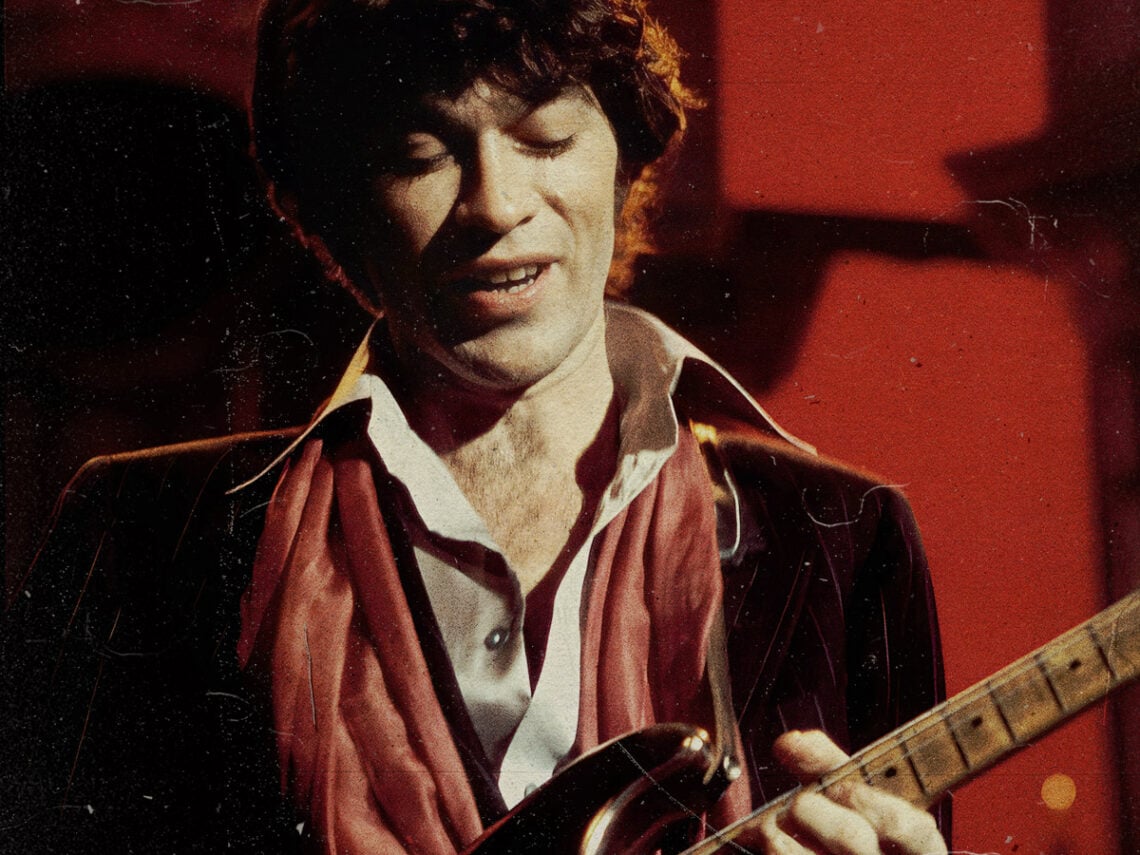
The two guitarists Robbie Robertson tried to emulate

One of the biggest roles of any guitar player is serving the song you’re playing. Even though it might be fun to use any track as an excuse to shred anything, as long as it’s within the key, the best players know when to pick their battles. While Robbie Robertson may have been able to make fans weep on records by The Band, he was indebted to two guitar players for giving him his musical education.
Before he had even spent time making albums like Music From Big Pink, though, Robertson had already been a seasoned veteran of the rock and roll scene. Initially operating under the name The Hawks, The Band helped Bob Dylan realise his folk-rock visions, turning him into one of the greatest forces in the industry.
Even though Mike Bloomfield would add his blistering blues licks to albums like Highway 61 Revisited, it would be Robertson who helped bring everything to life on the live stage, even spending time with Dylan crafting his masterpieces on the double album The Basement Tapes. While Robertson was keen to show some skill now and again, part of the beauty of his playing comes from how sparse it is.
Despite being able to hold his own next to a guitarist like Eric Clapton during The Last Waltz, Robertson was more interested in letting his guitar speak whenever he played. Whenever he put a subtle lift in the track with a guitar lick, it was always about what he was trying to say melodically rather than relying on flash.
When talking about his approach to the instrument, Robertson would credit two guitar players with helping him find that sound, telling Rolling Stone, “I wanted to go in the opposite direction [of the blues players], to do things that were so tasteful and discreet and subtle, like Curtis Mayfield and Steve Cropper … where it was all about the song.”
For all of the great accolades people like Clapton and Bloomfield may have recieved, Mayfield may have been one of the foundational pieces of melodic guitar playing. Throughout his solo career, Mayfield would use every single lead break as an excuse to play something tasteful, turning the grim tale in a song like ‘Freddie’s Dead’ into an angelic cry for help.
The same could be said for Steve Cropper, who had remained a fixture of the Southern music scene since the 1960s. Working with everyone from Booker T. and the MGs to Otis Redding, it’s almost impossible to spot what Cropper is doing to the track until someone removes him, providing just the right guitar lick or the occasional rhythmic accent to make the track come alive.
Robertson would take both of those lessons to heart when working on The Band’s rootsy material. Since most of their output focused on songs with a folk tinge, Robertson’s guitar playing may as well be another voice alongside the singers, creating musical moments that made for hooks all by themselves.
Even though many guitarists might pride themselves on making songs with rapid-fire guitar solos, Robertson learned a long time ago that he needed to do more than just play fast. Music was always about having an artistic conversation, and when Robertson picked up his guitar to talk, people listened intently.
