

Jamie Cook: The secret weapon of Arctic Monkeys
Read More


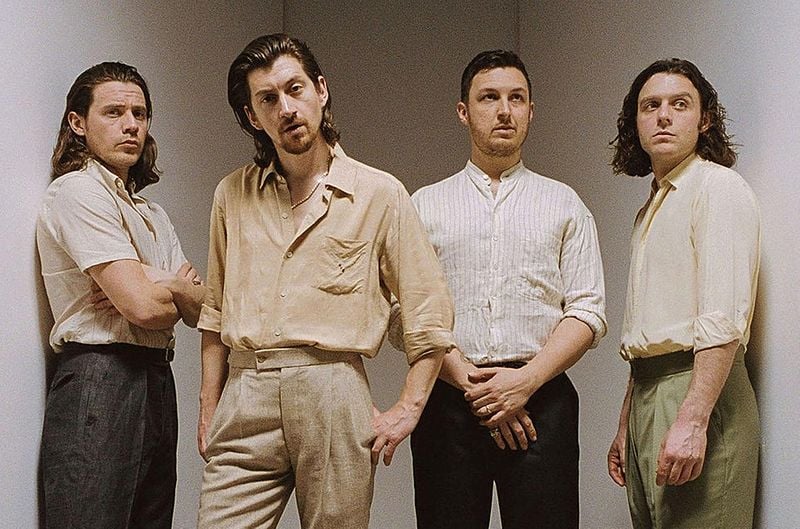
In terms of contemporary rock acts, Arctic Monkeys are one of the most revered, ranking alongside the likes of Tame Impala and The War on Drugs. While being celebrated for their unmistakable sound, the Sheffield band is one of the more consistent on the planet, a contributing factor that has been key to their tremendous success.
Since they first broke through into mainstream consciousness during the mid-2000s, Arctic Monkeys have been key to keeping rock ‘n’ roll alive as the form has grappled with questions of relevance in a changing world and shifting cultural attitudes.
The quartet emerged as part of the indie boom that started with the advent of bands such as The Strokes and The Libertines reacting to the inertia that had covered the landscape of guitar-oriented music at the back end of the nineties, kicking off a new era that was carried by two key things, creativity and unbridled optimism.
Arctic Monkeys were formed in Sheffield, Yorkshire, in 2002, and would quickly rise to become Britain’s hottest artistic property. Their 2006 debut, Whatever People Say I Am, That’s What I’m Not, became the fastest-selling debut album in UK chart history, which gave everyone, even their doubters – who were few – an indication of the kind of heights they would hit over their career.
Following the release of their debut, the band refused to be pigeonholed, and with each new album, they enacted a stylistic change that would keep audiences and critics on their toes whilst managing to infuse their career with a vitality that many of their stadium-filling peers could only dream of having.
Whether it be the strung-out desert rock of 2009’s Humbug, the swaggering hard rock of AM, or the sophisticated lounge pop of 2018’s Tranquility Base Hotel & Casino, the band has touched on many different musical modes over their career, and it is a trend that shows no sign of abating, given that they have promised to do something completely new on their long-awaited follow-up to Tranquility Base.
The band’s main creative force is frontman Alex Turner, and without him, it is certain that we would not be discussing the importance of Arctic Monkeys today, indicating the measure of his genius. Rightly lauded as one of the greatest songwriters of his generation and all time, Turner has given fans many stellar moments over the years, including two surreal references to new wave heroes Duran Duran.
Perceptive fans of the band have pointed out that their hit single ‘I Bet You Look Good On The Dancefloor’ contains a direct reference to Duran Duran’s 1982 track ‘Rio’. In one of Turner’s classic plays on words, he sings: “Your name isn’t Rio, but I don’t care for sand“.
Although many differences separate the work of Arctic Monkeys and Duran Duran, fans also noticed that Turner seemed to reference the Simon Le Bon-led outfit again in their 2007 single ‘Teddy Picker’. The song contains a lyric that alludes to a line in the chorus of 1982’s ‘Save a Prayer’, as Turner sings: “I don’t want your prayer, save it for the morning after”,
When asked about the references on XFM in 2007 when discussing Favourite Worst Nightmare, the album that ‘Teddy Picker’ features on, Alex Turner claimed that he only knew a few of Duran Duran‘s tracks and that the references must have emerged from his subconscious because of a documentary he’d seen.
He said: “I don’t know. Simon Le Bon must’ve got into my conscience… I don’t even know that many Duran songs… I have seen that documentary, that one in the blue suede case, have you seen that? Well it’s not suede but it’s not plastic, it’s, it’s nice to touch.”
