


Burj Al Babas: Turkey’s deserted ‘Disney castle’ city

When you think of Disney, you instantly think of princesses, Micky Mouse and of course, castles, with the iconic Cinderella Castle a key part of the brand’s identity, so much so that it’s even in their logo.
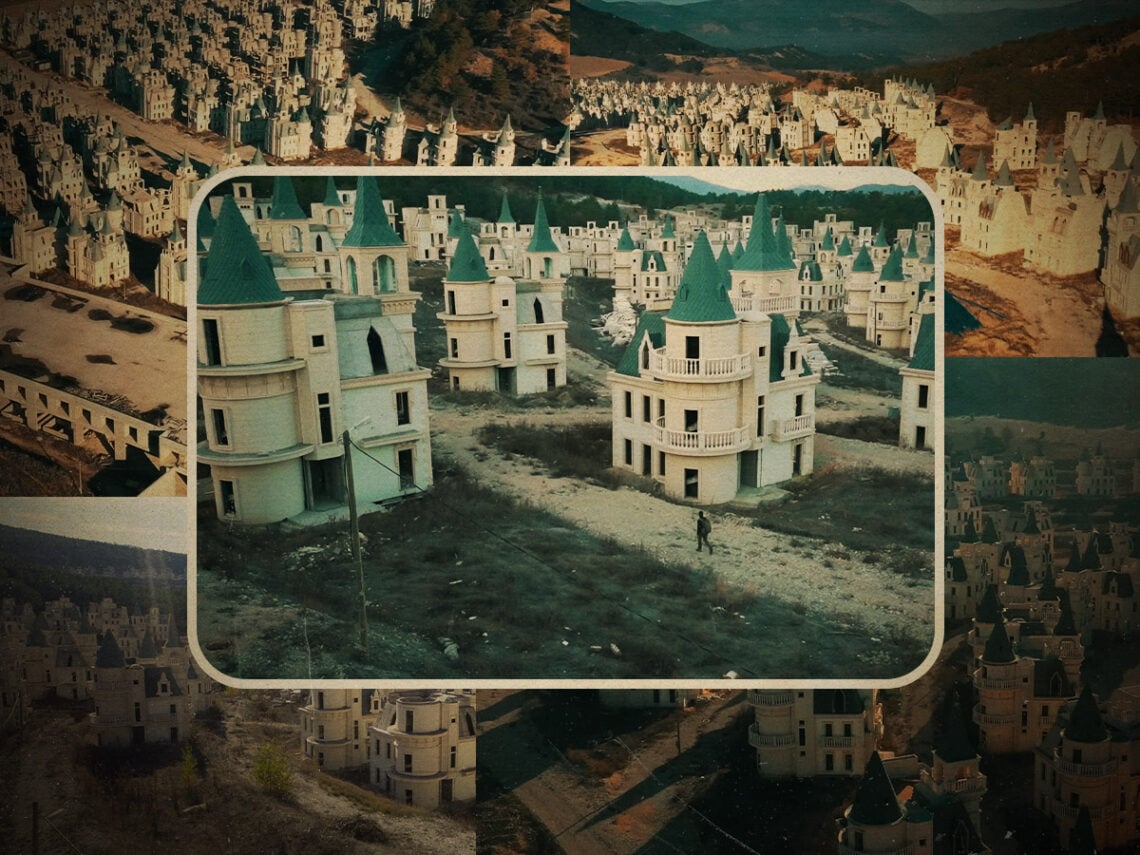
Well, it’s not just children that love the iconic towers, with northwestern Turkey being home to a sprawling valley full of Disney-like castles; however, situated near Mudurnu, roughly around the halfway mark between the capital Istanbul and Ankara, there is one place that doesn’t look like something from a Disney fairytale but more like something you find in a dystopian horror movie. This is the Burj Al Babas, one of the strangest, abandoned developments on the planet, an eerie Disney-style ghost town that’s as unsettling as it is empty.
Back in the early 2010s, Turkish developers, the Sarot Group, conceived the idea for a beautiful, fairytale-like, luxury development aimed primarily at rich Gulf buyers. This $200million project was set to build 732 identical three-story castles that would then be sold for up to $530,000, based on the location. This would be a full resort community and one tailored to the ultra-wealthy from the Middle East, with a shopping centre, cinemas, gyms, Turkish baths and a mosque.
The location was perfect, with the project being built on natural thermal springs, making it the perfect spa town, and the extravagant architecture was meant to ooze luxury, with the design heavily inspired by European chateaux to evoke a real fantasy feel, with turrets and balconies on every property. It looked like a real success story with over half of the units sold quick as a flash, bringing in a large Kuwaiti presence, as well as investors from Qatar, Saudi Arabia and across the Arabian Peninsula.
However, unlike a Disney movie, there was no happy ending with defeat snatched from the jaws of success, as a perfect storm reduced the project to its knees. Falling oil prices damaged the desire for investment opportunities from the Gulf countries, and Turkey’s own economic instability became a major concern for foreign buyers, leading to potential transactions drying up. On top of that, there was backlash, both locally and legally, with allegations of environmental damage, including improper waste disposal and illegal forest clearing, plus the architecture, a selling point for foreign buyers, was hugely at odds with the region’s Ottoman-style buildings, which led to huge criticism.
The warning signs came early when workers were protesting unpaid wages in 2015, and delays began to pile up as various contractors pulled out, citing unpaid bills. The Sarot Group made a mistake in building all at once, rather than in phases, meaning that huge amounts of the buildings were left unfinished, and then, in 2018, the group declared bankruptcy, and the project was effectively dead.
Now we’re left with Burj Al Babas as a ghost town. Hundreds of identical grey castles are spread across the valley, none of which are complete and actually habitable. Combine that with a lack of aftercare, which has seen water damage from snow, as well as unkempt vegetation reclaiming the site, and now Burj Al Babas resembles a post-apocalyptic movie, as if 28 Days Later was set in Disney World.
While the Kuwaiti residents never materialised and the community was never developed, it has become an attraction for urban explorers, YouTubers and photographers, all excited to survey its truly unique and haunting landscape. Over the past five years, there have been a number of false dawns for Burj Al Babas, with rumours of a sale to a US investment group as well as reports of involvement from Kuwait’s emir, but no work or redevelopment has taken place.
With the cost of living skyrocketing across the world, instability in the Middle East, limited demand for identical luxury properties, as well as a huge cost to fix and complete, it appears that the Burj Al Babas is consigned to a slow, gradual destruction. There might not be a Hollywood-style twist in its story, but it has left us with an important lesson about modern housing projects and the potential for overreach, where poor planning and impromptu economic twists can turn even the most popular and expensive projects into something doomed for failure.
