


Hear Me Out: Dubai is the worst tourist destination on Earth

I do not plan to travel to Dubai, and it’s important that I confess that I have never set foot in the United Arab Emirates, for absolutely clarity.
I’ve never looked up at the towering Burj Khalifa from the sweltering hot pavement below or shopped in its humongous air-conditioned malls, I’m yet to drink cocktails next to an infinity pool, and my tongue is yet to taste the touch of a rib-eye wrapped in gold-leaf.
Despite my absence, I feel like I know Dubai well. Not the migrant workers’ rooms, the ones where they’re packed in like sardines, that we’re not allowed to know about, but the shiny, bright Dubai that is sold to us, whether that’s on Instagram or by UAE ownership and its influence in sports teams and cultural sites. Much like I know that walking off a cliff will be unpleasant, without trying it to see, I know that Dubai is the worst tourist destination on the planet.
It’s not dangerous, it doesn’t lack sunshine or have never-ending rain, it’s not an inefficient place, or one without infrastructure, and sadly, that all form part of the problem. Some of the most thrilling, life-affirming places to travel are dangerous, scary, cold, or wet, while Dubai is sterile, new and glitters in the sunlight. Dubai isn’t a place, nor is it even a product, but it represents a state of mind, an obsession with money, opulence, image and status that represents everything that’s vulgar and wrong with 21st-century society.
The world’s great cities are collages: they are layered, overlapping with history, a shared culture, an owned past, both good and bad, and they’ve grown organically, adapting through the years as the world around them shaped their existence. Dubai is like flicking to the final chapter of the book, where you’ve skipped all the story and everything that makes it interesting, standing as a city conceived in a boardroom, all style over substance.
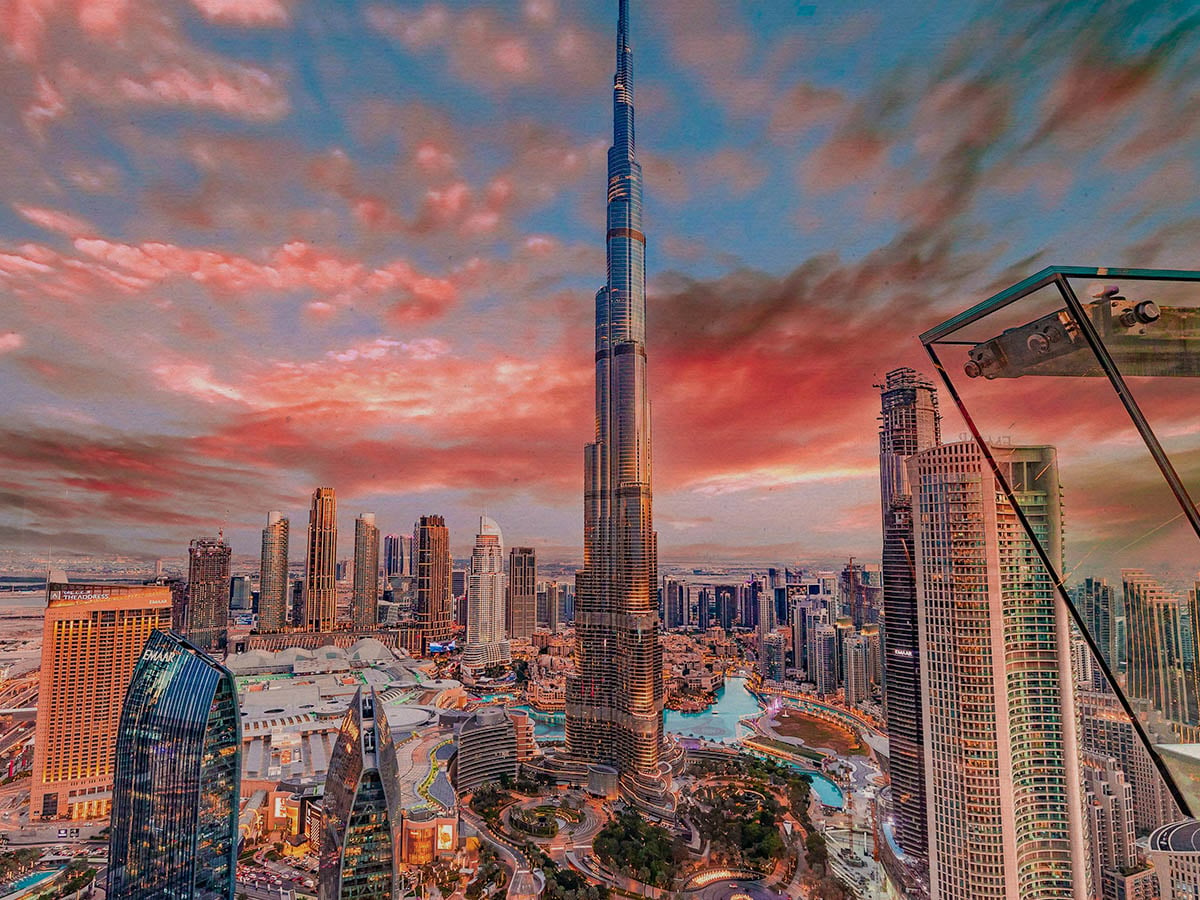
As social media and travel have aligned, we’ve seen a growing fixation on spectacle. People don’t travel to experience something different or to learn about other cultures, but they want to consume, whether that’s the latest viral lunch spot, with food designed to be photographed, not devoured, or visiting the Burj Khalifa, to have a picture in front of the world’s tallest building.
Everything in Dubai exists as a superlative, its value seemingly decided by status and grandiosity: The tallest building on the planet, the world’s biggest mall, the most luxurious hotel, or the world’s largest artificial island, but size isn’t everything, and it’s a city humming with the engines of expensive sports cars, sky-high seven-star hotels, all built, and still running on, the backs of exploited workers from the poorest third world countries.
I can appreciate that most of Europe’s grandest cities were built on money from colonial spoils, and must stress that this isn’t an attack on the Middle East; some of UAE’s nearby neighbours have done a far better job of integrating culture and history, but everything in vapid Dubai comes down to status, from the Lamborghini in the street to the Richard Mille watch on the driver’s wrist.
Its famous buildings aren’t designed for prayer or purpose but to flex and flaunt wealth. Money can buy a stay at the Atlantis, or dinner at Croissot Dubai, but it can’t buy class, and nothing showcases this better than the fact that the Burj Khalifa didn’t have a working sewage system when it opened, with trucks carrying seven tonnes of human excrement from the tower every single day.
The perfect representation of late capitalism, this hellscape in the desert shows the final form of money when it is without context. A city built on expenditure and petro-wealth, an indoor ski slope in a sandbox isn’t a showcase of technology, it’s a defiance of reality, and an insult to anyone concerned about our planet. Dubai is a hegemony that believes climate control is a human right, and treats money with the same self-centred attitude that it treats environmentalism.
Just as every British high street now looks the same, with a bookies, a Greggs and a B&M, Dubai is the wealthy equivalent, a sign that globalisation has won. They can import culture, repackage it and sell it as a premium experience, as heritage villages and dune-riding quadbike packages, but much like the oil that is pumped from the ground, everything here is extracted to increase consumption.
Dubai holds a mirror up to our age, and shows us what happens when riches, marketing and tech combine without meaning. Sadly, it shows our appetite for spectacle and uncovers the truth about how we value image over substance, which is why it’s the worst tourist destination on Earth, but one that we deserve.
