


‘Triangle of Sadness’ Review: Ruben Östlund reads Marx on a luxury cruise

Last year, Adam McKay’s Don’t Look Up became the subject of heated debate since some critics felt that modern satire had become too simple and heavy-handed. Well, Swedish filmmaker Ruben Östlund has decided to contribute to that conversation by crafting one of the most direct critiques of modern superficial activism in recent memory.
The final piece of his anti-capitalist trilogy, Triangle of Sadness, has been in the headlines for a lot of reasons. It attracted worldwide attention by winning the coveted Palme d’Or at this year’s edition of the Cannes Film Festival, but the production was also hit by a significant tragedy since its star Charlbi Dean recently passed away at the age of 32.
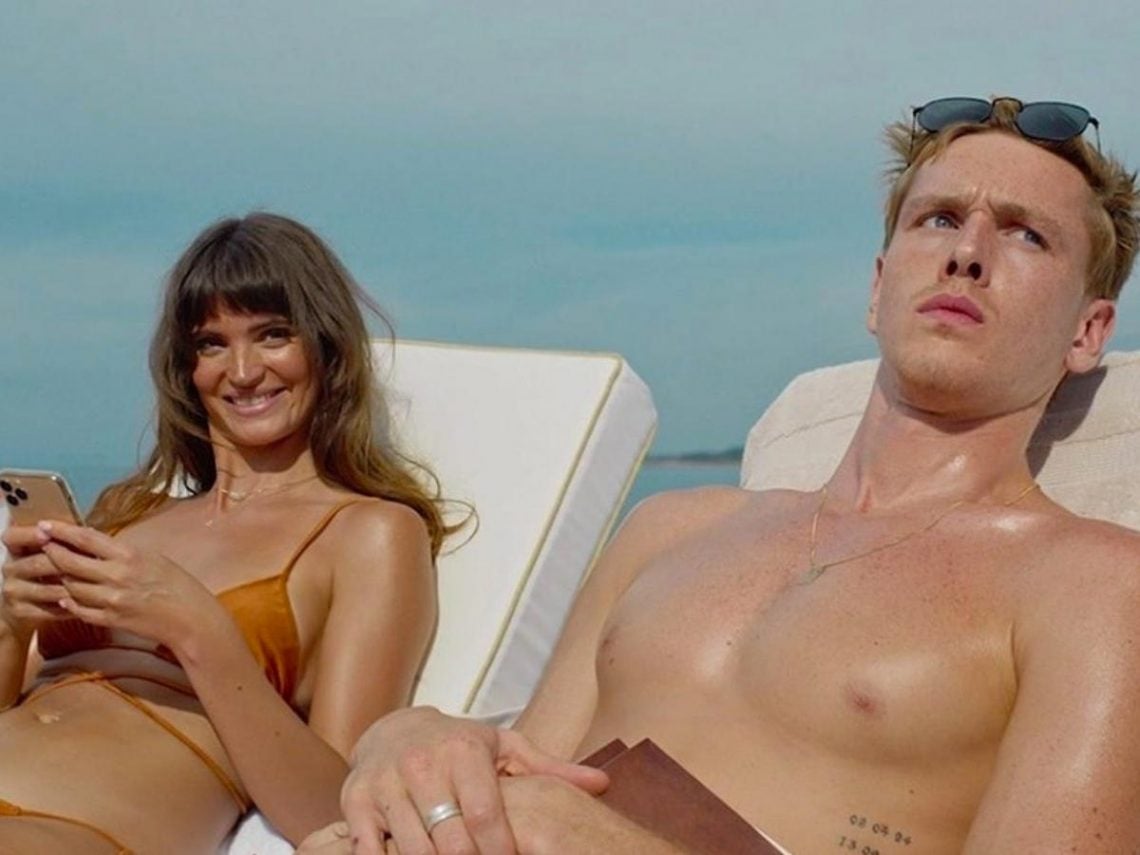
Triangle of Sadness features Dean in what will now be remembered as the definitive performance of her career. She is flawless as Yaya, a social media influencer who is involved in a sham relationship with a male model named Carl (played by Harris Dickinson) in order to get engagement up on their respective Instagram accounts.
Right from the opening scene, Östlund is unapologetic about his all-encompassing attack on the new trend of political activism in the elite world of high fashion. While most modern comedic depictions of these elite societal strata focus on the ignorance of the wealthy, Östlund focuses on something way more sinister – their hypocrisy.
Triangle of Sadness touches upon many subjects, ranging from the vapid rituals of modern dating to the codification of gender roles within a capitalistic framework. However, like in some of Östlund’s other projects, such as The Square, the film’s suggestions of a surreal undercurrent start exploding in the second act.
This middle segment of the three-act narrative is Östlund at his very best – total anarchy at the expense of the bourgeoisie. We are transported to a luxury cruise to which Carl and Yaya have received free “influencer invitations”, a $250 million super-yacht populated by some wealthy businessmen, arms dealers, Silicon Valley loner millionaires and other insufferable “philanthropists”.
Östlund brilliantly uses the spatial politics of the ship to launch a commentary on rigid class divisions. This is evident in the separation between the nouveau riche, the pseudo-successful elite of social media (our influencers) and the beneficiaries of inter-generational wealth. Not just the guests, the crew is also strictly divided into the mostly-white hospitality staff and the cleaning crew, who are people of colour.
Triangle of Sadness captures this sickening hypocrisy through various memorable vignettes. These include surreal scenes such as a rich white lady declaring “everyone’s equal” while soaking in a pool and ‘L’internationale’ playing in the luxury cruise’s kitchen as the proletariat prepares gourmet octopus dishes for the bourgeoisie.
One of the most entertaining on-screen partnerships in the film is between Zlatko Burić (the incredibly talented star of Nicolas Winding Refn’s Pusher Trilogy), who plays the role of a Russian capitalist and Woody Harrelson, fantastic as the alcoholic American Marxist. Their hilarious dynamic (like engaging in an ideological battle by looking up self-serving quotes on Google) is another reason why Östlund’s “obvious” satire works; it is reflective of the rapidly degenerating social discourse.
The cinematography of Fredrik Wenzel deserves high praise too, especially because it captures the subtlety of social instability (shown through simple methods such as the presence of a fly buzzing around a luxury yacht) as well as the anarchic explosions of ruptures in the social fabric. The best example of the latter is a scene where the toilets start overflowing after the ship experiences turbulence, washing away the seasick guests with their own shit (it is reminiscent of the bleeding elevators in The Shining).
Triangle of Sadness‘ third act is philosophically interesting, but it’s nowhere near as impactful as its predecessor. After being attacked by pirates, the survivors find themselves on an island where their social statuses are rearranged as a new dominant force takes over the hierarchy – one of the cleaning ladies named Abigail (played by Dolly de Leon).
Almost as if Östlund is laughing at the idea of a revolution, he shows the consequences of the elimination of capital and the bourgeoise class – another primitive system of exploitation and control replaces it. Many have already compared the film to HBO’s show The White Lotus, but Triangle of Sadness is the better work because it weaponises its political convictions and refuses to pander to the critics’ bourgeois demands for “subtle satire”.
All in all, it seems like Östlund hit upon the perfect note while bringing his trilogy to a close.
