


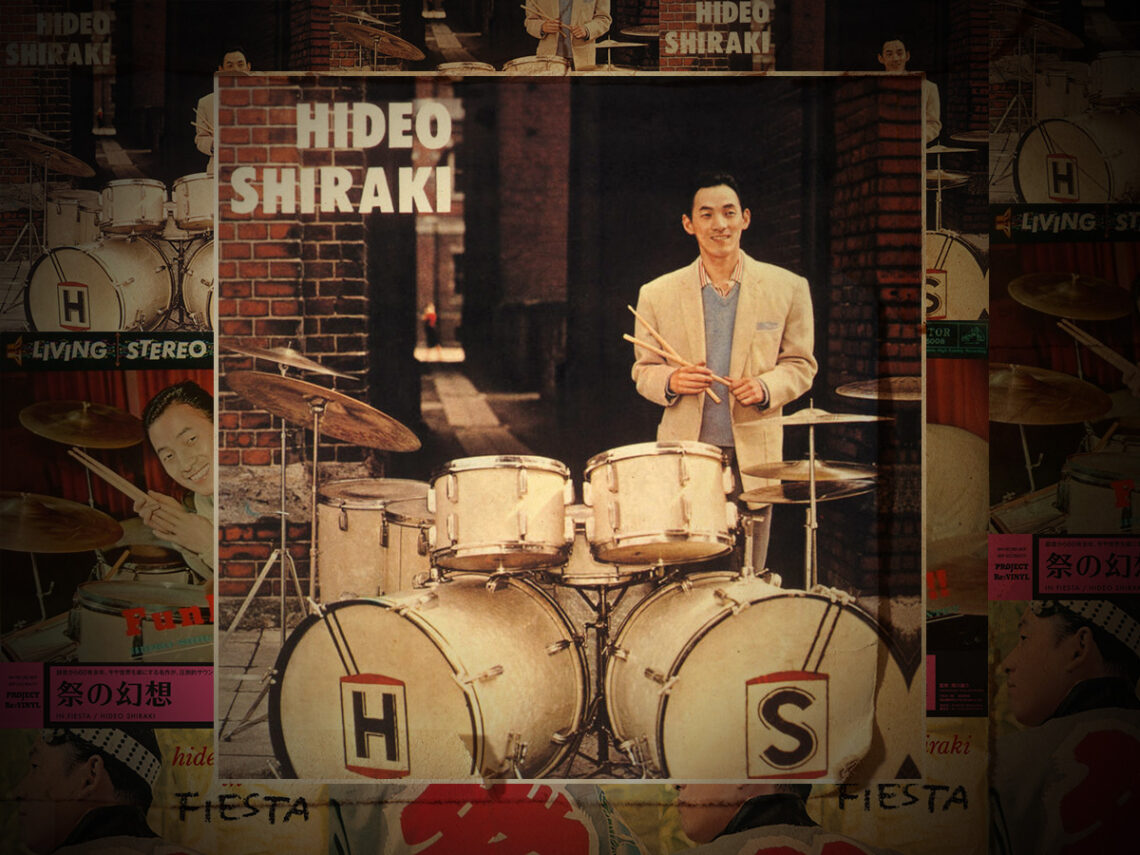
The tragic ending of Hideo Shiraki, Japan’s greatest jazz drummer

Once Louisiana’s Black musicians of the late 19th century had brewed a new and swinging art form from the country’s blues, vaudeville, and spiritual heritage, jazz soon seized America and the rest of the world as the era’s premier soundtrack for society’s hip and curious bohemians and dancers.
Japan was no exception. Briefly reaching the East Asian island country at the tail-end of the 1920s’ Taishō period and expunged during the Imperial era, the post-war liberalisation that swept across the nation accelerated the explosion of jazu kissa bars—bespoke clubs to drink and enjoy jazz as the evening’s focus over mere background music—reaching a peak in the 1970s.
Heard in Tokyo’s trendy Ginza in the Chūō district, early national pioneers such as Toshiko Akiyoshi began to imbue her American-inspired big-band pieces with instruments and compositions traditional to her formative years in Beppu City. Hanging around this time was the hard bop drummer Hideo Shiraki. Celebrated as one of Japan’s finest percussionists along with George Kawaguchi, Hideo performed with Masashi Nagao’s Blue Coats while still a student at the Tokyo School of Fine Arts, leading the fore with the country’s “funky boom” that swept the nation’s music fans.
Corralling a band including members Sleepy Matsumoto, Terumasa Hino, and Yuzuru Sera, and cutting the cult 1962 records, Plays Horace Silver and Plays Bossa Nova, Hideo was establishing himself as hard bop jazz’s leading man.
According to his ex-wife Yoshie Mizutani, Hideo had travelled to New York around the time of his lauded albums, and was introduced to big-band leader and fellow drummer Art Blakey and invited to join a Gretsch Drum Night at Manhattan’s famous Birdland club. Impressed, Blakey urged Hideo to make the big move to New York. However, unsure as to whether he’d strike the same level of fame outside Japan, Hideo reluctantly declined.
He would reach the pinnacle of his career in 1965, playing with a koto quartet at that year’s prestigious Berlin Jazz Festival and winning critical acclaim for his artful meld of jazz with traditional Japanese flourish. Yet, his beloved hard bop’s popularity began to wane, with jazz altogether becoming eclipsed by Western pop trends’ chart takeover.
Before long, his young band members began looking for opportunity elsewhere, and his quintet trumpeter, Terumasa Hino, found jazz fame that overshadowed Hideo’s fading glories. Yoshie stated that in private conversations, Hideo routinely expressed regret over not heading to the States when he had the chance.
Dropped by the Watanabe Production talent agency in 1968, the man floundered in obscurity after having left the music business and, as reported by The Asahi Shimbun, was found dead from an overdose of sleeping pills in 1972; suicide was not officially ruled out.
A sad end to a troubled but brilliant artist, Hideo’s legacy would soon reach a level of cult respect he’d lost sight of, years later, when numerous works of his would be featured in the nation’s film and TV, and retrospectively celebrated as a pioneer in Japan’s storied and unique jazz history.
