


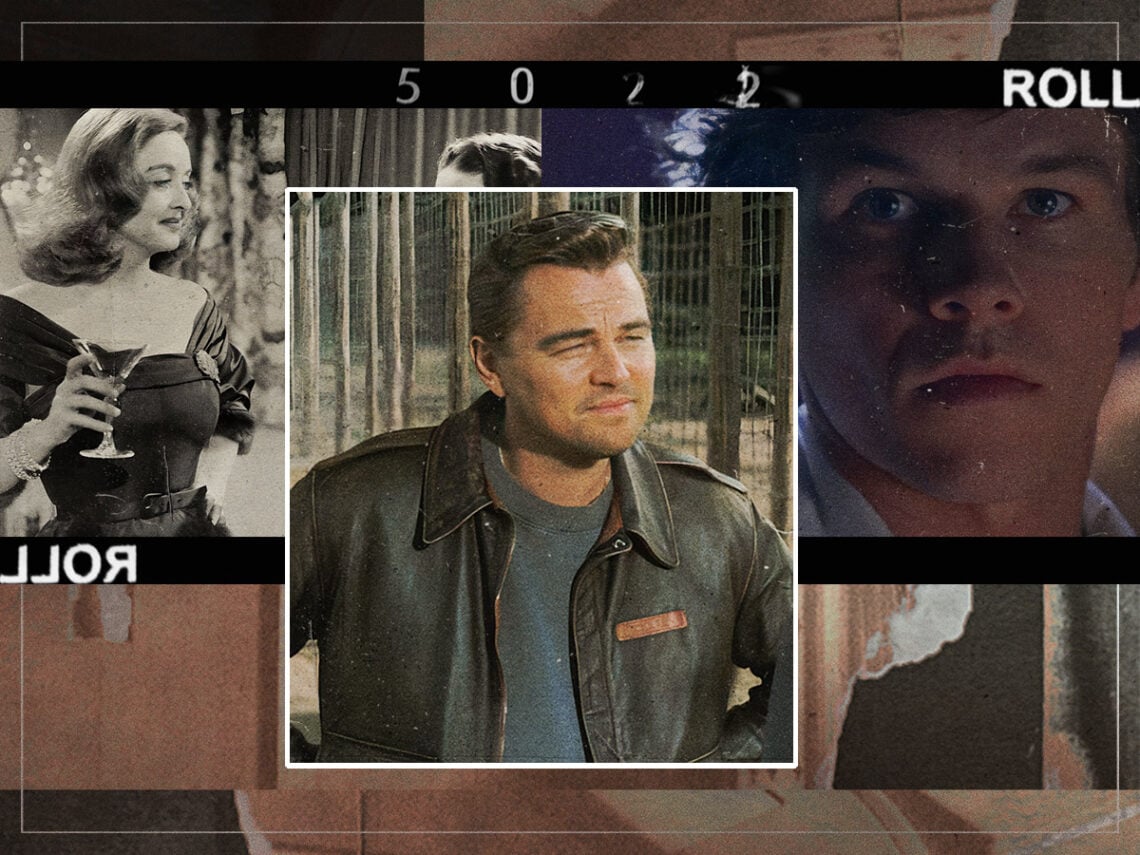
10 times actors played other actors in movies

The celluloid world has a unique fascination for tales that mirror its own existence. During the buzz of The Artist in 2011, we had it confirmed: Hollywood loves stories about Hollywood. At worst, they can be pure vanity. At best, however, cinema can gravitate towards tales that reflect its own intricate relationship with fame, glamour and the complexity that comes with life around the cameras.
Whether it’s the thrill of a standing ovation, the despair of a box-office flop, or the paranoia of being replaced by younger talent, movies about movies tap into the universal human experience of validation, rejection, and legacy. Even better, however, is when you get a truly great performance of an actor playing an actor.
For actors, playing their counterparts on-screen offers a rare opportunity – to channel their encounters in the industry, blurring the lines between the real and the reel (it had to be done, sorry). This duality in storytelling has gifted audiences with a treasure trove of iconic performances. Many seasoned actors have dived into their on-screen counterparts’ psyche, resulting in some of the most memorable, funny and moving portrayals the silver screen has witnessed.
Whether it’s the ageing starlet grappling with her fading limelight or the up-and-coming talent navigating the murky waters of Tinseltown, these roles provide a nuanced reflection on the craft of acting itself. Let’s embark on a journey through these meta-cinematic moments, exploring the layers of life, imitating art… imitating life.
The top 10 times actors played actors:
10. Kiss Kiss Bang Bang (Shane Black, 2005)
Robert Downey Jr shines as Harry Lockhart, a petty thief turned unexpected actor. Thrust into a Hollywood party, his faux pas and accidental successes provide a hilarious take on the industry’s often fickle nature. It tells us that not only is insincerity valuable in tinsel town, but it’s also actually an asset that can propel you to stardom.
After charming his way through a screen test that he actually wasn’t meant to be at, Lockhart stumbles through the movie business, reaping the rewards of a specific type of lifestyle whilst simultaneously shining a light on the absurd, vapid and sometimes insidious aspects of the big screen.
9. Hail, Caesar! (The Coen brothers, 2016)
It was the Coen brothers who first truly understood how to harness the untapped comic power of George Clooney with O Brother, Where Art Thou? in 2000, and 16 years later, they did it again. This time, Clooney played Baird Whitlock, a famous actor kidnapped during the production of a 1950s Roman epic.
Through Baird’s naive eyes, the film offers a satirical glimpse into the machinations of Hollywood’s Golden Age. Less the main character and more of a catalyst for the ensuing caper into the world of McCarthyism blacklisted writers and covert communists, Clooney’s idiotic ageing actor was nonetheless a delight to watch.
8. Tropic Thunder (Ben Stiller, 2008)
Once again, Downey Jr gave audiences a comedic gold performance as Kirk Lazarus, an overzealous Australian method actor who undergoes skin surgery to play a Black soldier. While still a hot point of contention today, it was a biting commentary on pretentious method actors’ often misguided commitment to ‘authenticity’.
Whatsmore, Downey Jr’s portrayal of Kirk playing Lincoln Osiris (“I’m the Dude, playing a dude, disguised as another dude”) is genuinely compelling, and the genius of his acting, along with Ben Stiller‘s direction, is that you often don’t know whether to be laughing at him or crying with him. With rumours of an upcoming Tropic Thunder 2 swirling.
7. Wings of Desire (Wim Wenders, 1987)
In this unrivalled poetic exploration of love and humanity, Peter Falk plays himself – a version of him that is shooting an episode of Columbo in Berlin. For most of the film, we’ve been following Bruno Ganz’s angel, Damiel. However, Falk makes a wonderful and much-needed appearance halfway through.
We learn that Falk was himself once an angel, but having grown wearisome of always observing passively and never actively engaging with the world around him, he shed his wings and became human. It’s a gorgeous, heart-wrenching lesson that he imparts to Damiel, and, more importantly, the audience. There’s also something delightful in the fact that Falk wasn’t written into the script – he was simply shooting in Berlin at the same time, so Wenders reached out.
6. Boogie Nights (Paul Thomas Anderson, 1997)
If you don’t think a well-endowed young porn star counts as an actor, that’s your problem to sort out, not ours. Mark Wahlberg takes on Eddie Adams, an everyday teen transformed into Dirk Diggler, a leading star in the adult film industry of the 1970s. His defining qualities are: he loves to have sex, he’s very good at it, and he has a huge member.
Boogie Nights provides a complexly layered, decade-spanning look into the world of showbiz, with all its glamour and darkness. By using the film-adjacent space of pornography, director Paul Thomas Anderson is able to make a film about filmmaking whilst retaining a fresh perspective. And, at the heart of it in a genuine career-best, is Wahlberg’s Dirk Diggler, with his epic rise and tragic fall.
5. All About Eve (Joseph L. Mankiewicz, 1950)
An all-time classic, All About Eve managed to break new ground and present a film that was as much about actors as it was about age, anxiety, obsession and crippling, mind-breaking insecurity. Bette Davis embodies Margo Channing, a renowned theatre actress wary of her advancing age and the young, ambitious Eve Harrington.
Davis’ electric performance, much like Margo’s, stands the test of time, reminding viewers of the fleeting nature of fame. Almost any film about the relationship between a young up-and-comer and an established star has Davis and Mankiewicz’s magnum opus to thank because it so perfectly laid the foundations for the celluloid version of an age-old dynamic.
4. Ed Wood (Tim Burton, 1994)
Martin Landau earned an Oscar for his role as Bela Lugosi, the iconic Dracula actor in his twilight years – and rightly so. Depicting Lugosi’s collaboration with the notoriously bad filmmaker Ed Wood, Landau paints a tragic yet utterly compelling and endearing portrait of an actor’s unyielding passion for his craft.
Tim Burton’s monochrome masterpiece is an ode to the freaks of Hollywood and the beating heart of the actual narrative, and the film itself is Landau as the waning star, Lugosi. Top marks to Landau for so accurately imitating Lugosi’s mannerisms, as well as for nailing an early-century Hungarian accent.
3. Sunset Boulevard (Billy Wilder, 1950)
If the two films after this weren’t such personal favourites, Sunset Boulevard would take place at number one – for its sheer, unparalleled artistry and definitive role as the movie about movies. Even more than All About Eve, Billy Wilder‘s fever dream about the corrupting powers of fame stands as the ultimate Hollywood fable.
Gloria Swanson, a silent film star, plays Norma Desmond, another silent film star unable to cope with the advent of talking pictures and her waning (if not completely snuffed out) popularity. Her eventual and inevitable descent into madness is a desperately powerful and tragic character study and a commentary on the industry’s ruthless evolution.
2. Opening Night (John Cassavetes, 1977)
Taking cues from All About Eve, John Cassavetes‘ harrowing psychological thriller is about as close to the horror genre as he’s got – but with all his trademark rawness, messiness and dedication to being as authentic as possible.
Gena Rowlands takes centre stage as Myrtle Gordon, a seasoned actress confronting her fear of ageing and the associated decline in her career. As she prepares for a play’s opening night, she’s haunted by the phantom of Nancy, an aggressively obsessive fan whose commitment to getting an autograph got her killed. Seeing reflections of her younger self in the spectre of this ghostly starlet, Myrtle starts to unravel mentally.
1. Once Upon a Time in Hollywood (Quentin Tarantino, 2019)
Leonardo DiCaprio‘s portrayal of Rick Dalton, a fading TV star striving for cinematic relevance in 1969’s changing Hollywood landscape, is nothing short of a bonafide masterpiece. In his swansong, Quentin Tarantino took the trope of a has-been actor and applied his clinical, forensic knowledge of the history of film and TV.
In DiCaprio’s Rick Dalton, we have an actor who is both emblematic of a specific type of TV actor who struggled to burst onto the big screen and of an alcohol-fuelled, mentally unstable man-baby unable to take accountability for his actions. His portrayal is at once hilarious, tragic and deeply moving. It is undoubtedly DiCaprio’s best performance and Tarantino’s most authentically written character.
