


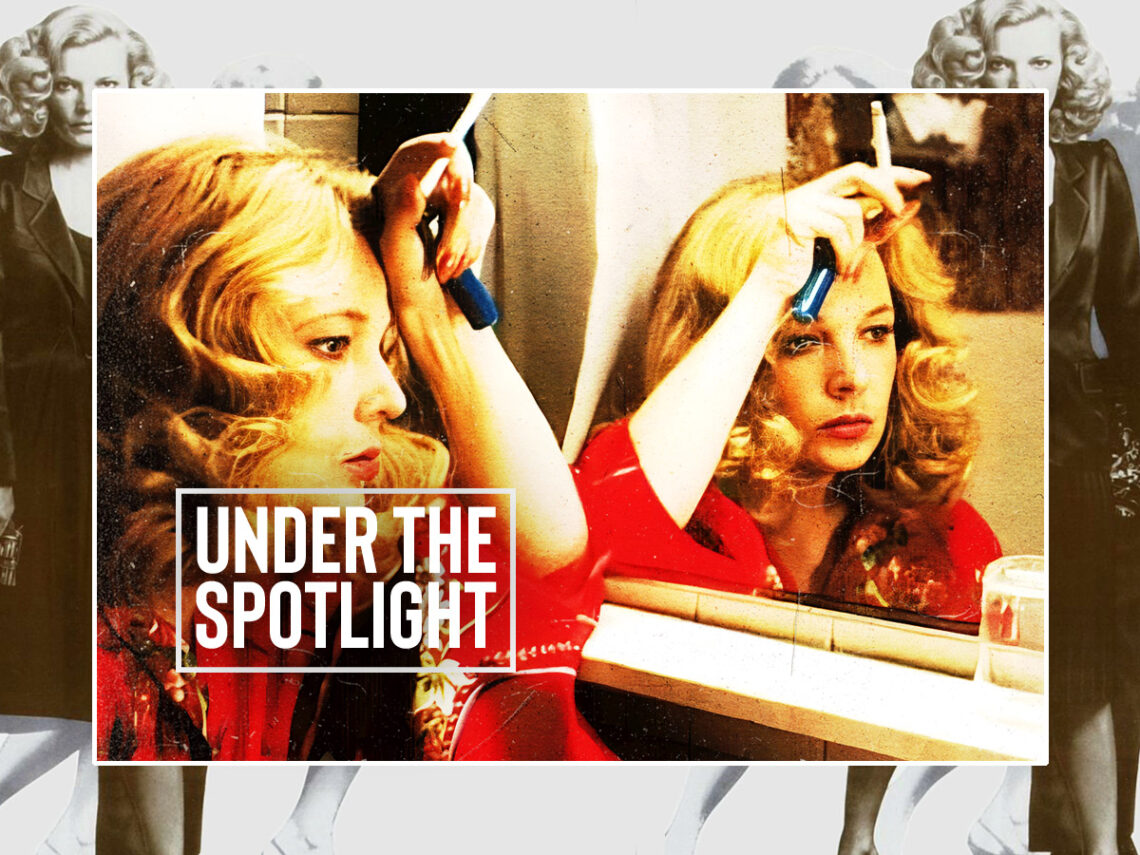
Under the Spotlight: Gena Rowlands’s realistic integrity in ‘Gloria’

A special energy existed between the actor Gena Rowlands and director John Cassavetes; a creative partnership that produced several remarkable films over a span of two decades. The seeds of this collaboration were planted in the mid-1960s, growing over time and yielding cinema classics like 1968’s Faces, Minnie and Moskowitz in 1971, their 1974 magnum opus A Woman Under the Influence, and Opening Night, which came three years later. However, their 1980 work Gloria, whilst not their best work, showcases the director/husband and actor/wife tackling an entirely new type of movie, the gangster film — but with their trademark commitment to realism, emotional authenticity and character depth. And, unlike any of their previous films, the integrity of this film rests entirely on the performance of Rowlands.
Navigating the intersection of emotional drama and action, Gloria charts an unexpected journey of a mobster’s girlfriend, who, by a twist of fate, becomes the protector of a young Puerto Rican boy, Phil, after his family falls victim to a mob hit. Very much the atypical ‘mob’s moll’, equipped with a thick New York accent, red lipstick, blonde hair and a snub-nose revolver hidden in her handbag, Gloria’s character could have dissolved into stereotype and melodrama. In the hands of Rowlands, however, it’s one of cinema’s greatest heroines.
Cassavetes’ reverence for Rowlands was not merely a reflection of their personal relationship but was deeply rooted in his admiration for her abilities as an artist. In Ray Carney’s 2001 book Cassavetes on Cassavetes, the director offers a poignant portrayal of Rowlands’ approach, stating: “She doesn’t want to represent them as caricatures, she wants to represent the people she’s playing with some authenticity…” Cassavetes described Rowlands as an artist balancing on “the edge of vulnerability and strength, fear and courage, a performer who could encapsulate complex characters”, with an “enormous capacity to perform”.
Arguably the most pivotal relationship in the film, and the one that truly sells the movie, is between Gloria and the young Puerto Rican boy, Phil. Throughout the film, the character of Gloria has to first break the news of his family’s murder, then convince him that staying with her is the only option for safety, and then navigate the confused, endearing, yet somewhat unsettling romantic advances from the young bog: “You’re my mother. You’re my father. You’re my whole family. You’re even my friend, Gloria. You’re my girlfriend too.” It’s more than an emotional rollercoaster, it’s a near-fatal trainwreck, but one that Rowlands manages to steer to safety with breathtaking acting prowess.
On the bond between Phil and Gloria, Cassavetes states: “Even when they’re thrown together, they don’t pretend to care about each other because it’s fashionable. So at the end, when they do care about each other, it’s because of their personal trust and regard.”
“She doesn’t care about anything except that you believe her.”
Unlike their previous improvisation-based cinematic outings, the crime-thriller elements of Gloria necessitated carefully choreographed moments of violence and action, which in turn demanded a more conventional script. A look at Rowlands’ notes on the script provided Cassavetes with an ill-gained but nonetheless riveting insight into the creative mind of one of the 20th-century’s greatest performers. “I picked up her script once, and I saw all these notes, all about what reaction she had to the various people both in the production and the story. It was very personal to her, and I felt very guilty that I’d snooped. Then I watched her work. She sets the initial premise and follows the script very completely.” He then explains an aspect of Rowlands which, in retrospect, is perhaps her most defining quality — the reason why her performances have left such an indelible mark on indie cinema. “Everybody else is going boom! boom! boom!, but Gena is very dedicated and pure. She doesn’t care if it’s cinematic, doesn’t care where the camera is, doesn’t care if she looks good – doesn’t care about anything except that you believe her.”
The sacrifice that Gloria makes is so huge, so immediately life-changing, that Rowlands needs to not convince us of the stakes of such a sacrifice, but of the ultimate rewards of it too. In the space of mere minutes, she’s tasked with establishing herself as a hardened, childless mobster’s gal who enjoys her life of no responsibility — which she does. Then, for the rest of the film, she must sell the idea that she is slowly but surely being won over by a bereaved Latino child, which she also does. It’s amazing. As Cassavetes puts it, “It was about a woman who, beyond her control, stood up for a kid whom she wanted nothing to do with…So I think this woman gives up her whole way of life, and she does it in such a fashion that you believe her, and that’s basically the picture. If that works, then I think the picture works.”
The legacy of Cassavetes and Rowlands extends beyond their individual careers, their collaboration being a testament to their shared vision and mutual respect. Perhaps the conflation of their romantic and professional lives yields such astounding and resonant filmmaking. Regardless of all of the fantastic films they’ve created together, Gloria is the one that most remarkably shows how much of an unparalleled heavy-weight Rowlands truly is.
Reflecting on their career, Cassavetes draws parallels between themselves and the character of Gloria, confessing: “She’s lost by life, and that’s the way I feel. I’m lost by life. I don’t know anything about life. If I make a movie, I don’t even understand why I’m making the movie. I just know that there’s something there.”
