


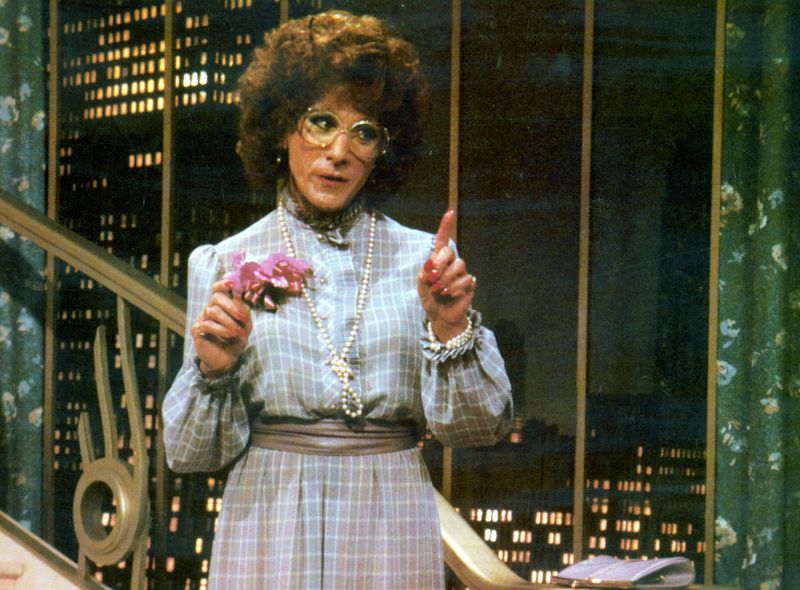
How ‘Tootsie’ changed Dustin Hoffman’s outlook on life

As the New Hollywood movement took hold in the late 1960s and 1970s, popular cinema shifted away from the domination of the studio and into the hands of young new filmmakers like Martin Scorsese and Francis Ford Coppola.
Out of this pioneering cinematic movement came a new crop of actors, such as Al Pacino, Robert De Niro and Dustin Hoffman, whose faces defined the era. Hoffman made his film debut in 1967’s The Tiger Makes Out before quickly landing the lead role in Mike Nichols’ seminal movie The Graduate. His performance as Ben Braddock, an aimless 21-year-old who falls for the older Mrs Robinson, earned him an Academy Award nomination.
From there, Hoffman appeared in many iconic movies from the period, including Midnight Cowboy, Straw Dogs and All The President’s Men. As the ‘70s came to an end, Hoffman’s credits only continued to pile up with roles in acclaimed movies such as Kramer vs Kramer and Tootsie.
Released in 1982, Tootsie was directed by Sydney Pollack and sees Hoffman play an actor, Michael Dorsey, who dresses as a woman, calling himself Dorothy Michaels, in the hopes of landing some different jobs. The movie was a huge box-office and critical success and remains one of Hoffman’s most popular performances.
However, despite the comedic intentions behind Tootsie, Hoffman found the movie an eye-opening experience, exposing him to the patriarchal demands placed on women to be attractive. For the first time, Hoffman truly realised just how much beauty is valued by society. He explained to the American Film Institute that after he was transformed into Dorothy, he said to the makeup artist, “’Now you have me looking like a woman, now make me a beautiful woman.’ Because I thought I should be beautiful. And they said to me, ‘That’s as good as it gets.'”
He continued: “It was at that moment I had an epiphany, and I went home and started crying, talking to my wife. And I said I have to make this picture, and she said, ‘Why?’ And I said, ‘Because I think I am an interesting woman when I look at myself on screen. And I know that if I met myself at a party, I would never talk to that character because she doesn’t fulfil physically the demands that we’re brought up to think women have to have in order for us to ask them out.’ She says, ‘What are you saying?’”
Portraying a fascinating woman made Hoffman realise just how many women are ignored or disrespected by men based on their appearance. Subsequently, the actor explained: “There’s too many interesting women I have not had the experience to know in this life because I have been brainwashed. That was never a comedy for me.”
