


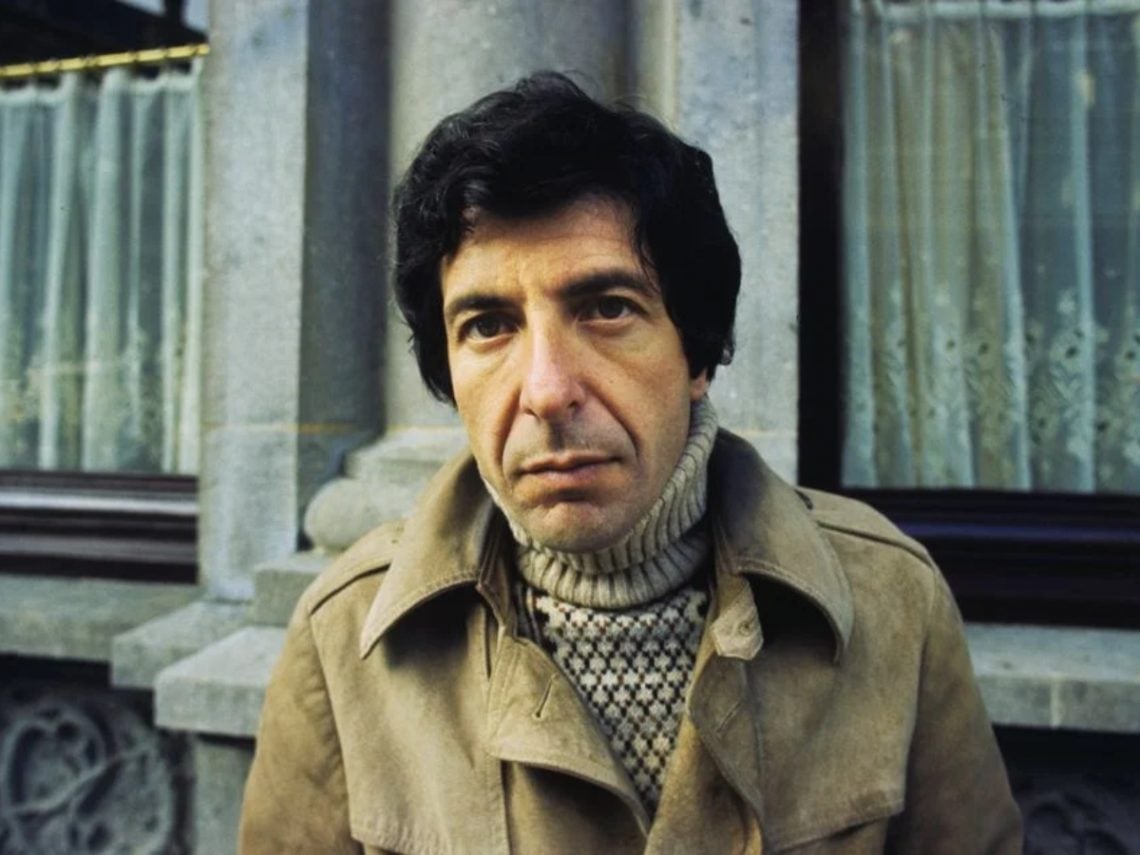
The songwriter Leonard Cohen called “so much better” than himself: “Incredibly classy and chic”

Long before Leonard Cohen tried to make it as a professional musician, he was plying his trade as a writer. While a guitar had been a spiritual part of his life since his high school days, he always figured he’d be best off following in the footsteps of his first literary hero, Federico García Lorca.
As a teenager, he’d strum out the flamenco rhythms he had recently learnt with his friends in the restaurants of Westmount, Quebec, accompanied by his mother. “She would sing with us when I took my guitar to a restaurant with some friends; my mother would come, and we’d often sing all night,” he would later recall.
This stirred him, but somehow, it also made music seem like more of a homely pursuit, and Cohen hungered to get out in the world. So, as he ventured off to Columbia University, he began publishing poetry. His endeavours on this front were never hugely successful. Eventually, however, in the buzzing 1960s, he received a $2,000 grant from the Canadian Arts Council.
Flush with cash for the first time, he ventured beyond North America, settling, in time, in the Greek jewel of Hydra with its 1966 bohemian residents. He had been drawn to the island when during a particularly gloomy April in Hampstead, UK, after he met Barbara Rothschild at a party, and she told him of a mansion she knew of with much better weather. But as soon as he got there, it started to dawn on him that perhaps it wasn’t sunshine that his poetry was missing but rather the homely spiritualism of the music that first moved him.
This development is pivotal in the way we view everything that followed for Cohen—he was a poet saved by the strum of his guitar, one part equal to the other in the marriage of his reflective balladry. This made him one of the finest songwriters in the history of modern music, conjuring lyrics and melodies that added depth untold to folk.

It was this dual identity that ultimately defined Cohen’s artistic voice. Rather than abandoning poetry for music, he fused the two disciplines, allowing his lyrical sensibilities to shape songs that felt more like intimate confessions than traditional compositions.
In doing so, Cohen carved out a space that few others could occupy, where literature and music coexisted seamlessly. His work didn’t just tell stories; it invited listeners to sit with them, to reflect, and to find meaning in the quiet spaces between words and melody.
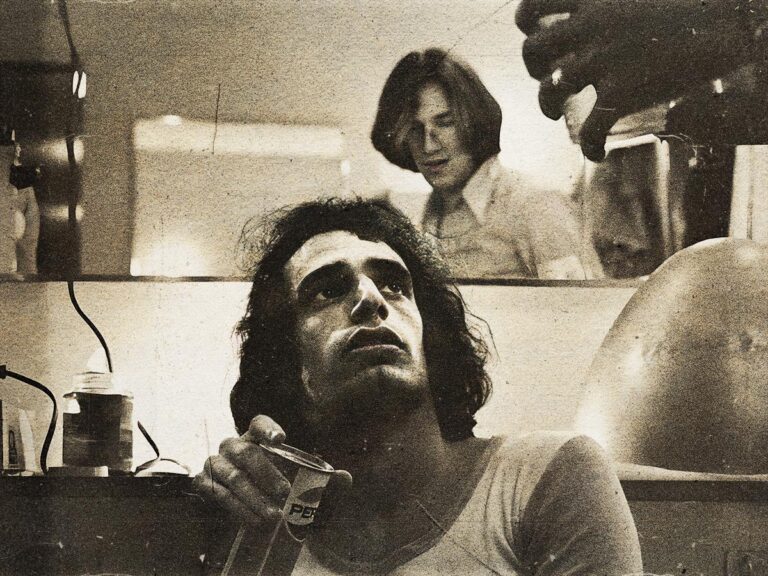
Thus, it is perhaps no surprise that when championing I’m Your Man among his all-time favourite albums, Tom Waits once proclaimed, “Euro, klezmer, chansons, apocalyptic, revelations, with that mellifluous voice. A shipwrecked Aznovar, washed up on shore. Important songs, meditative, authoritative, and Leonard is a poet, an Extra Large one.”
This would’ve flattered Cohen endlessly because of all the songwriters out there, Cohen considered Waits one of the most superior. “Tom Waits’ whole personage is incredibly classy and chic,” Cohen once opined, “much more so than anybody around.”
In fact, Cohen even once penned a poem about him, ranking him as the prevailing songsmith. The initial stanza of ‘Dream Brighton’ reads: “Tom Waits singing—I hear him / I’m in a theatre—I’ve given a show to a large audience / My show went well—I can’t see him—I’m in my dressing room / But I can hear him—his music begin—it is so beautiful and original and sophisticated—so much better than mine—some mélange of harshness and sweetness”.
Much of that same lofty praise can be applied to Cohen’s own sound—unique, creative, yet always experiential. These shared facets are tied to one core tenet: both were interested in writing as much as they were interested in music.
