


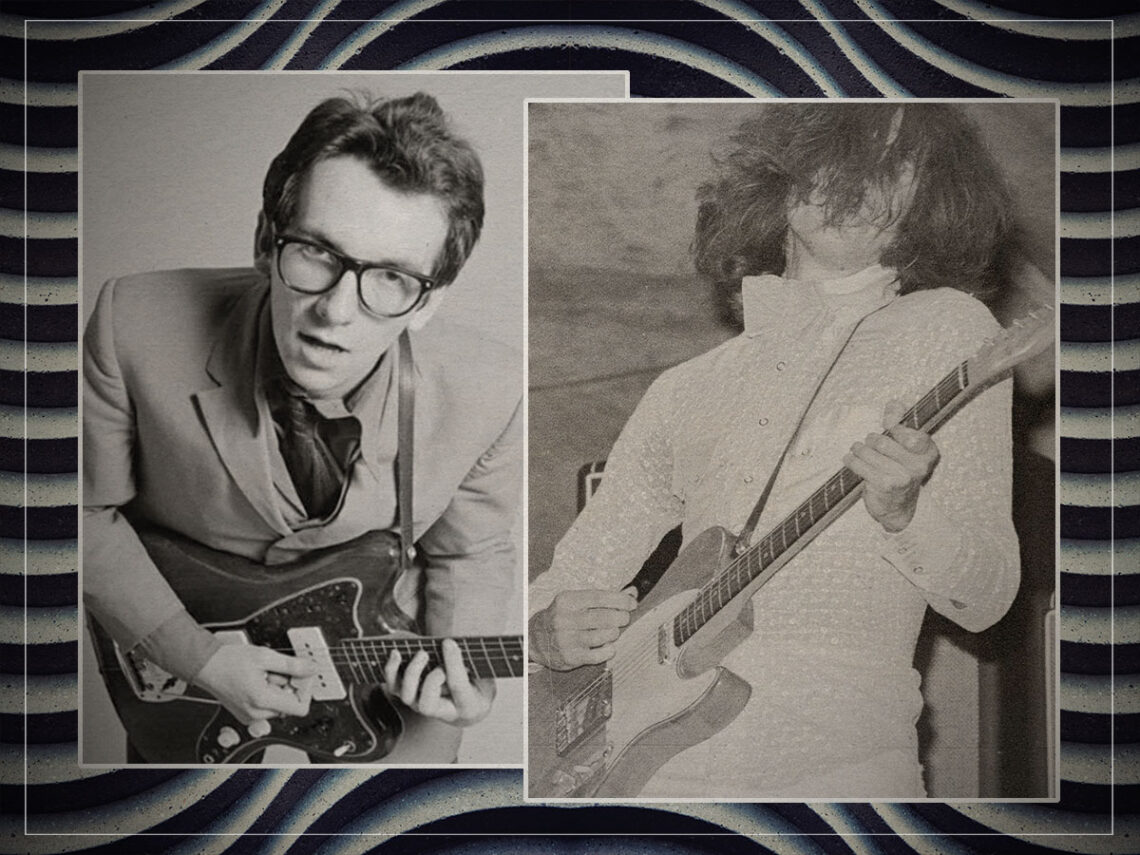
The three best songs by The Kinks, according to Elvis Costello

As fellow purveyors of witty, literate guitar pop, one can imagine that Elvis Costello and The Kinks share a pretty deep connection. However, the more you think about it, the more you realise that it goes even further than that.
Sure, there’s the catchy power-pop that both made their name on, but both also have a neat hand in bitingly sarcastic state-of-the-nation addresses on the one hand, and dazzlingly romantic ballads on the other.
Bringing that into the equation, one realises that arguably, there is no Elvis Costello without the work of Ray Davies’ British invasion maestros. This is proven by a list that the former put together for Vanity Fair, a shockingly deep dive into his 500 favourite songs. This list shows the sheer length and breadth of his music taste, stretching from The La’s and The Jesus and Mary Chain to Umm Kulthum and Maria Callas.
Taking pride of place on this list are not one, not two, but three songs by The Kinks. Beginning with one of their all-time classics, a song that should appear on any devotee of British rock’s favourite songs list, and one that makes perfect sense on one by Elvis Costello. ‘Waterloo Sunset‘ is still a marvel of songwriting, no matter how you slice it; one that manages to be unmistakably British with none of the jingoism that kneecaps most other unmistakably British songs.
No, ‘Waterloo Sunset’ has a melancholic grace to it that generations of songwriters have tried and mostly failed to match. Costello has gotten closer than most with the likes of ‘Alison’ and ‘I’ll Wear It Proudly’, so it stands to reason that he puts a song like ‘Waterloo Sunset’ on the list, one he may well have been listening to on repeat when putting together his classic ballads.
What other songs by The Kinks does Elvis Costello love?
Next up, we have one of the great non-album singles of The Kinks’ back catalogue. ‘Dead End Street’ is arguably the other side of the ‘Waterloo Sunset’ coin. Both songs are character sketches typical of the band’s discography. While one is a breathlessly romantic love story, ‘Dead End Street’, as the title suggests, is something a little darker. An atmosphere contrasted wonderfully by the jaunty music-hall melody it’s set to.
In ‘Dead End Street‘, we have Ray Davies writing unflinchingly about how poverty traps people in unfulfilling lives. The empathy of ‘Waterloo Sunset’ is still there but deployed in a completely different way, used to create a jarring, almost haunting vision of a life where the walls are closing in every single day. A powerful song bordering on protest music, the kind that almost certainly informed Costello when writing the lyrics to Robert Wyatt’s ‘Shipbuilding’.
This brand of cynicism and economic despair informs the final Kinks song to make Costello’s list. After making worldwide hits with ‘You Really Got Me’ and ‘All Day and All of the Night’, one can only imagine what the response of their record label was like when Davies turned in ‘Where Have All the Good Times Gone’. A song that, when The Kinks’ tour manager heard it for the first time, reportedly made him say, “That’s a song a 40-year-old would write”. Thing is, though, he’s not wrong.
If ‘Dead End Street’ finds Davies expressing his anxieties via a character study, ‘Where Have All the Good Times Gone’ drops the act. This is the songwriter at his rawest and most direct. Above all these songs, this heart-on-sleeve attitude is the one that seems to have affected Costello most. After all, what makes records like My Aim Is True and Armed Forces so compelling is that feeling that Elvis Costello is speaking directly to you. It’s a skill he clearly learned from Ray Davies and The Kinks.
