


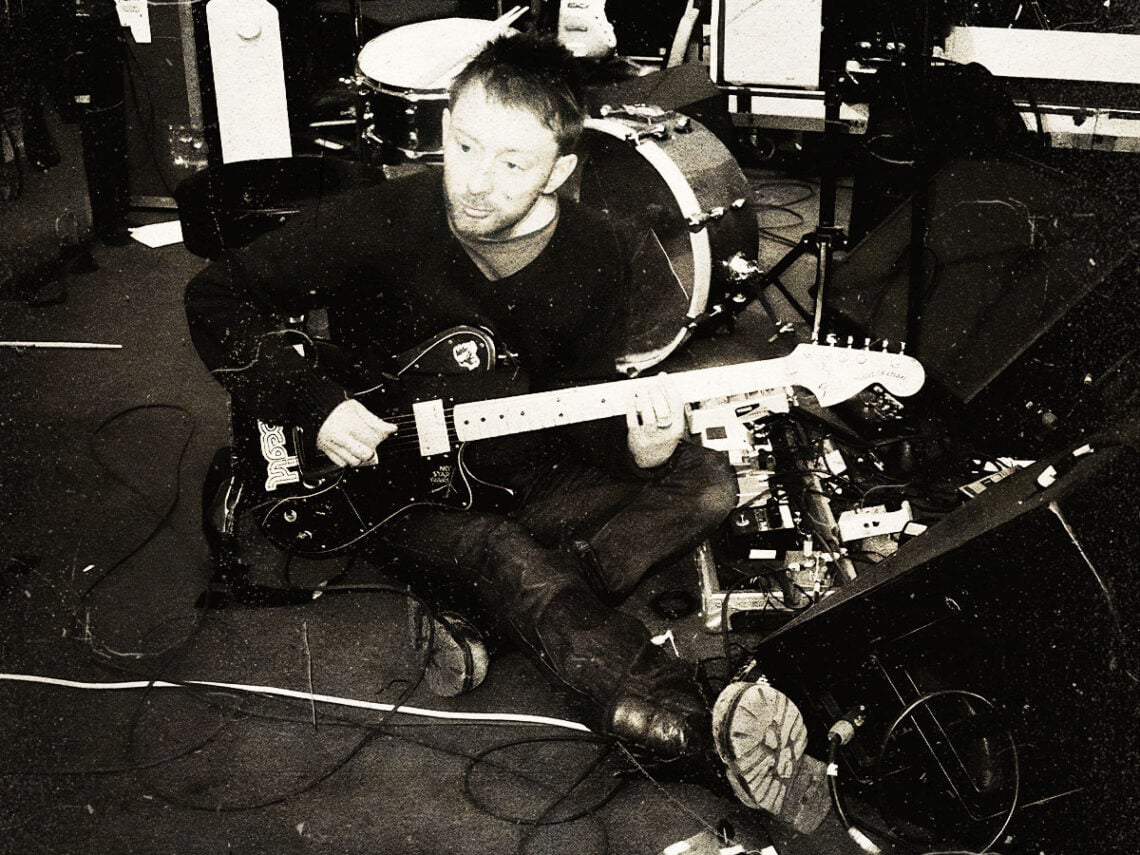
“That level of bullshit”: Thom Yorke on the one singer he could never act like

There’s no right or wrong way to behave as a frontman. The whole point of being at the front of the stage is to make sure that everyone has a good time, and whether that means dancing your way through a song or putting every fibre of your body into hitting one high note, it’s usually worth it to see a crowd losing their minds to every tune. But Thom Yorke was a bit different compared to other rock frontmen, and he admitted that he could have never gone through the mainstream the way that this icon did.
When looking at how Radiohead started off, though, no one would have guessed they would have become one of the biggest names in rock right out of the gate. ‘Creep’ was definitely a surefire hit, but since the grunge bandwagon bands had a limited shelf life, it wasn’t clear whether they were going to last for a few years or for one summer before the public washed their hands of them.
While The Bends made everyone stand up and pay attention, OK Computer was the record that stopped everyone in their tracks. There had been many monumental releases scattered throughout the 1990s, but if Nevermind kicked off the 1990s with a bang, this was the moment where the decade slowly began winding down, with Yorke talking about the dangers that come with trusting technology over Jonny Greenwood’s eccentric guitar work.
Although many rock fans loved what they heard, they also heard one other band in Radiohead that hadn’t quite been themselves lately. Despite being one of the more eclectic acts in rock, it was easy to draw parallels between Yorke’s songs and what U2 had been doing in their prime, particularly with the clean guitar sounds and the whole story of alternative-band-turned-stadium-rockers.
But as far as Yorke was concerned, he could never have been what Bono was. Outside of having a completely different vocal approach, Yorke saw many of the Irish frontman’s preachiness and thought that everything he did was completely alien to what a musician should do.
Yes, Yorke had his political opinions and even shared a handful of them on records like Hail to the Thief, but he knew he could never be the same kind of bullshit artist that he was, saying, “The difference between me and Bono is that he’s quite happy to go and flatter people to get what he wants and he’s very good at it, but I just can’t do it. I’d probably end up punching them in the face rather than shaking their hand. I can’t engage with that level of bullshit. I admire the fact that Bono can, and can walk away from it smelling of roses.”
And nowhere was that mindset more apparent than when Kid A came out. Since Yorke was expected to put out a record that capitalised on the U2 comparisons, going completely electronic was a definitive line in the sand and also a stiff middle finger at every critic who wanted the group to go down one specific direction for the rest of their lives.
That wasn’t what Radiohead was built for. They could give their audience what they wanted and even make the odd business decision with big-name companies, but when looking at something like U2’s partnership with iTunes, Yorke knew that he could never stoop that low.
