


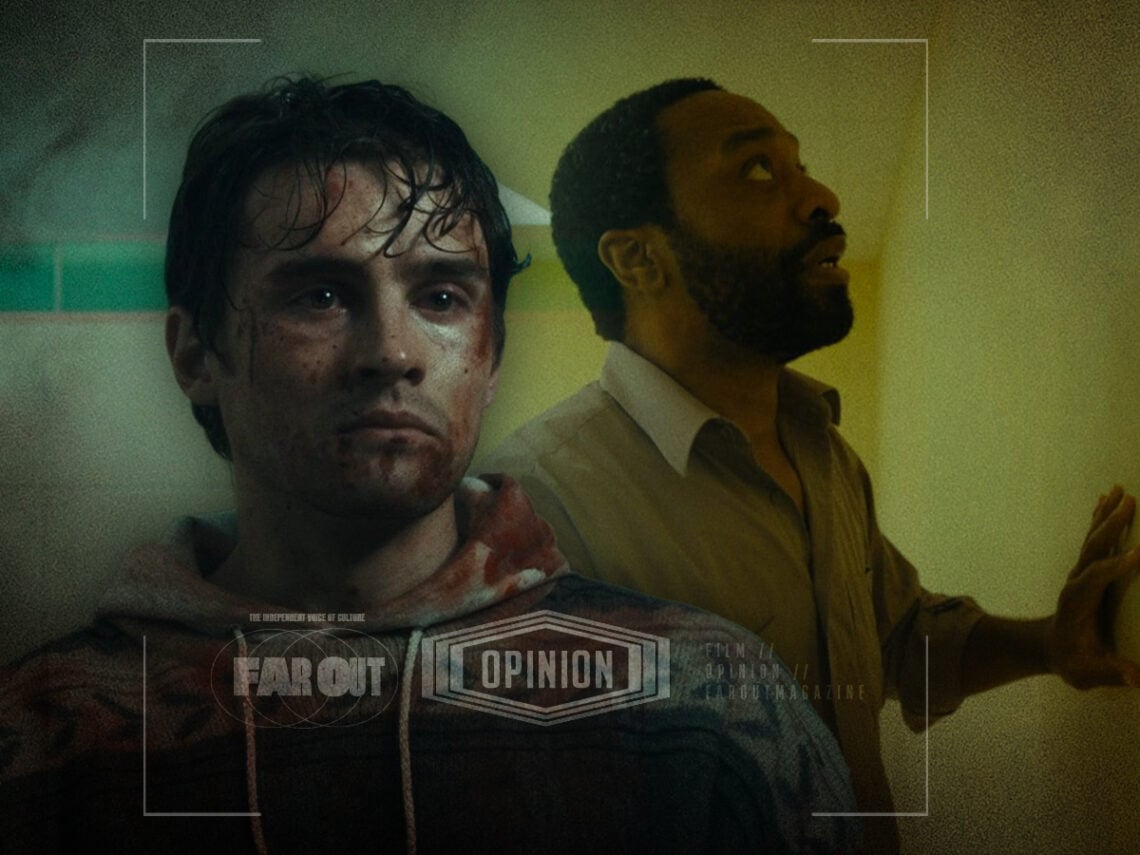
This is why all men need to watch ‘Backrooms’ and ‘Obsession’

If great art should comfort the disturbed and disturb the comfortable, then the two films that have shaken Hollywood to its core this month, Kane Parson’s Backrooms and Curry Barker’s Obsession, have done a fantastic job at both.
Most of the discourse about these two brilliant movies is, of course, centred around the fact that they were made by directors in their early 20s, on relatively tiny budgets, without a great deal of studio control and relying on word of mouth to get the marketing job done. But as a man in his 40s, what struck me most after sitting through them back to back was the fact that they both, more than any films I can remember in a long time, ask very important questions about what is, and has been, going on in the world between the sexes.
If we take Backrooms as a starting point, the ‘liminal’ (who knew that word before this year?) horror starring Chiwetel Ejiofor as the furniture salesman suffering an existential crisis after the breakup of his marriage, then those questions are perhaps a little easier to decipher.
Because the film, while an undoubtedly surreal, open-ended affair with plenty to work out, is a clear examination of two people witnessing the same situation from a male and female point of view: Ejiofor, who is lost in the turmoil of his grief and self-pity, and his therapist, played by Renate Reinsve, who joins him in the endless backrooms of his mind and workplace, at first trying to help him but then delivering home truths that prove even more devastating.
What staggered me about the film, and about Obsession, which we’ll come to, is that its director, Parsons, is 20 years old. I have no idea how the depth of thinking about the male psyche and ego required to make this film could have come from someone who isn’t legally allowed to drink alcohol in his home country. The only comfort comes from the fact that the screenplay was written by someone older named Will Soodik, although his actual background or age is a fitting mystery because he was called something completely different until this movie.

There are usually five distinct stages to manhood; between 14 and 25, we are in the second, essentially still acting as kids, which is why we are often complete idiots, capable of only driving cars fast, not jumping off bridges, taking responsibility for our actions, and being fairly terrible in relationships. Not until we have experienced life, and all its grief, twists, bad news and challenges do we generally even start to think about other people, about how differently those around us, especially women, with all their own pressures, view the world. Not until we’ve had families, and gone through divorces, and deaths, do we begin to consider the mental load of motherhood, or what it means for a woman to attach her life to us, to empathise and to sacrifice.
‘I wish that I knew what I know now, when I was younger’, as the song goes. This is not to excuse the behaviour of young men, nor to blithely ignore the mental issues we often have, or some of the societal expectations; it is solely to speak from experience that sadly, the lessons we need to heed come far too late. And it’s the fact that this film meets that head on that is so powerful for people like me.
Ejiofor’s eventual undoing comes from Reinsve’s withering volley of truth that he has to stop blaming everyone else for his problems. His job, his wife, his therapist, his kids, alcohol, they are all the reasons he is sleeping in his own sterile furniture store that will become his grave, not him or his decisions or actions. He doesn’t ever consider that his therapist has her own daily trauma to work through, or that his wife left him because she had dreams of her own.
That kind of narcissistic, often male-centric thinking is also a central theme in Barker’s Obsession, just on the other end of the age spectrum, another surprise from a 26-year-old from the land of locker room culture. It shows us how, in our early 20s, women are still often even now seen as objectified commodities, prizes to be won, trophies to be had. The male lead in the movie, Bear, played by Michael Johnston, decides that because he has become so smitten with Inde Navarette’s character, he has to have her, no matter the cost.
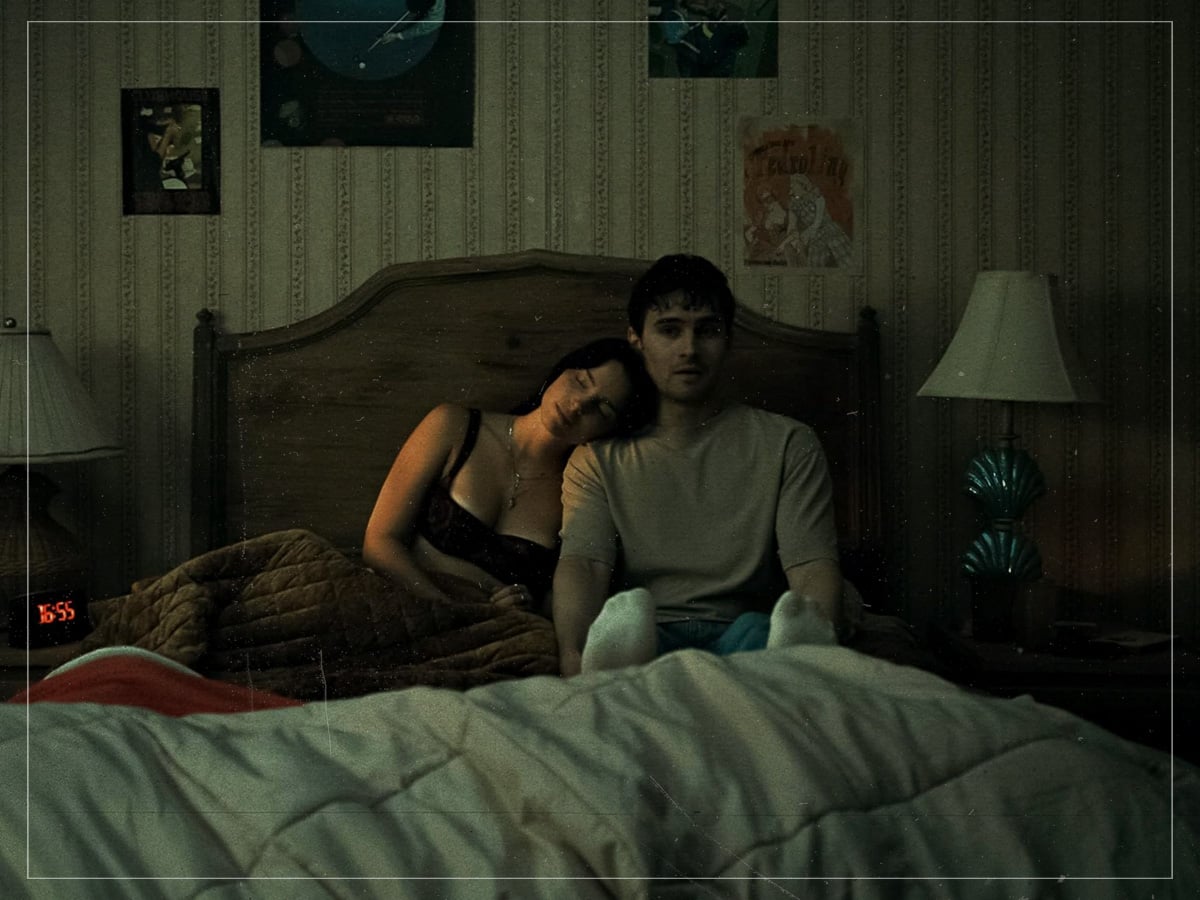
Without a thought to her consent he casts a spell to make it so. Navarette, who puts in a jaw-dropping display of acting for the ages in this as Nicky, is left helpless and trapped, taken over externally as an obsessive lover. She is shown, as women in horror films like Fatal Attraction, or Single White Female or Rosemary’s Baby often are, as completely unhinged, desperate for male attention, threatening harm to herself and those around her. The irony, of course, is that it is Johnston’s character who is the obsessive, who refuses to just be her friend, who, even when her real voice pleads with him to free her, can’t move past his own desires and asks pathetically, “But…what would be so bad about being with me?”
A quick fact for any fans of this Hollywood trope, by the way: in America, between 80 and 87 per cent of stalkers are male. One of the most telling moments in the film is actually a very throwaway one, when Johnston’s best friend demands he tell him whether or not he and Nicky had slept together, excited that Bear could notch his bedpost, sex reduced to an accomplishment, her feelings ignored.
The reason these two films are so important to watch as men is that, regardless of whether we are in our 20s or in our 40s, they ask vital questions about how we view potential partners and our own egos. Because the people who run the world are in the midst of polarising us in many ways, all in the pursuit of money, dividing and conquering for cash. Both sexes are prompted to hate each other for their failings via social media, to generate engagement for revenue. Dating is ‘hell’, disposable, with the swiping left and right superficiality ruling all, as the ‘manosphere’ undoes years of important progress.
At least, through consuming important art like these films, we can still reflect and change in order to try to understand each other, and push back against it a little to come closer together.
