


From bunny boiler to cat sandwich maker: ‘Obsession’ revives a familiar trope

Every couple of decades, male filmmakers use cinema to reveal their greatest fears about women.
In the 1920s and ‘30s, it was the vamp (often played by Theda Bara or Pola Negri), a sexually voracious man-eater whose appetites were practically supernatural in scope. In the 1940s and early ‘50s, it was the femme fatale, an assertive, independent strategist who outwitted men and often pitted them against each other (think Double Indemnity, Detour, and Out of the Past).
By the 1980s and ‘90s, women had become a key part of the workforce, leading to movies like Fatal Attraction and Disclosure, in which the villains are high-powered female professionals who outrank the male protagonist. Independence was no longer enough of a threat, at least not admittedly, so many femme fatale-style characters were saddled with a mental illness. What could be more terrifying than a psychotic, financially independent woman who couldn’t be quietly carted off to a mental institution like the old days?
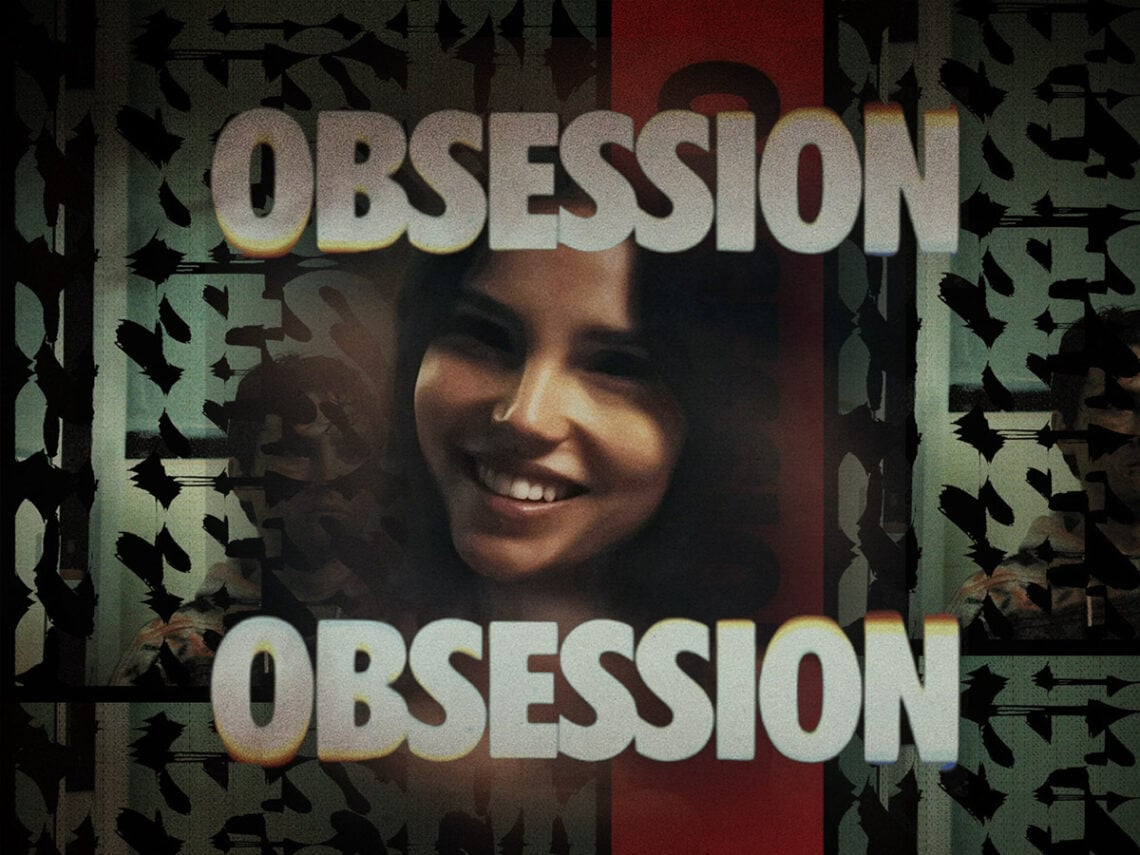
Obsession, the new movie from 26-year-old YouTube creator-turned horror director Curry Barker, tries to reckon with the other side of the equation – the passive, pathologically self-involved man – but it turns out to be more of a reversion to the 1980s than a bold evaluation of the present. There is no question that it is one of the best horror movies this year.
The performances are spot-on, the script never gets tangled in unnecessary exposition or explanation, and Barker understands the pacing and tropes of horror as if it were the language he was born speaking. But beneath all the humour, gut-twisting terror, and flawlessly executed jump scares, the substance is far less progressive than the discourse around the film has been.
The plot concerns an unfuckable twentysomething named Bear (Michael Johnston), who is gearing up to finally tell his co-worker and childhood friend Nikki (Inde Navarrette) that he has a crush on her. Unable to summon the courage for this level of vulnerability, he resorts to the One Wish Willow, a novelty collectable he bought in a crystal shop that promises to grant the user one wish.
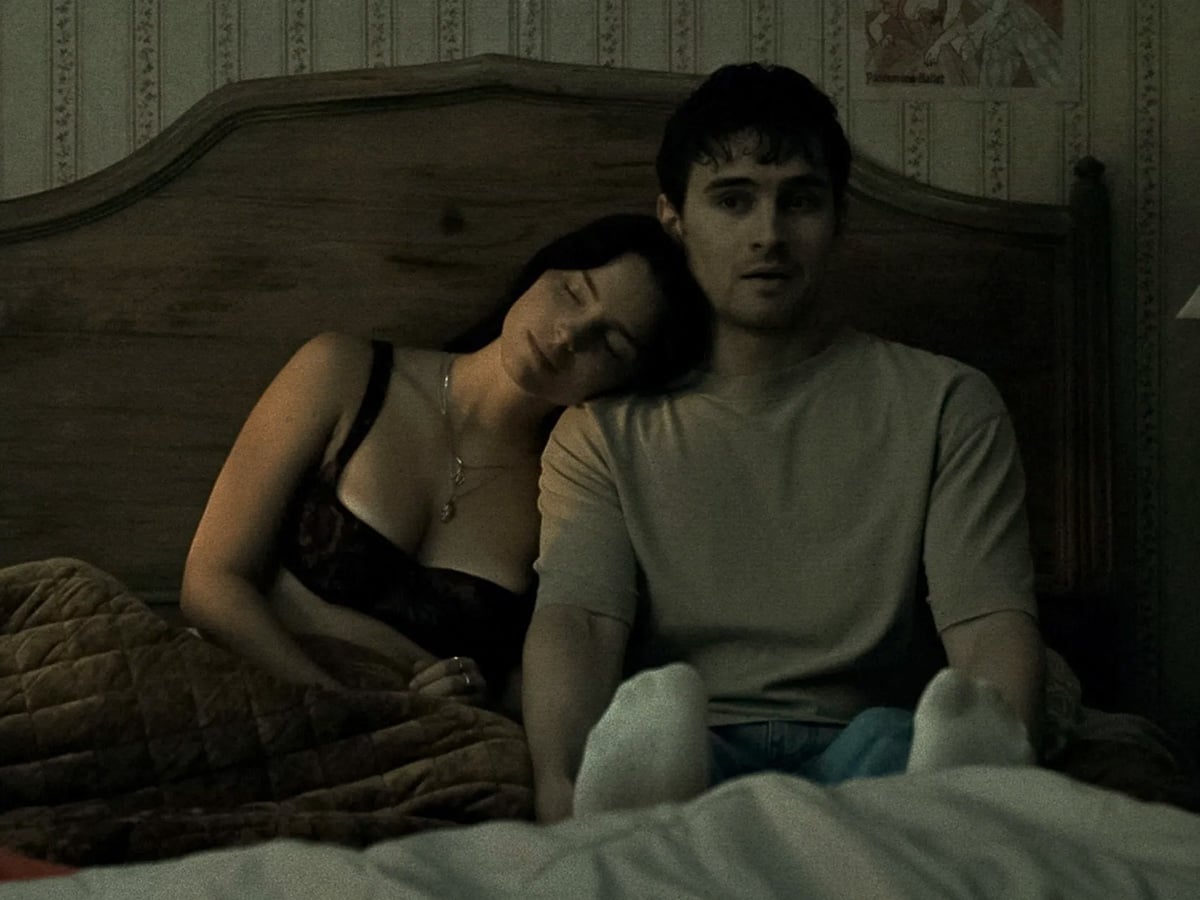
He wishes that Nikki would love him “more than anyone else in the fucking world,” and to his amazement, his wish is granted. After an initial period in which an adoring Nikki shows flashes of panic, there is a blissful montage of the apparently thriving couple.
One scene in which they have sex, however, shows Nikki gasping with feigned pleasure as she stares glassy-eyed into the dark recesses of the bedroom. The real Nikki is somewhere behind the façade, and to his credit, Barker makes sure that she looks more like a victim of drugging and rape in this scene than a lust-crazed romantic who is living out her wildest dreams.
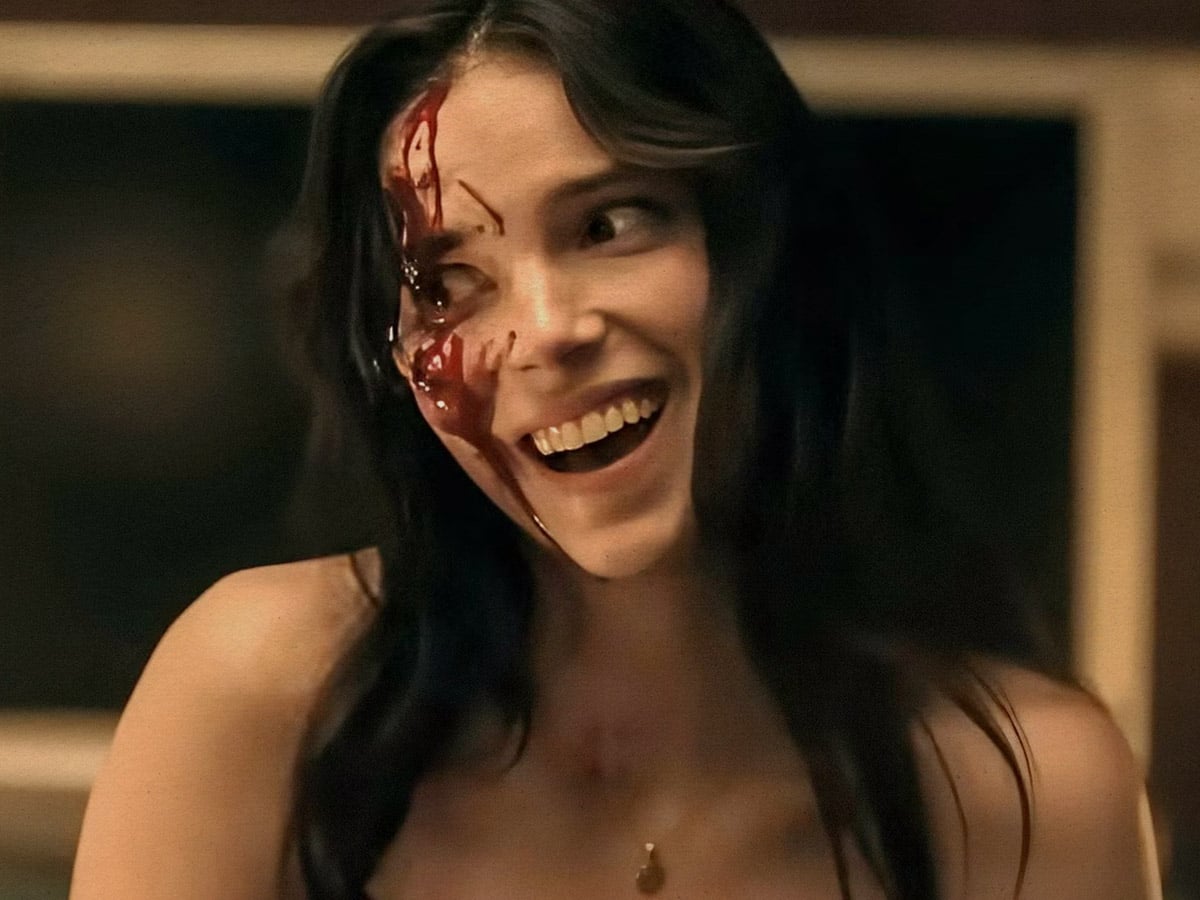
As Nikki’s infatuation grows, Bear starts to question (like the genius he is) if maybe he made a mistake. When his giddiness cools, Nikki becomes increasingly desperate for his love, and the horror unfolds with bloodcurdling screams, menacing flower pots, and a face-splitting smile to rival Mia Goth’s at the end of Pearl.
It is here that the balance of the narrative tips from pathologically weak and self-serving incel to psychotic girlfriend. Nikki’s increasingly deranged possessiveness seems geared towards a male audience and their fear of the scorned woman rather than towards a female audience who is probably pretty concerned for the safety of the real Nikki.
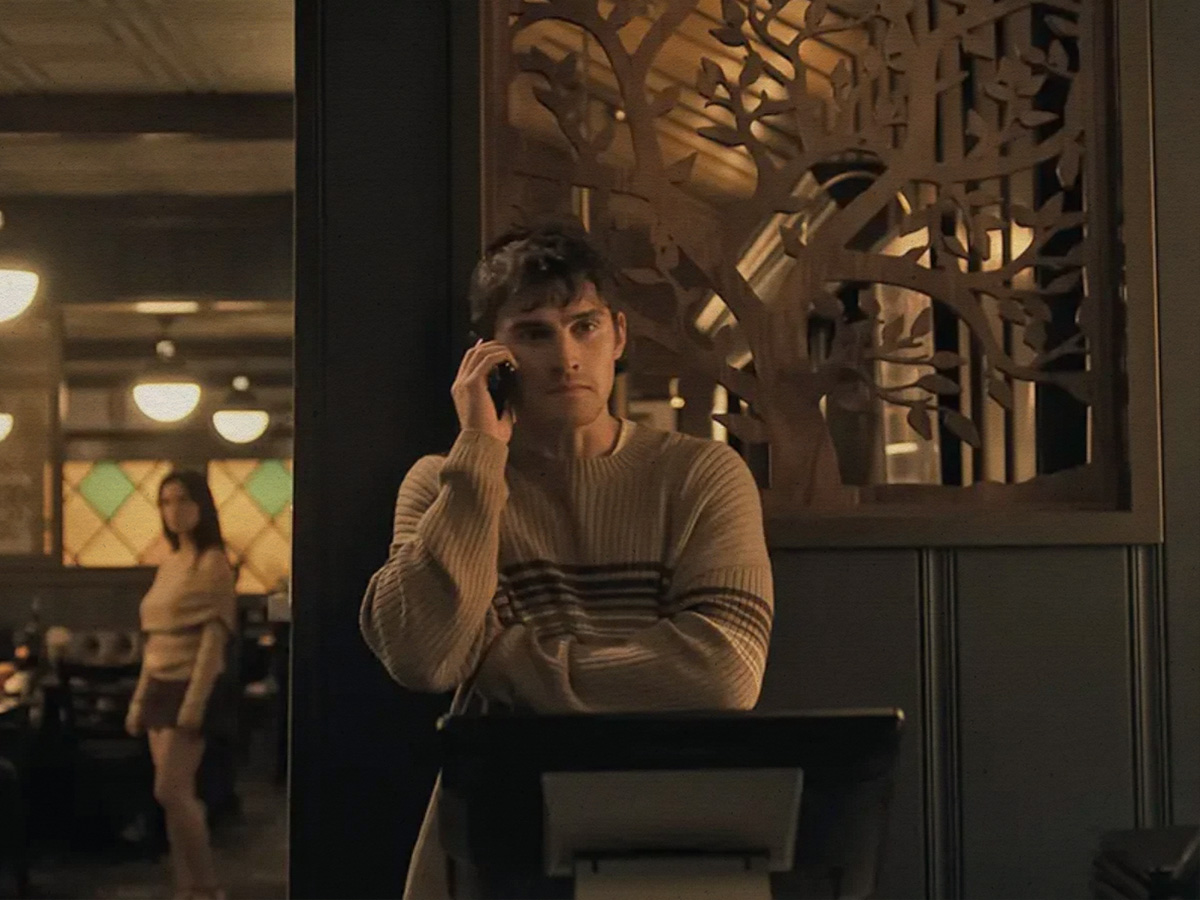
Like Glenn Close’s Alex in 1987’s Fatal Attraction, Nikki goes to outrageous lengths to control her lover, even turning his pet into a meal (swapping bunny boiling for cat sandwich making). The extremity of her actions makes Bear’s attempts to appease her, by letting her watch him sleep and ignoring her growing capacity for violence, seem downright compassionate. He’s a coward, of course, but he also appears to be a man who is struggling mightily to do the right thing.
How effectively can you subvert the trope of the lovesick madwoman when that character dominates the film? Regardless of the intention, there will be men who watch Obsession and feel sorry for Bear and what his “shyness” has gotten him into. If it wasn’t for Navarette’s jaw-dropping performance, we might not even care about Nikki at all. Miraculously, the actor makes her character’s agony so physical that she calls to mind Shelley Duvall in The Shining. She might be the aggressor, but Nikki is clearly suffering the most.
That anguish, inflected with violence and comedic attempts to play it cool, makes the movie a showcase for female psychosis, even though we are aware that she only got that way because of Bear’s selfishness. As such, it’s not so much a movie about a male villain getting his comeuppance as it is about the male fear of a woman who is “too much”. It isn’t quite spoiler territory to note that, while no character makes it through the film unscathed, the blood-letting and injury detail is left exclusively for the women. Like many horror movies, female pain is an aesthetic.
The paradox of these femme fatale characters has always been that they are the best roles a female actor can hope to play. Inde Navarette walks away with the movie, and it’s not even close. A showcase of female madness is a showcase of female acting, after all.
It’s no surprise that everyone from Marilyn Monroe (Don’t Bother to Knock) to Natalie Portman (Black Swan) has given their best performances portraying psychotic women, but that doesn’t detract from the fact that they are almost always serving a male perspective. In the case of Monroe, the character was an easy-to-dismiss 1952 version of “bitches be crazy”, and in the case of Portman, the character serves a masturbatory male fantasy of mental illness.
Obsession comes close to redeeming itself with the ending. Realising that he can only set Nikki and himself free if he kills himself, Bear takes a gun into the bathroom, chickens out, and then guzzles some pills. Ever the coward, he again backs out and sticks his hand down his throat to induce vomiting.
Before he can finish, however, Nikki makes her own wish with the One Wish Willow, ensuring that Bear will love her back. He gets up, without emptying his stomach, and joins her in the living room. Slowly, the medicine takes effect, and he dies, releasing Nikki from the spell and leaving her alone, finally, horribly herself again, in a blood-soaked, corpse-filled house.
In Fatal Attraction, Alex dies, and Michael Douglas’s character gets to live happily ever after with the wife he cheated on. In that film’s estimation, he was punished more than enough by Alex’s violence and deserves a do-over with the family he nearly lost. Obsession ensures that Bear is a coward to the bitter end. He even walks out when Nikki, in a brief moment of lucidity, begs him to kill her. In the end, he gets peace, and Nikki is forced to live with the unfathomable repercussions.
By bookending the film with Bear’s villainy, Barker sets up an easy conversation about the misogyny of passive men who view themselves as victims, inviting us to skip over the fact that the majority of the film exploits the unending trope of the man-eating madwoman.
