


Panic at the workspace: How ‘Disclosure’ predicted Mark Zuckerberg’s meltdown over corporate gender disparity

Where, oh, where is the masculine energy in corporate America? Mark Zuckerberg wants to know. In a recent interview with bro-culture progenitor Joe Rogan, he opined on the loss of manliness in Silicon Valley, saying that corporations need to set aside the whole equity thing and bring back the natural order.
“I think a lot of the corporate world is pretty culturally neutered,” he said. “It’s one thing to say we want to be kind of, like, welcoming and make a good environment for everyone, and I think it’s another to basically say that ‘masculinity is bad.'” He added, “I think having a culture that celebrates the aggression a bit more has its own merits that are really positive.”
Setting aside the fact that women hold only 28% of all computing and mathematical jobs in the US and only 52 women for every 100 men are promoted to managerial positions (according to CIO), Zuckerberg makes an excellent point: men in leadership have been terrified of women doing their jobs better for as long as the tech sector has existed. In fact, one need only cast back to the 1994 erotic thriller Disclosure to recognise just how unoriginal the Meta CEO was being when he started fear-mongering about the mass castration of the industry.
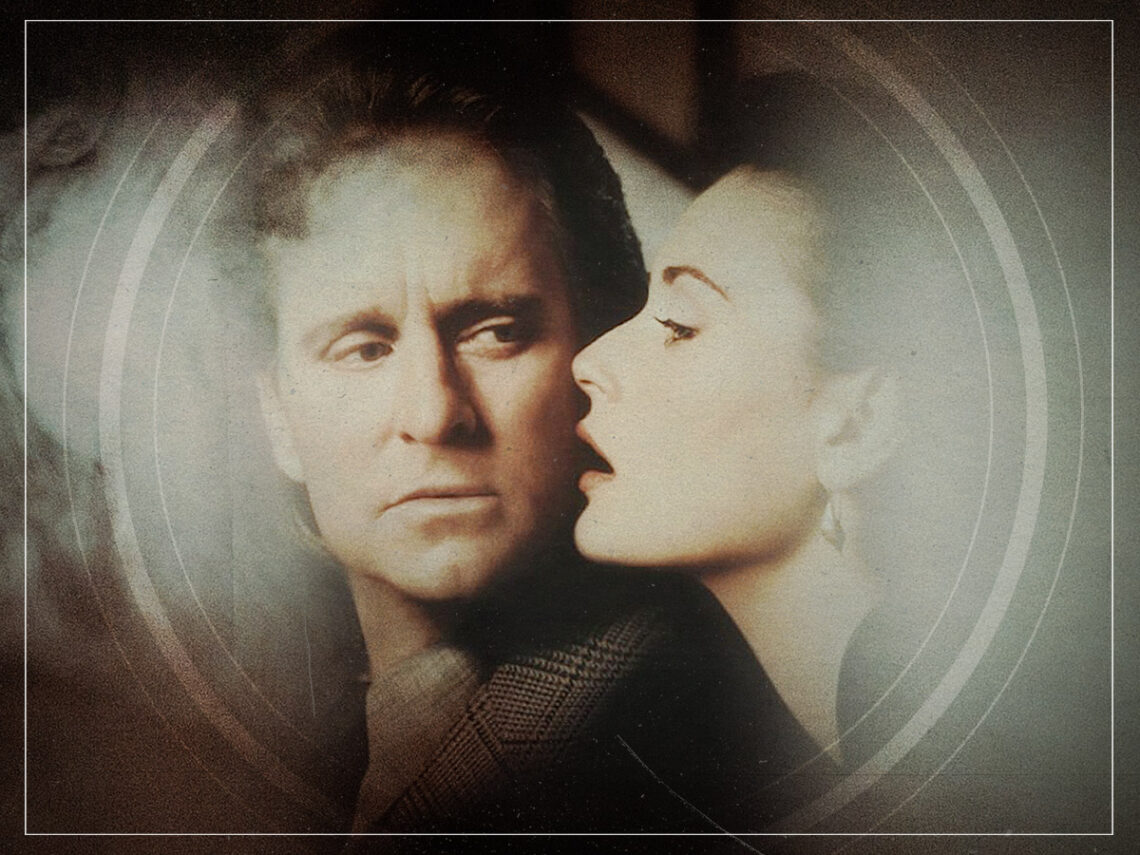
Directed by Barry Levinson, Disclosure stars Michael Douglas as Tom Sanders, the production line manager at a tech company in Seattle who is eagerly awaiting his God-given right to be promoted to head the CD-ROM division.Unfortunately, what with rampant feminism and everything, he discovers that he has been passed over in favour of his ex-girlfriend, Meredith Johnson (Demi Moore), who jets in from Silicon Valley to boss everyone around.
Meredith, drunk with power-fueled lust, invites Tom to her office that evening and tries to seduce him. As a doting family man with a wife and two young children, he only succumbs to oral sex but stops short of anything reprehensible when he sees his reflection in the office window. Furious at being jilted, Meredith screams at him, threatens to ruin him, and then formally accuses him of sexual assault. The rest of the film involves Tom’s frantic attempts to prove Meredith’s fake allegations with the help of a female lawyer. In doing so, he uncovers a vast conspiracy that explains why his boss promoted Meredith in the first place because it obviously couldn’t have had anything to do with merit.

Spurious allegations of sexual assault are indefensible and also exceedingly rare. The very fact that the film centres on a woman who lies about being raped is in itself a reflection of male insecurity. The saying goes that a man’s worst fear is being falsely accused of rape, while a woman’s worst fear is getting raped. Tellingly, Disclosure spends more than two hours illustrating why, statistics be damned, we should all be worried about the former and no time at all on the latter.
Masculine fragility over shifting gender dynamics in the workplace is everywhere in the movie. During his commute to the office, Tom hands one of his colleagues’ business cards to a male commuter who has recently lost his job. The man looks at the card and says wistfully, “You used to have fun with the girls. Now they probably want your job.” When Tom’s team learns that Meredith has gotten the position that he was expecting to get, one of them says, “It’s like the Amazons: keep a few of us around for sperm and kill the rest.” Keep in mind that when he says this, the CEO of the company and nearly all of its shareholders are men, and only one of the managerial positions is held by a woman.
Many erotic thrillers from the 1980s and ’90s revolve around the demonisation of women, especially when it comes to sexuality. Sexually assertive women, these movies teach us, are psychotic man-haters coming for your family. Fatal Attraction, the film on which Disclosure is at least partially modelled and which also starred Douglas, is the most notorious example. Glenn Close’s performance as a murderous, jilted lover of a decent family man spawned countless copycat characters, including Meredith Johnson.
The difference with Disclosure is that it is very specifically based in the corporate world. Women aren’t just here to ruin your personal life, they are also here to ruin your career. The corporate tier of companies is no longer safe from the maniacal hunger for power that supposedly defines women of professional accomplishment. No wonder Tom is terrified.
It’s no accident that Disclosure was released a few years after the Anita Hill hearings, in which a young lawyer testified before the Senate Judiciary Committee about allegations of sexual harassment against her former employer, Supreme Court justice nominee Clarence Thomas. At every turn, she was met with scepticism from the all-male panel. She took a lie detector test and had witnesses to corroborate her story (none of whom were called to testify), but in the end, Thomas was sworn in as Supreme Court Justice, and somehow, the main takeaway from the events seemed to be that false accusations of sexual harassment were a very serious threat to men in the workplace.
At the heart of these fears is the belief that women want to bring men down because of some nebulous combination of sexual frustration and hunger for power. Although Zuckerberg and his peers aren’t lashing back at women coming forward with sexual assault allegations, they are betraying their fears about women being in positions of authority. Affirmative action is bringing down the calibre of corporations, they argue, never mind the fact that men like Tom Sanders feel entitled to promotions simply for existing.
Three decades ago, Disclosure offered men like Zuckerberg the perfect illustration of their fears, featuring a man so neutered that he is sexually assaulted by a woman who is also his boss. Whether or not the Meta CEO has been psyching himself up for another round of MMA training with repeat viewings of the film is unclear, but the VR headset that the company in the film is engineering does look suspiciously like the Meta Quest Pro. Sadly, Joe Rogan didn’t have time to ask about it.
