


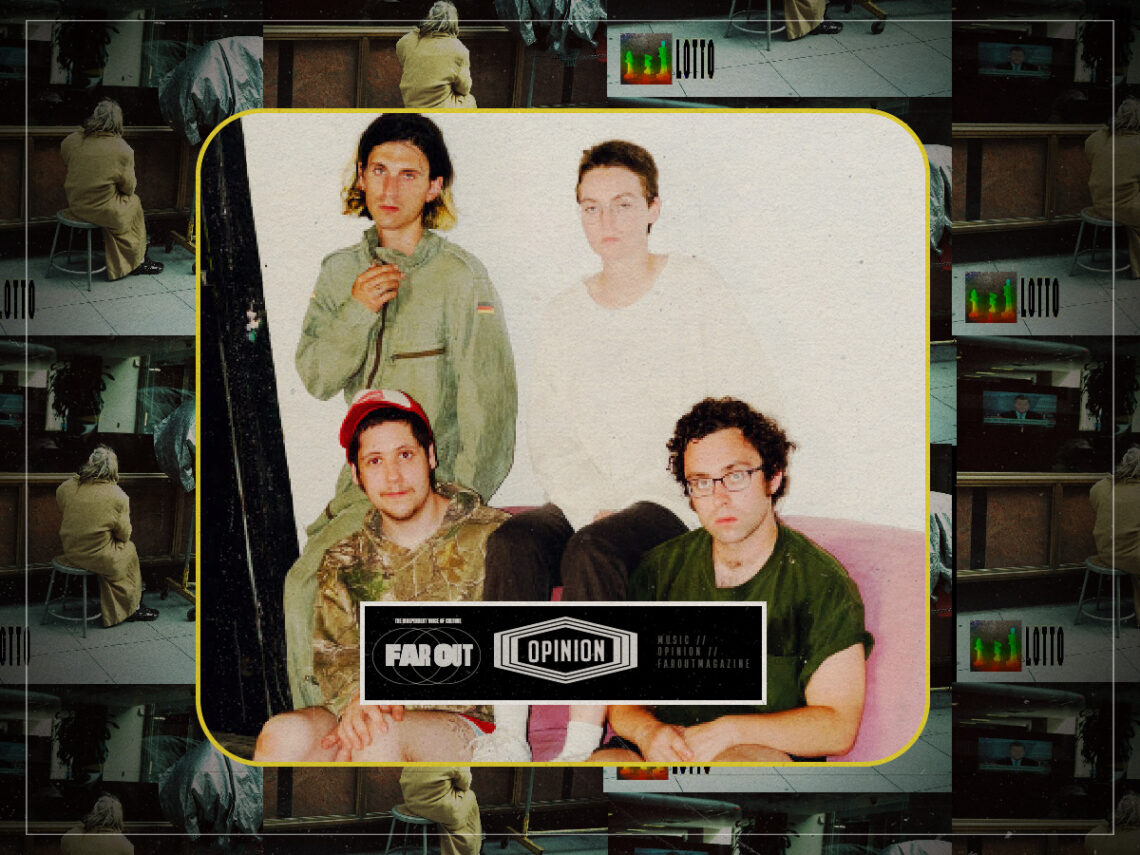
‘Lotto’: They Are Gutting a Body of Water just keep sounding better and better

We all know the feeling of an album that grabs you instantly, the kind that hits on first listen and never quite lets go. But sometimes the records that matter most are the slow burners. They take their time, revealing new layers with each spin, slowly settling into your life until one day you realise they’ve become indispensable.
Take Arctic Monkeys’ 2018 return, Tranquility Base Hotel & Casino, as an example. It followed the overwhelming success of 2013’s AM, an alternative rock and hip-hop hybrid that took on a life of its own online and cemented the Sheffield band as international household names. Tranquility Base, by contrast, arrived as a shock. In place of punchy riffs came a slow, piano-led concept album set around a science fiction-inspired resort on the moon, and the reaction was immediate, divisive, and for many, disappointed.
With every listen, though, Tranquility Base sucks you into its fantasy realm: we’re inclined to dive into Alex Turner’s quirky lyrics and embrace the calm of the instrumentals, nearly forgetting our yearning for their old guitars. The album grows on you, as many tend to do, and thus alters our ideas surrounding the stifling of a genre. Why stick a band into a mould when they, too, can grow into something bigger?
Shoegaze may have emerged in the 1990s with its boundless, lush sounds and customary feather-like vocals, immortalised in the stylings of My Bloody Valentine, Slowdive and more, but the genre persists today with new champions in They Are Gutting a Body of Water, the band from Philadelphia, Pennsylvania, that brings an uncanny sensation to the soundscape.
Beginning as a solo project by vocalist/guitarist Douglas Dulgarian in 2017, They Are Gutting a Body of Water has brought a surrealism to shoegaze that refuses to shy away from life’s shadow. Their fourth album, 2025’s Lotto, is the pinnacle of this, an album that could be easily misunderstood but demands recognition of its undercurrents of emotion.
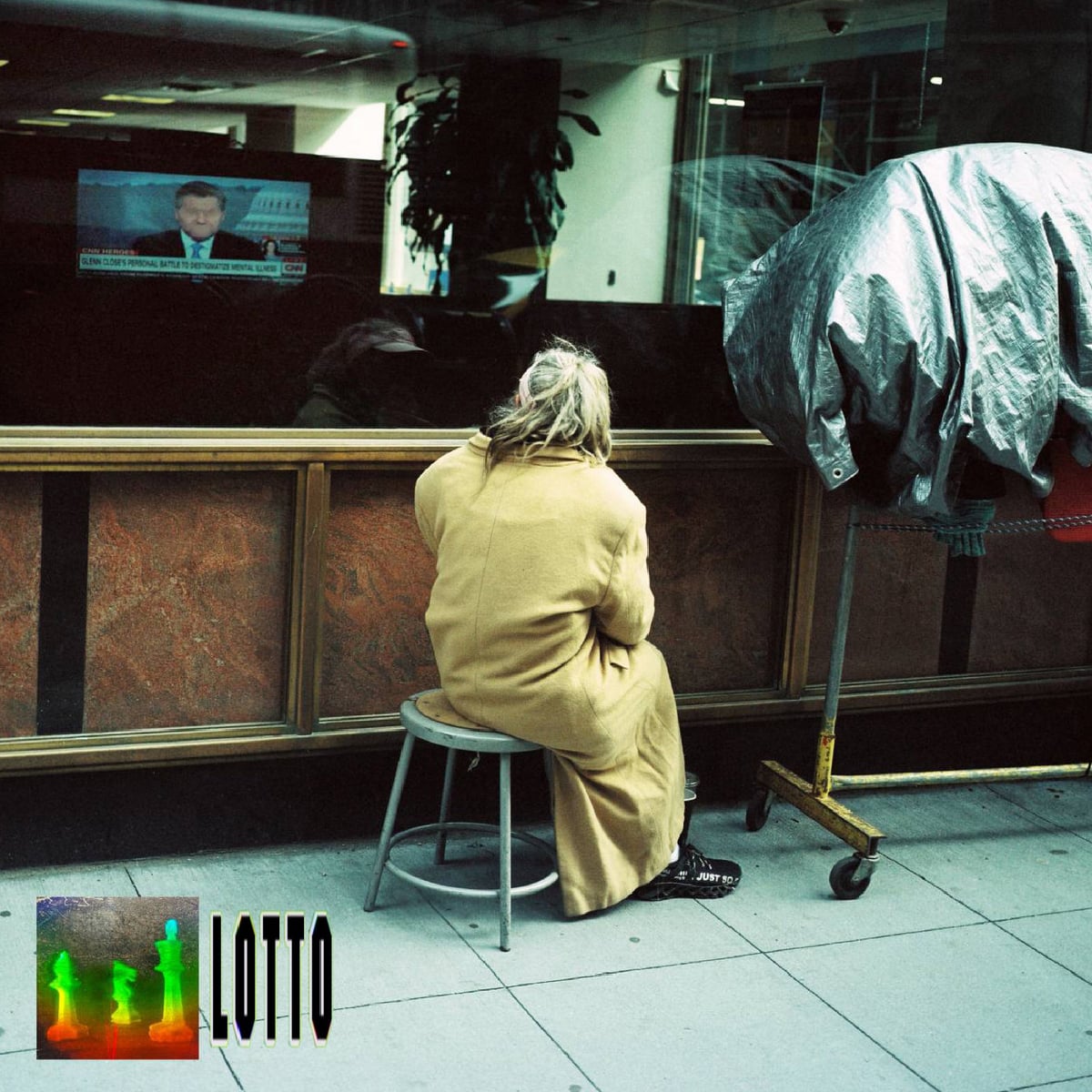
Lotto packs a punch from the opening crawl of guitars on ‘The Chase’, solidified with an immediate darkness that is all-encompassing. More narrative than pure poetry, Dulgarian drones a story of succumbing to the dual effects of addiction and love, torn between the two.
“The dark disease spread across my sweaty forehead like a dead giveaway, my halo,” he laments, “In three days it will sink down to my neck and choke me out, but she kisses me tonight.” From the outset, Lotto establishes a heaviness that never falters, making for an album that is uneasy and captivating, at once.
Hence, Lotto grows with time: intense from the start, sure, but meant to provoke, whether that be thought or emotion, or a mix of the two.
‘Sour Diesel’ is the most characteristically “shoegaze”, filled with fuzzed-out guitar chords and breathy vocals that resurface on ‘Baeside K’. The instrumental track ‘Chrises Head’ whirrs like a computer, strange and unexpected. This moment of rest is broken by the sludge metal-tinged riffs on ‘rl stine’, bookended by another instrumental in ‘slo crostic’, where each instrument – Dulgarian and PJ Carroll’s guitars with Emily Lofing’s bass, supported by Benjamin Opatut’s drumming – has its moment to break through.
‘American Food’ mirrors millennium-era emo in its repetitive chords, merging with turntables and a robotic chorus that promises, “Tell me there’s a better one / And I’ll go get my gun.” For the evident anger that courses through Lotto – at themselves, at others, at the world – there is a gentility in the music, too. Thus, the album is not driven by nihilism, but rather grasping towards optimism, even in a society that tries its hardest to deny such a reprieve.
The album’s closer, ‘Herpim’, recounts the story of an aeroplane horror. “Keep your wits / So we begin the descent,” Dulgarian commands in a distorted radio-like voice, before describing “conversations with God” and the sudden landing, “You can feel it in your guts”.
Lotto may not be for everyone upon first listen, as it fills its mere 27-minute run-time with an astounding force of intensity, but with every revisit of the songs that follow, it grows into a rallying cry to lean into discomfort, compelling the listener to recognise that the beauty is evident not just in the instrumentation or the lyrics, but in what is buried within them: a message of vulnerability that persists in spite of pain.
