


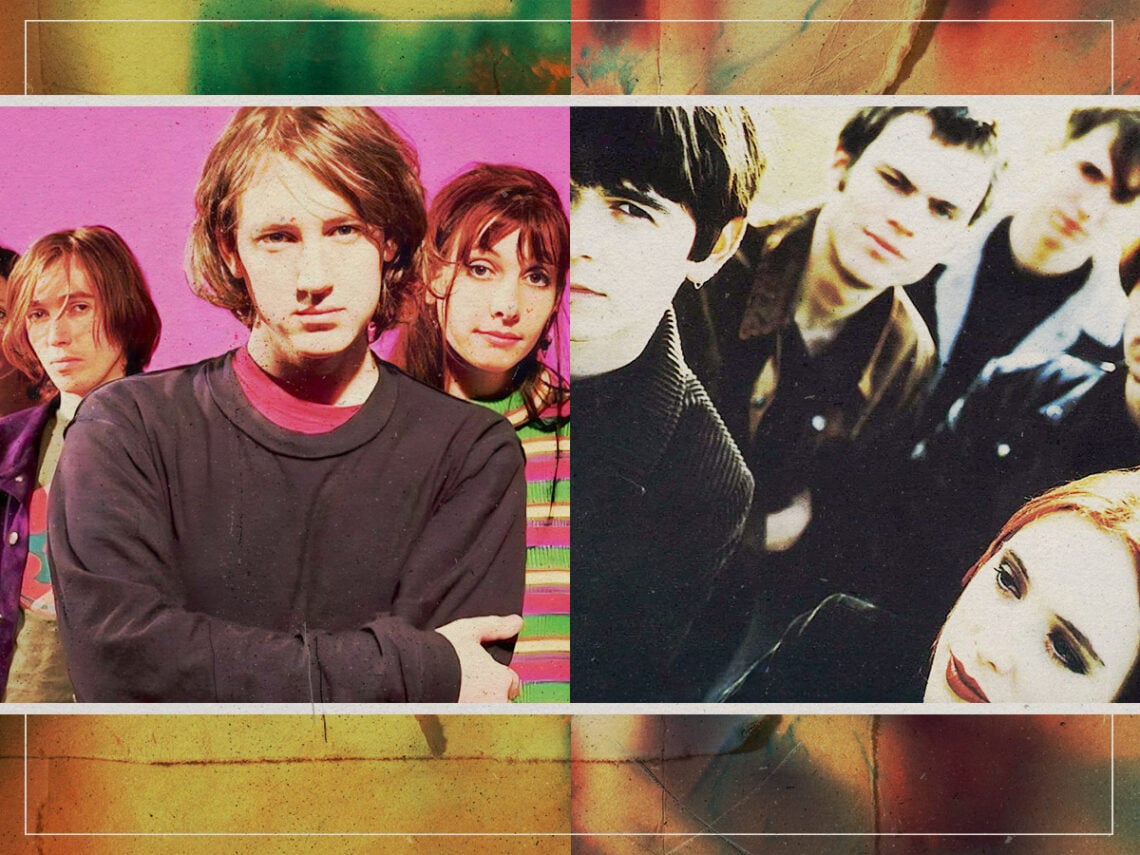
My Bloody Valentine vs. Slowdive: Crowning the ultimate shoegaze band

It’s been three decades since shoegaze was first termed “the scene that celebrates itself”, and the genre finally seems to have shaken off that descriptor. For those brave enough to remove their rose-tinted glasses, Britpop has lost its shine, but fuzz and feedback are only getting glossier. Rate Your Music users and DIY venue dwellers have afforded shoegaze a long-awaited revival, celebrating old and new iterations of the genre both online and offline.
Upcoming artists are looking to recreate the underground guitar sound of the 1990s, packing their pedalboards tight and piling on the reverb, but the originators of the genre are also amassing acclaim they never had the first time around. At the centre of it all are pioneering shoegazers My Bloody Valentine and Slowdive, both of whom still exert some form of influence on every single band that follows in their pedal-trodden footsteps.
As such, they have consistently and rightfully been helmed as the defining acts of the genre. They’re accompanied on lists of seminal bands by a rotating roster of names like Ride or Lush, or even Cocteau Twins, but never without one another. The genre has become almost synonymous with these two projects, with the titles of their seminal releases, with the names Kevin Shields and Rachel Goswell, but which band comes out on top as the ultimate shoegaze outfit?
There’s certainly a case to be made for both bands. Slowdive planted the seeds for the softer side of the genre to grow, their sound verging somewhere between shoegaze and dream-pop with Goswell’s ethereal vocals and Neil Halstead’s airy guitars. It’s a style they showed off on their seminal offering, 1994’s Souvlaki, and one that they still have down today, as proven by Everything Is Alive last year.
Meanwhile, My Bloody Valentine were pioneering a more abrasive form of shoegaze, courtesy of Shields’ guitar stylings and their punkier roots. Loveless proved to be a slightly less comfortable listen than anything in Slowdive’s catalogue, swapping ethereal escapism for something a little more confrontational. And as beautiful as Souvlaki was (and still is), it couldn’t quite mount the wall of sound that Shields and his band had created just a couple of years prior.
With its unrelenting fuzziness and blurry fuchsia artwork, Loveless became the defining release of the genre, though it nearly bankrupted Creation Records in the process. As a result, it had absolutely everything: droning and gliding guitars, disorienting swirls of distortion, and delicate vocals floating just above it all. It was just as reflective and nostalgic sounding as Souvlaki, but it allowed for far less ease in its hypnotic ambience, unafraid to veer into harsher, heavier territory.

As Loveless became synonymous with shoegaze, so too did Shields, Bilinda Butcher, and My Bloody Valentine. The Irish band would release just one more album after Loveless – 2013’s m b v – but it didn’t matter. They had forged the genre as we know it, in all of its fuzzy, feathery glory, and then they had near-enough killed it as they pushed Creation to focus on Britpop with their mammoth costs. Still, budding guitarists would be referencing Shields’ use of the whammy bar for years to come.
Beyond the release and retroactive legacies of their seminal records, though, My Bloody Valentine still maintains their place as the most important band to come out of the shoegaze genre. Loveless and Souvlaki have each gained more critical acclaim with the revived interest in the genre, but it’s the former that tends to take the title for the most important shoegaze record. It’s a suitably jarring introduction to the genre for newcomers, which retains its sheen no matter how many full-volume playthroughs it’s afforded.
Just as My Bloody Valentine’s seminal release predated Slowdive’s, so, too, did their reunion. Over two decades after their last dose of fuzz, the band returned for the sort of self-titled m b v in 2013. Though it would never become quite as iconic as its predecessor, it was the perfect follow-up, matching the noisiness and image of Loveless as best it could. Since then, Shields has been biding his time on a new album, re-issuing the hits amidst promises of new material.
Slowdive orchestrated a reunion in 2017 with a self-titled record of their own, which was just as gentle and reflective as anything they had put out in the 1990s. It received similarly stellar reviews, building upon the work that had come before with gently reflective tracks like ‘Sugar for the Pill’. It was a gorgeous record, much like their more recent offering, Everything Is Alive, but it could now just as easily fit in a playlist amongst the modern indie rockers as it does alongside the softer side of shoegaze.
This, perhaps, is where My Bloody Valentine distinguish themselves from Slowdive. The latter prevailed when it came to forging a dreamy ambience and nostalgia-steeped songs primed for when the sun hits, but My Bloody Valentine’s sound strikes in an entirely different way, uncompromising and uncomfortable at first. That distorted density, mixed in with those lighter elements, is what makes them the defining band of the genre.
