


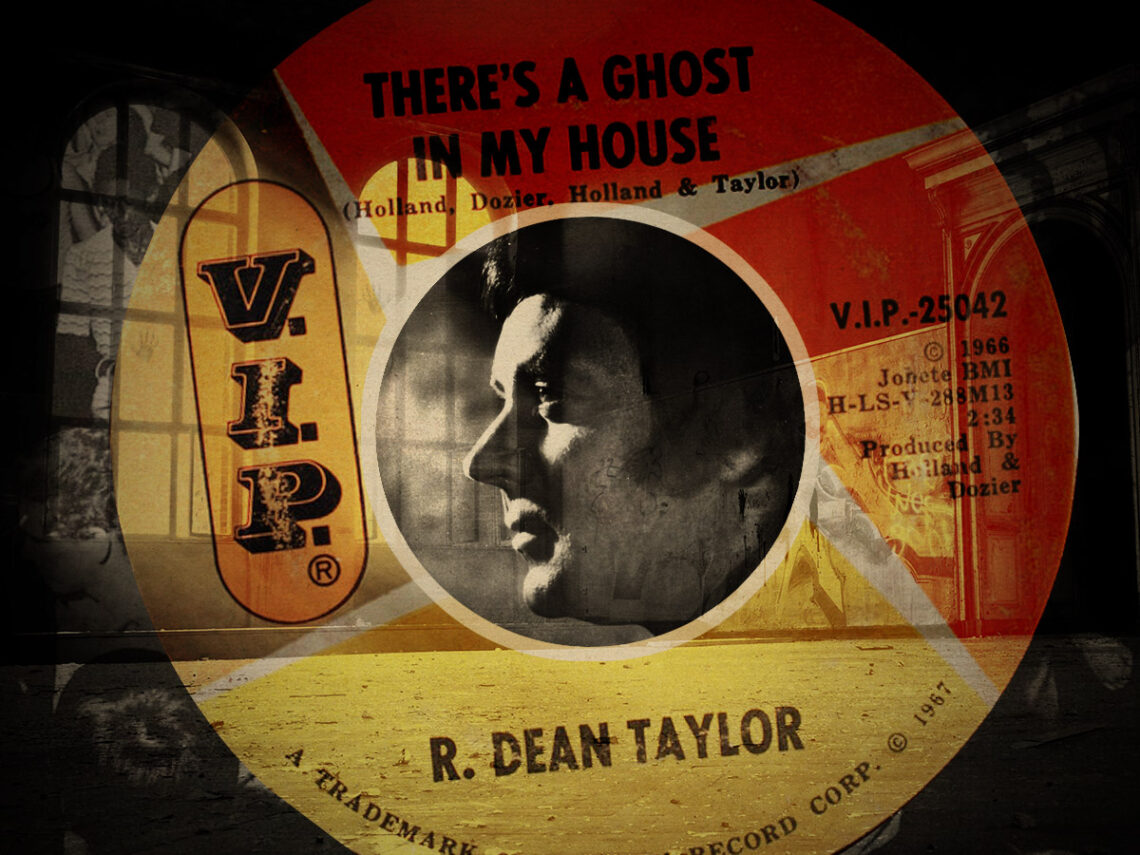
‘There’s a Ghost in My House’: The story of northern soul’s spookiest floorfiller

Soot-stained stone and perpetually slick-wet ginnels, the towns and cities of northern England have always provided adequate inspiration for ghost stories -whether it’s the gothic horror of Bram Stoker’s Whitby-inspired Dracula, or the moortop tales of the shape-shifting Gytrash.
During the 1970s, though, the northern soul dancefloors of Blackpool, Wigan, and Manchester were gripped by an altogether different ghost story.
Although not quite as spine-chilling as the musings of Bram Stoker, the northern soul scene which sprang up during the late 1960s and early 1970s was just as mysterious to those outside its spell. Seemingly out of the blue, thousands of young people across the glorious north rejected the pop guff of the singles chart, entranced instead by the forgotten and impossibly obscure American soul records of the decade prior. Like Dr Frankenstein, the DJs of the northern soul scene resurrected those previously moribund records in front of halls of sweat-soaked dancers.
Out of all the singles selected for northern soul reanimation, though, some of the greatest came from the crypt of Motown. Berry Gordy’s label certainly satisfied its blood-thirst for hit records back in the 1960s, exerting unparalleled command over the pop charts, but for every ‘Baby Love’ or ‘I Heard It Through The Grapevine’, the Detroit label put out a wealth of other tracks that either flopped, failed, or were entirely ignored – until northern soul came knocking, that is.
One such sacrificial track was R Dean Taylor’s ‘There’s A Ghost In My House’, a Holland-Dozier-Holland-penned garage-soul stormer which boasted all the hallmarks of a Motown triumph. Upon its 1967 release, though, the supernatural heartbreak anthem fell victim to a lack of support from the label. For starters, it was pied off to one of Motown’s many subsidiary labels, V.I.P., and what’s more, Motown didn’t bother to promote the single at all, focusing their attention on the tried-and-true hitmakers of their roster, instead.
So, despite its colossal potential, ‘There’s A Ghost In My House’ was dead-on-arrival, failing to break into the pop charts and – by the standards of Motown – rendering itself superfluous. However, when northern soul DJ and Motown graverobber Ian Levine discovered the song on a record-buying trip to the United States back in the 1970s, the song finally found its target audience. Levine introduced audiences at Blackpool Mecca to Motown’s favourite ghost story shortly thereafter, and a northern soul monster was born.
Musically, the track leans into the garage rock tendencies of Taylor, setting it apart from the rest of Motown’s mid-1960s discography while retaining the kind of infectious groove which forms the backbone of northern soul, so it is no surprise that the single became an instant fan-favourite on the circuit. Like every great horror villain, the single seems virtually indestructible, and its legacy stretched far beyond a few spins in Blackpool.
By 1974, even Motown itself had caught wind of the song’s popularity on the other side of the Atlantic, and promptly re-released the single, whereupon it reached number three in the UK singles chart – not bad for a song that even R Dean Taylor himself had largely forgotten about. In the years that followed, the song even found itself on the receiving end of a post-punk reimagining courtesy of Prestwich’s finest, The Fall.
Even today, ‘There’s A Ghost In My House’ remains a floor-filling favourite on the northern soul circuit, and its supernatural lyricism means it’s one of the very few songs that are equally as fitting when played to dancehalls full of amphetamine-fueled youth or a Halloween party that wishes to elevate itself above ‘The Monster Mash’.
