


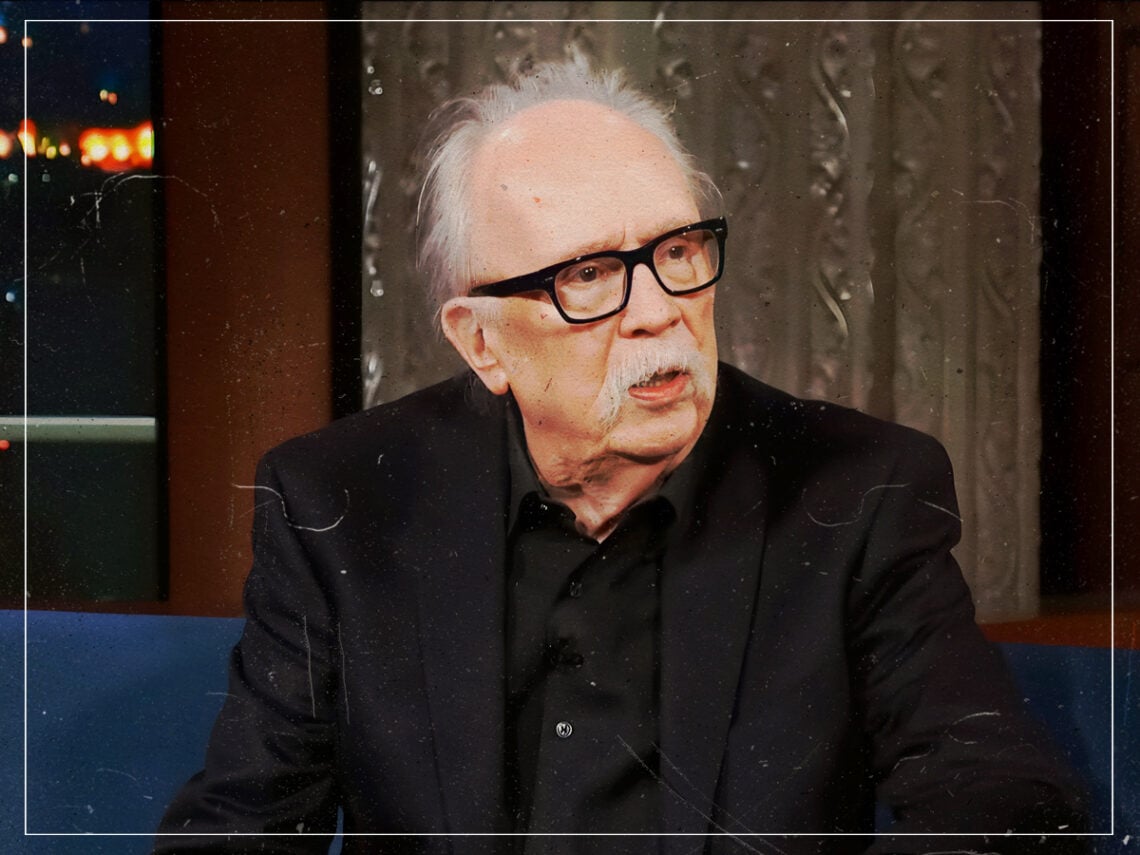
The theme song John Carpenter only recorded because Metallica said no: “We didn’t get it”

A soundtrack can truly make or break a film, so when a filmmaker leaves a score in the hands of another, there’s surely a worry that their musical decisions won’t align with what you want.
This is why certain filmmakers are hesitant to let a composer near their work, full stop. Quentin Tarantino is the perfect example, with the Pulp Fiction director once saying, “I’ve always just used existing tracks. And the basic reason is… that’s just too much power to give someone who’s not me over my movie.”
John Carpenter, on the other hand, has the ideal talent of being able to make music as well as films, and this skill has worked in his favour throughout his career. Not only did he make one of the most important films in horror history with his indie slasher Halloween, but he also created that iconic theme that instantly makes you think of Michael Myers ominously standing behind a hedge, a knife in hand and a terrifying William Shatner mask concealing his identity. We all know it’s you, Mike.
The filmmaker has made the score for each of his movies, dating back to 1974’s Dark Star. Yet, in 1994, he wanted to use a pre-existing track by Metallica in his film In the Mouth of Madness, but a ‘no’ from the band led to his own interpretation of the metal legends.
It’s not hard to hear the inspiration in Carpenter’s theme (co-written by Jim Lang), which has slightly more theatricalism to it. Still, the riffs are unmistakably indebted to Metallica, with a supernatural ambient twist to create an air of suspense for the horror theme. Talking to Louder Sound, Carpenter revealed, “Well, In the Mouth of Madness was inspired by Metallica and The Black Album.
“We wanted ‘Enter Sandman’ for that and we didn’t get it so I just made it up and Daniel’s [Davies, his Godson] dad played lead guitar on it for me and it turned out great. My kids got me into [Metallica]. I wasn’t [a fan] before, I wasn’t even paying attention to them and all of a sudden they’re listening to it. I loved [the heaviness of] it all; the drama.”
The filmmaker didn’t find as much success with the picture as he did with his previous efforts, but it is still highly regarded by fans of the horror auteur. What is often forgotten is his use of score, and his musical abilities to achieve just the right sound. In this case, it was the thrash brilliance of Metallica.
The 1990s were a very hit-or-miss period for Carpenter, whose work moved between cult classics and critically derided cuts. The one consistent part of his films has always been his soundtracks, however – ever since he helped to pioneer the use of synthesisers in horror scores. His work led to a significant shift in the world of horror movie soundtracks, moving away from classic Hollywood instrumentation and closer towards more minimal, ambient, and repetitive sounds.
Never one to miss an opportunity to pioneer a new facet of horror, Carpenter jumped on board the new ghost train that saw movies get bloodier and scarier. The restraints were off, and Carpenter seemed intent on enjoying them. Often praised for his groundbreaking contributions to the genre, Carpenter offered something else that most directors couldn’t. His unique position as director and composer for a project is woefully undervalued. Sitting in both chairs, he manages to infiltrate our senses with sight and sound perfectly rounded for the advance. Maybe Tarantino should learn how to make music.
