


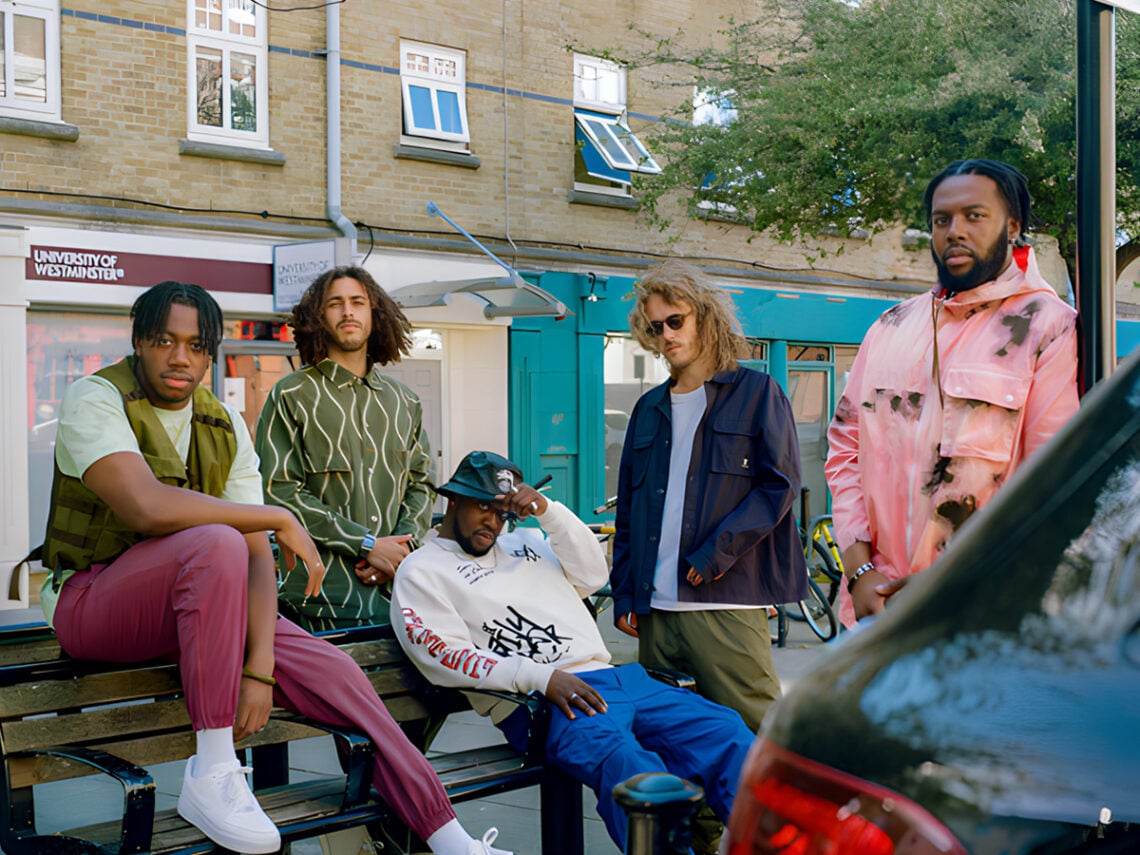
The very meaningful origins of Ezra Collective

Today, Ezra Collective are a defining presence in modern jazz, but once upon a time, they were Tomorrow’s Warriors.
As of 2026, Ezra Collective have been making music for over 14 years, and while the quintet might have their ten feet planted firmly in the core principles of jazz, their sound also stretches far beyond it, embracing influence from funk, afrobeat, reggae, hip-hop and soul with open arms.
Made up of drummer Femi Koleoso, bassist TJ Koleoso, keyboardist Joe Armon-Jones, saxophonist James Mollison and trumpeter Ife Ogunjobi, the group became friends as teenagers through a youth club called Tomorrow’s Warriors, a jazz music education and artist development organisation that was co-founded in 1991 by Janine Irons and the ‘Godfather of UK jazz’, Gary Crosby.
Their aim was to champion diversity, inclusion and equality across the arts through jazz, with a special focus on “Black musicians, female musicians and those whose financial or other circumstances might lock them out of opportunities to pursue a career in the music industry”.
In founding Tomorrow’s Warriors, Crosby drew inspiration from his own time as a member of the Jazz Warriors, a London-based collective that, during the 1980s, showcased many young Black British musicians who went on to achieve international success, and among them were Courtney Pine, Steve Williamson, Cleveland Watkiss, Phillip Bent and Orphy Robinson.
Under the steady tiller of HMS Crosby, Femi, TJ, James, and Joe quickly formed Ezra Collective after they began playing together at the Southbank branch of Tomorrow’s Warriors. Ife, younger than the others, met Femi through the carnival collective Kinetika Bloco and joined the band after their first album. The band’s name nods to the biblical prophet Ezra, known for studying and preserving the work of those who came before him, an approach the group sought to mirror within jazz, and, in a poetic turn of providence, Ezra Collective have themselves become the figures the next generation of young jazz musicians look to for guidance.
Read any interview with the band and a shining thread quickly reveals itself: an enduring connection and dedication to London’s youth clubs and the people in them. These spaces brought Ezra Collective together through music and community, and the group remain keen to champion their power.
“The way that we came into music as a band has shaped our way of doing things,” TJ told The Guardian in 2024, “We don’t have much that we weren’t given. We were given a lot by way of advice, approach, teaching, tuition, all of that kind of stuff. And, to us, that’s an advantage… It’s not the same for everyone in music. I guess with a lot of people [in pop music], they’re told the whole time to have a big ego, like, ‘You’ve got to go in that room and be the best’. We’re not that.”
That mentorship-first, all-in-it-together approach is something the band is now determined to pass on. In 2023, Ezra Collective invited 30 young musicians from Kinetika Bloco to join them on stage in front of a crowd of 35,000 at Glastonbury, and Bloco now regularly appear with the band, popping up on stage last year alongside Ezra and Jorja Smith at the 2025 Brit Awards and at 6 Music Fest, sporting T-shirts bearing the slogan ‘Youth clubs Change Lives’.
When Ezra Collective became the first jazz band to win the Mercury Prize in 2023, Femi Koleoso’s acceptance speech was a love letter to where it all began: “Ezra Collective represents something really special because we met in a youth club. This moment that we’re celebrating right here is testimony to good, special people putting time and effort into [helping] young people to play music. Right now, this is not just a result for Ezra Collective – this is not just a result for UK jazz – but this is a special moment for every single organisation across the country ploughing their efforts and time into young people playing music.”
