


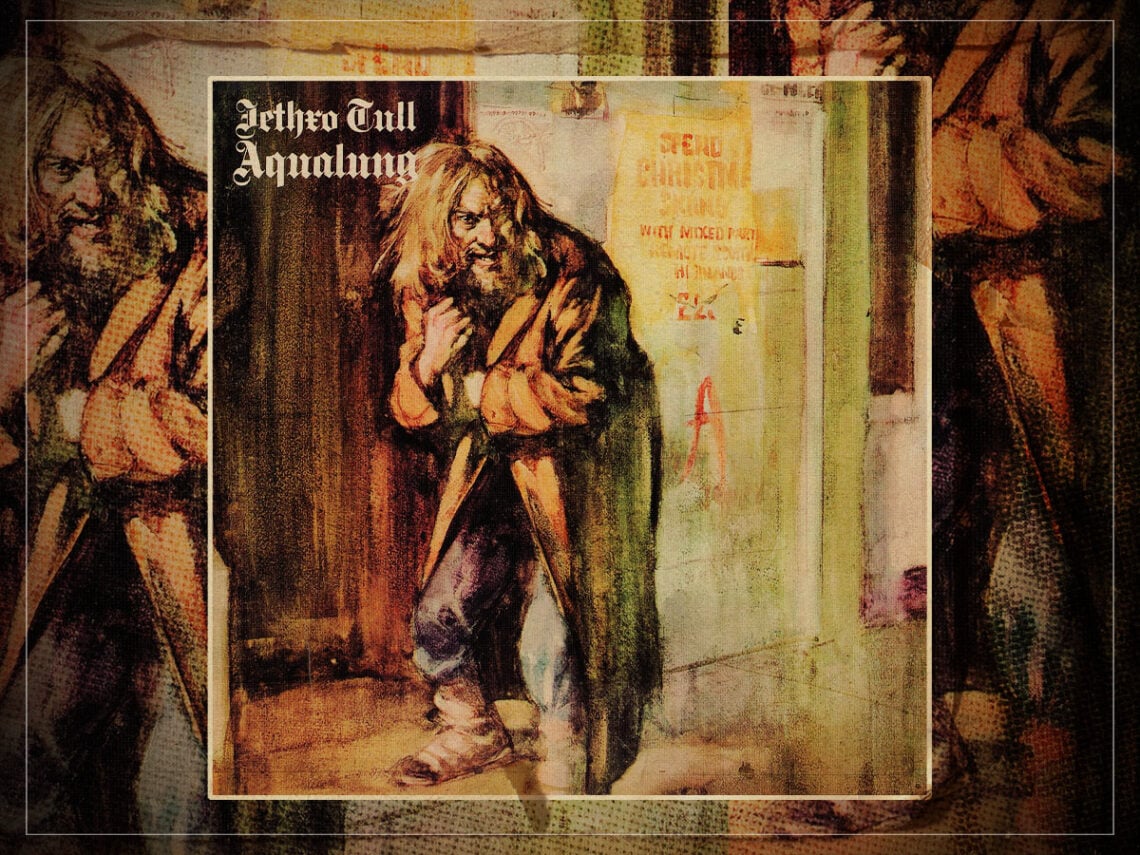
The unusual “telephone burbles” sound effect on Jethro Tull’s ‘Aqualung’

Whatever box of conventions music wanted to draw, Ian Anderson and Jethro Tull were determined to think outside of it. After all, they were competing against the likes of Led Zeppelin and The Who for a place at the top of the charts, who, respectively, were creating classic rock songs steeped in experimentalism.
But while Zeppelin may have forayed into the world of experimentalism through sprawling solos, Jethro Tull went all out, embracing genres and techniques from all over the world. And perhaps, that culminated on ‘Aqualung’, a seven-minute epic that feels like a rollercoaster, changing pace and arrangements before letting loose into a spiralling guitar solo.
Despite the fact that it has gone on to become Jethro Tull’s calling card, its indulgence prevented it from ever becoming a single release for the band. Despite the obvious appetite in 1971 for lengthy compositions and never-ending solos, Anderson said, “It was too long, it was too episodic, it starts off with a loud guitar riff and then goes into rather more laid back acoustic stuff.”
The slow-burning reception to the now iconic song went on to disprove his reservations, proving the love for the band was rooted in that very excess. But while the song’s guitar solo in particular stood out as a memorable moment for the band, it was drenched in a catalogue of sonic nuances that contributed to the wider messaging of the song.
Written about the transient behaviours of life, whereby homelessness is nothing more than something we view as a societal symptom as opposed to a genuine problem, Anderson explored every creative avenue in order to turn this into a siren call. The abrasive guitar line that introduces the song was one method, while the uncomfortable changing of pace was another.
But in the verses, he adopted one particular method to instil urgency within the listener. Anderson compressed the vocals using an audio effect called “telephone burbles”, which essentially removes all of the frequencies within it, paring it back to a simple megaphone-like noise.
He explained: “It’s also like when you’re addressing a crowd through a megaphone. Or even perhaps the tinny sound of a voice trumpet, which is a non-active megaphone. It’s a form of address. It’s the sound that woke up young pilots in 1941 and sent them into the skies to battle the Hun. This is the sound of the Tannoy, the calling to arms of young men going up in their Hurricanes and Spitfires. It’s something that’s very much part of the blood of an Englishman.”
Over half a century on from the release of the song, it appears the rallying cries haven’t necessarily been responded to. Instead, it remains as societally relevant as it was upon its release. “It has become, if anything, more worrying,” said Anderson when looking back on the song, and so maybe it’s time to revisit it with a more modern siren call for a similarly desperate society.
