


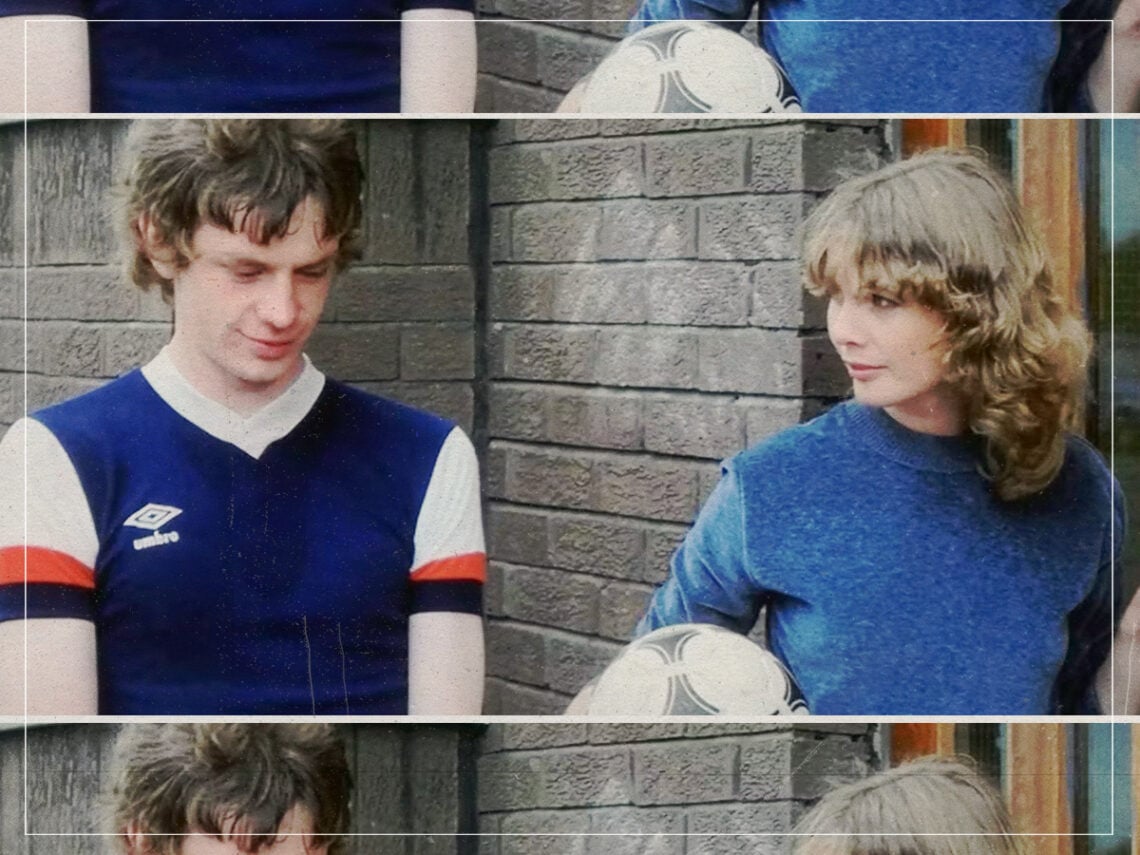
‘Gregory’s Girl’: the ultimate Scottish stoner comedy?

The stoner comedy is a genre we’ve come to know and love, with classics like The Big Lebowski, Dazed and Confused, and the Harold and Kumar series featuring characters who dabble in certain illegal substances and inevitably land in bizarre, often hilarious, situations.
Over time, the genre has evolved to include films where characters embark on journeys that mirror the intoxicated odysseys of stoner comedies. Films like Booksmart and Beau is Afraid share many of the genre’s hallmarks, with trippy, unpredictable scenarios that feel distinctly reminiscent. Yet, for all its iterations, one character stands above the great stoners of cinema—not because he’s intoxicated, but because he’s a Scottish teenage boy (and yes, I’m allowed to say that because I’m Scottish).
Gregory’s Girl, directed by Bill Forsyth in 1980, follows a teenage boy called Gregory who is replaced by a girl in his football team, leading him to develop a beyond-massive crush on her. While many boys would feel embarrassed and perhaps slightly emasculated at the prospect of a girl being better than they are at sports, Gregory does not care, partly because of his infatuation but mostly because he is completely lost in his own world.
Gregory is not a stoner, but he’s a person so detached from the world around him and lost in his own thoughts that he seems to be operating on a whole other plane of reality. While this trait is typical of many teenagers, Gregory is dazed and oblivious in a way that makes the cast of American Pie look like students of the Dalai Lama. He drifts around Dunbartonshire as if in a trance, blissfully unaware of the chaos he causes and exasperated looks from his teachers as they attempt to catch his attention in class.
While Gregory is a victim of unrequited love, and this partially adds to his generally sedated state, we get the feeling that he’s always operating on this subdued level, with ridiculously funny one-liners and moments of physical comedy as he attempts to navigate the world around him. Gregory orders coffee, and when asked if he’d like it black or white, he proudly declares, “I’ll have a brown”, with his comically wise baby sister rolling her eyes. He floats around town without any real motivations or worries, leaving a trail of chaos shrapnel in his wake as he leaves his electric toothbrush vibrating on the kitchen counter and struggles with the hand dryers in the school toilets.
There’s an endless list of quotable moments, with Gregory shouting a group of small children saying, “You’re worse that my dad. He’s old – at least he’s got an excuse for being a prick” and “Help me offload some marzipan on to an uncaring population”. It’s beautifully lived-in and realistic, with an ensemble cast of natural actors that were scouted from the Glasgow Youth Theatre, which was the first on-screen role for many of them, giving the film an effortless authenticity that feels reflective of the Scottish humour.
Besides some very problematic storylines and characters, such as the voyeurism of the teenage boys as they spy on naked girls and the sexual harassment that goes unchecked, it still manages to maintain a sense of charm because it is reflective of a very specific period in time. It’s a window into a small Scottish town and a snapshot of suburban teenagers during a particularly awkward time in life. It makes you feel nostalgic for the simple times despite all the glaring issues that are prevalent in every crack of the film, like the predatory teachers and glaring sexism as the boys puzzle over Dorothy’s ability to play football despite having boobs.
Even with all of this, Gregory’s Girl is one of my favourite coming-of-age films, showing a slightly useless teenage boy who just about manages to survive day-to-day life despite having limbs that don’t quite coordinate with his brain and an eternal sense of brain fog that clouds his judgement in nearly every situation. Everything feels effortless and relaxed, and the lack of obstacles creates a perfect portrait of a time that felt simple and untainted, where the main goal of each day was to make it to the end. Gregory never expressed any qualms or worries about his future despite being in his final years of school and standing on the precipice of uncertainty.
While Gregory is not technically a stoner, perhaps we could all use an infusion of this quality in our everyday lives. It would remind us of simpler times and ground us in a healthy indifference that helps us take life a little less seriously.
