


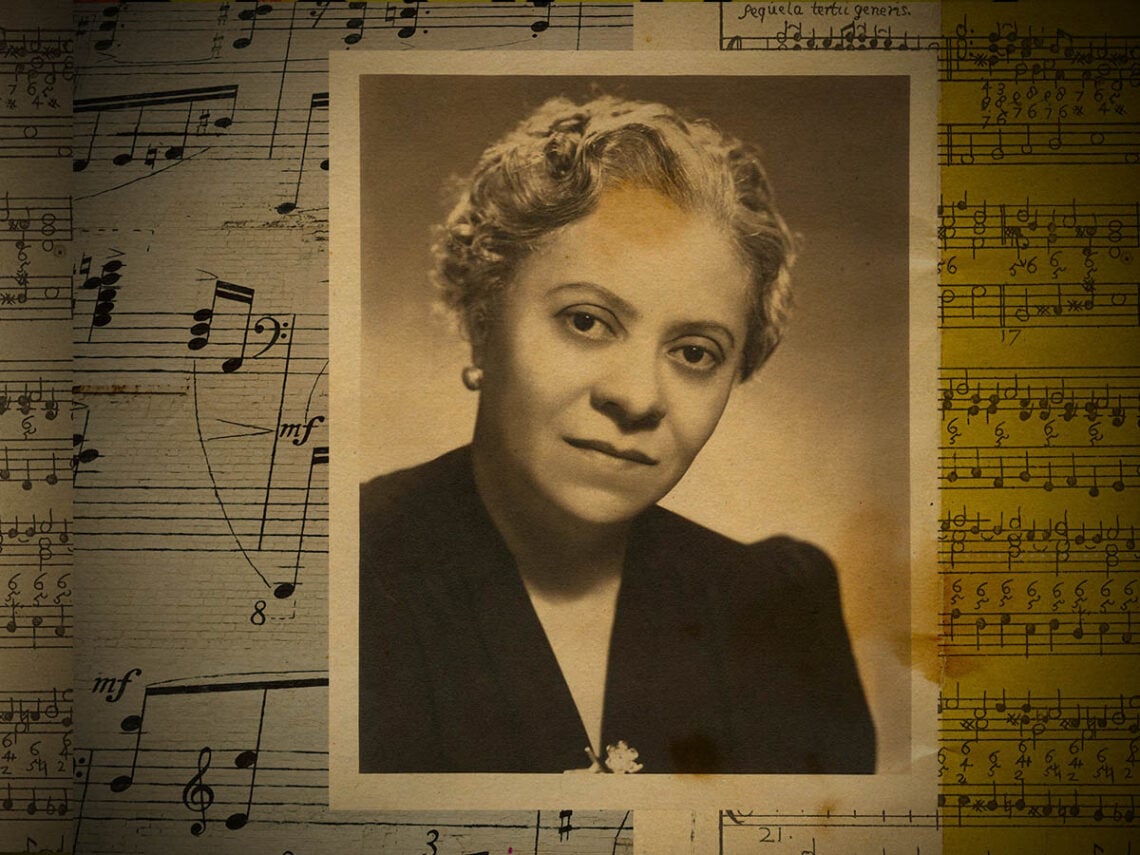
The trailblazing life of Florence Price

Florence Price achieved many firsts as an African-American composer, but her legacy was largely forgotten in cultural history and also tangibly lost for decades.
Price was born in Little Rock, Arkansas, in 1887, and was one of three children born to a middle-class, mixed-race family, with her father the only African-American dentist in Little Rock, and her mother was a piano teacher and businesswoman, who began giving her daughter piano lessons from the age of three.
Thus, Florence became proficient with the instrument from an early age, giving her first performance at four years old and earning her first published composition at 11, which led to, in 1903, at 16, her attending the New England Conservatory of Music in Boston, Massachusetts, where she double-majored in a teacher’s certificate in piano and a performer’s diploma in organ, graduating a year early and with honours three years later.
According to her school records, while the Conservatory was one of the few that admitted African-Americans, at the time, Florence enrolled as Mexican, listing her hometown as Pueblo, Mexico, to avoid the racial discrimination she would be subject to as a mixed-race African-American.
By 1910, her merging of music and academia continued as she became head of the music department at Clark University, a historically Black college in Atlanta, Georgia, and two years later, she married Thomas J Price, a lawyer, and had three children, two daughters and a son (who sadly died in infancy). The family returned to Little Rock, where Florence opened a music studio and taught piano, while continuing to write her own compositions.
The state of Arkansas, however, still operated under Jim Crow laws, enforcing segregation and allowing for oppression and racist attacks against Black residents, including Florence and her family, which resulted in her not only losing out on work opportunities but also her family gaining increased attention because of her and Thomas’ well-known positioning in the city, threatening their safety.
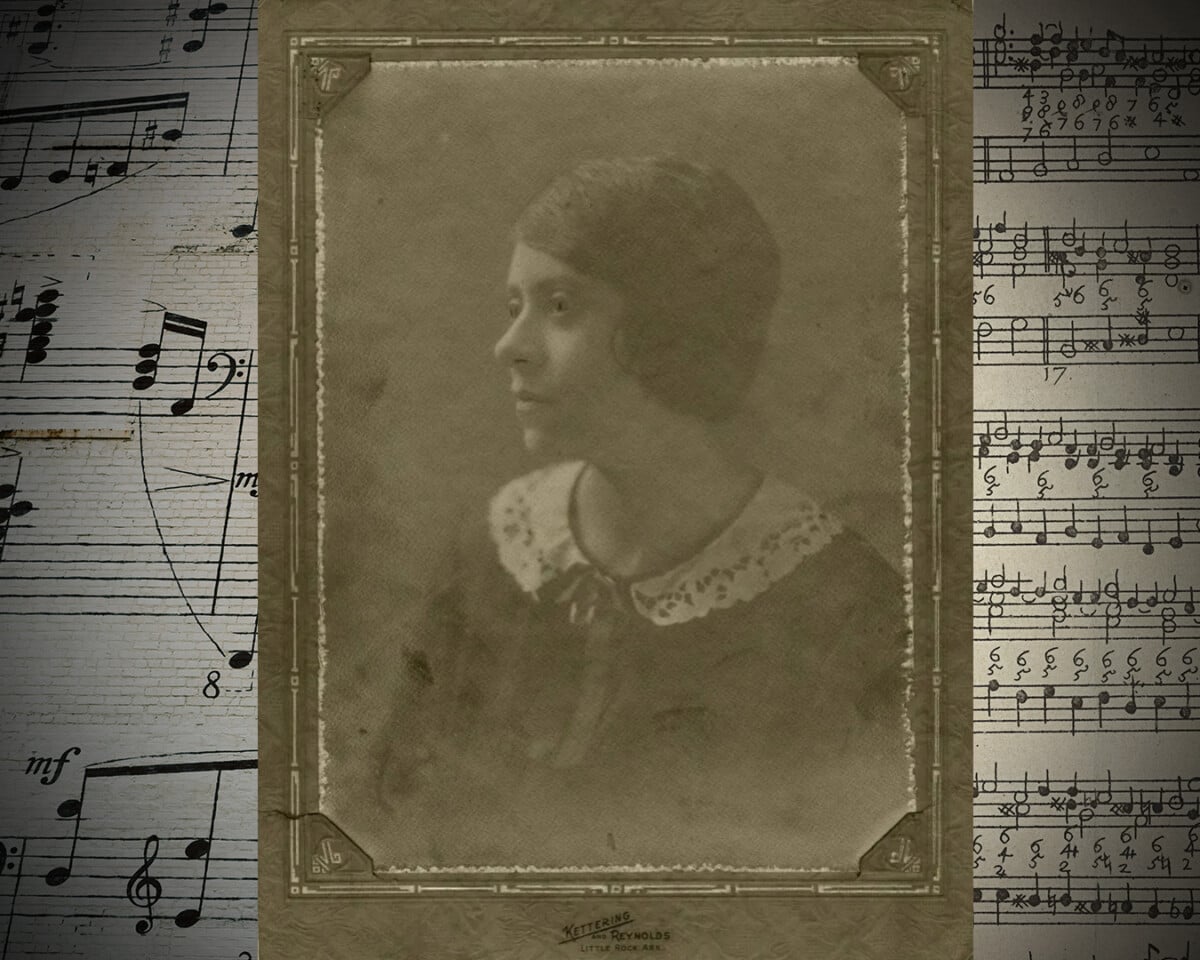
Living amidst frequent lynchings and other racially-motivated attacks, the Price family eventually chose to leave Little Rock in 1927 when one of her daughters was targeted by a lynch mob, moving to Chicago amidst the Great Migration in the United States, where millions of African-Americans moved from the rural South to urban areas in the northern and western states in the 20th century.
The move turned out to be a positive one, where, immersed within the Chicago Black Renaissance, Florence continued to study composition, organ and orchestration under the leading teachers in the city, as well as languages and liberal arts, with multiple enrollments at Chicago music colleges and universities. She also began to be frequently published, beginning with four piano pieces in 1928, and properly emerged as Florence Price, the composer.
In 1930, after her filing for divorce on account of Thomas’ abuse and experiencing continuing financial struggles, Florence began working as an organist for silent film screenings while also composing for radio advertisements under a pseudonym to support her family. She and her daughters shared a home with her friend and fellow pianist-composer, Margaret Bonds, who introduced Florence to writer Langston Hughes and contralto Marian Anderson; the four forged a close friendship and continued working together over the years.
Two years later, in 1932, Florence and Bonds both achieved recognition at the Wanamaker Foundation Awards, the latter Bonds winning first place in the song category, while Price won $500 (roughly $12,150 today) for her first place prize for ‘Symphony in E Minor’ and third place ‘Piano Sonata in E Minor’. This won Price the recognition of a prominent arts administrator, Maude Roberts George, who entered a contract with the conductor Frederick Stock to have Florence’s four-movement symphony premiered by the Chicago Symphony Orchestra in 1933. This endorsement made her the first African-American woman to have a piece performed by a major orchestra, and she was only 46 years old.
In her work, Florence utilised the European classical music that she had first learned and trained under, anchoring them with the melodies and rhythms of African-American spirituals and folk songs, also informed by her religious beliefs. The recognition that Florence received remained subject to discrimination on account of her gender and race, and while she received ongoing encouragement and endorsement from the likes of her friends George, Anderson and Bonds, she still faced rejection and/or complete silence upon her requests to perform. Florence and her contemporaries were caught in an in-between, their work celebrated by critics while still met with resistance and, in some instances, being physically unable to perform the work that was being praised.
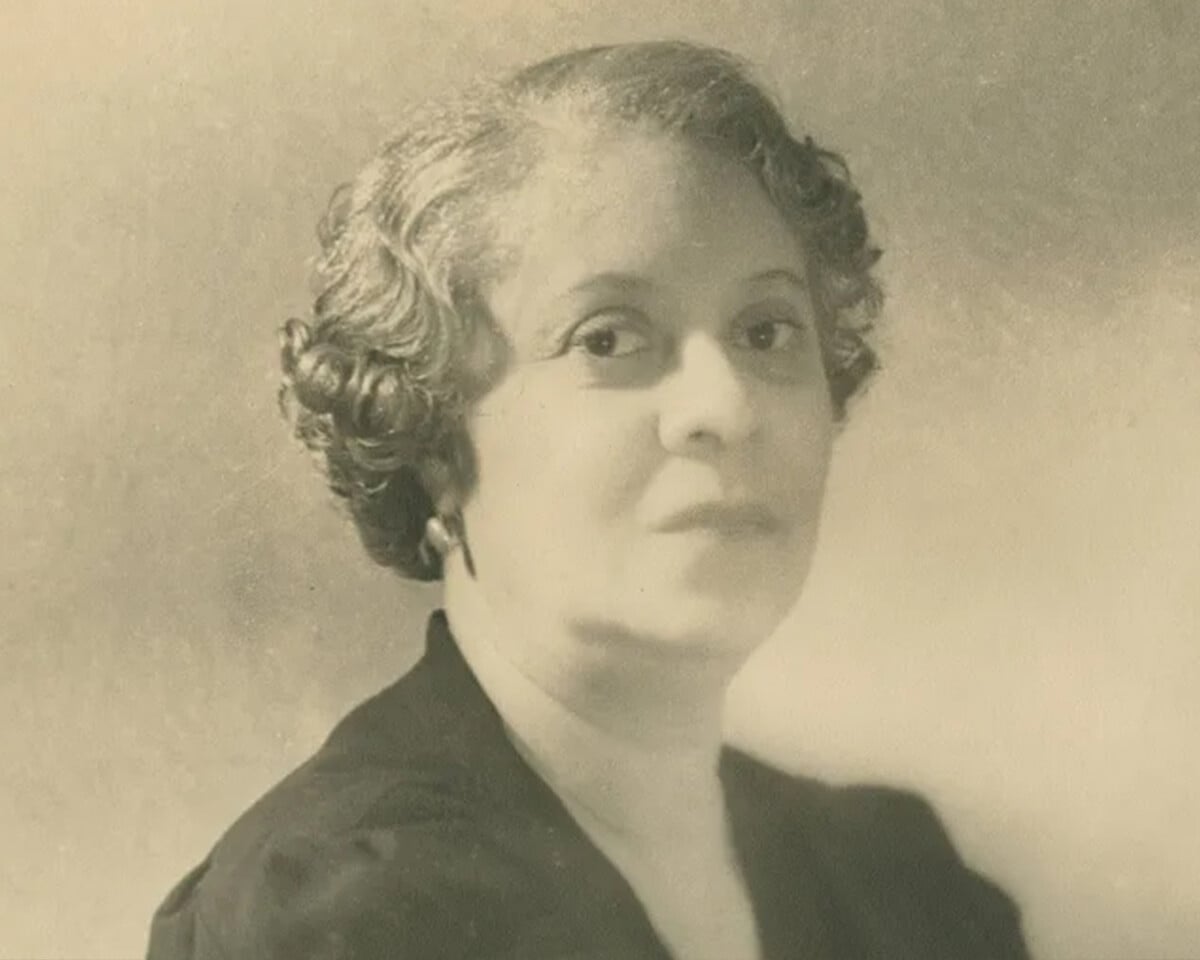
In 1939, for instance, one of her most well-known works, ‘My Soul’s Been Anchored in de Lord,’ was performed by Anderson in Washington DC, but because she was Black and the city was still segregated, she was not allowed to perform in Constitution Hall; the concert, instead, was held on the steps of the Lincoln Memorial. Florence’s work may have been embraced by both Black and white audiences and, in some cases, further exposed through radio play, but her widespread recognition continued to be stunted by the racist ideologies that remained embedded in American culture.
Frustrated, in 1943, she wrote a letter to the conductor Serge Koussevitzky, introducing herself by writing: “To begin, with I have two handicaps—those of sex and race. I am a woman; and I have some Negro blood in my veins”. As The New Yorker noted, Koussevitzky was one of the many composers who ignored Florence’s requests.
Still, she soildered on, writing and performing, representing her class at the Chicago Music College in 1934, in a performance of her ‘Concerto in D minor for Piano’ and Orchestra for the college’s commencement, while continuing her relationship with the Chicago Symphony Orchestra and forging new connections in the performances of her work by the Women’s Symphony Orchestra of Chicago, the Works Progress Administration (WPA) Symphony Orchestra of Detroit, and the Michigan WPA Orchestra.
The year 1940 saw her inducted into the American Society of Composers, Authors and Publishers (ASCAP) after a six-year-long membership process. Her legacy would remain in the history of Black composers who preceded her, and her work continued to be celebrated by both her contemporaries and the artists who followed her.
Florence passed away from a stroke on June 3rd, 1953, at the age of 66. In the years that followed, her work was performed less frequently and eventually, in some cases, permanently lost. In 2009, at a dilapidated home in St Anne, Illinois, a couple discovered copious manuscripts, books, personal papers and various documents that once belonged to Florence; the home was, in fact, once her summer home. This discovery of work once thought to be lost led to her legacy being restored through new recordings and publications.
