


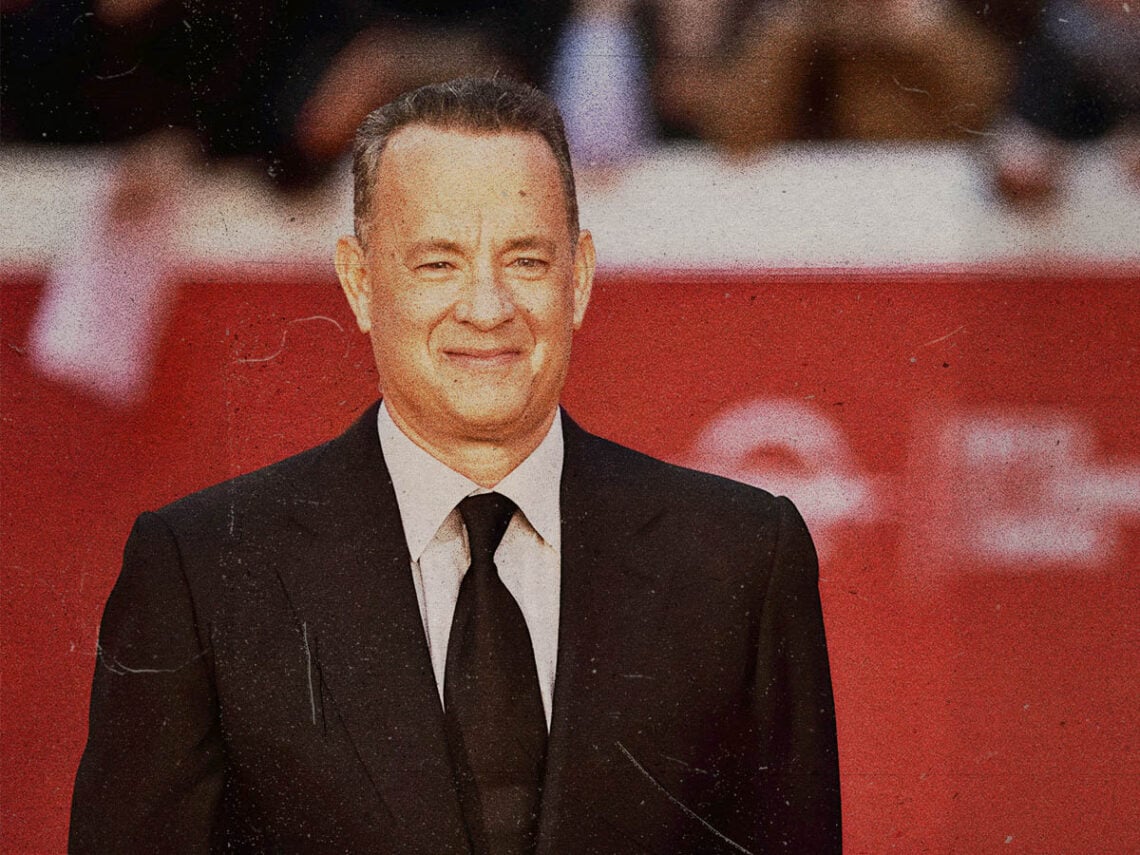
The Tom Hanks movie so bad he personally refunded audience’s tickets

As one of Hollywood’s most celebrated acting talents, Tom Hanks has no trouble finding work. Since the late 1980s, when he broke out with roles in Ron Howard’s Splash and Penny Marshall’s Big, he has grown from strength to strength, scooping two Academy Awards back-to-back for roles in Philadelphia and Forrest Gump and entering into a comfortable stream of blockbusters with top-flight directors.
Renowned for his extensive filmography, inherent kindness and approachability, Hanks has won the hearts of audiences worldwide. His affability extends far beyond his on-screen characters, permeating into real-life interactions and authentic moments that often catch the public’s eye in the most heartfelt and charming ways.
A memorable recent example was when Hanks spontaneously photobombed a couple’s wedding photoshoot in Central Park, offering genuine well-wishes and smiles – and creating a moment that would undoubtedly be cherished by the newlyweds for a lifetime and proving that his kindness wasn’t just an act for when the cameras were rolling. Then, of course, there was the moment he displayed some common sense and turned down Jeff Bezos’ flight to space.
And yet, an even more impressive display came during the release of Larry Crowne in 2011. With Hanks in the driving seat as co-writer, director, and leading actor, the film depicted the journey of Larry, navigating through life’s turbulent currents after unexpectedly losing his job and deciding to pursue higher education. Hanks passionately invested himself in this film, serving not only as its star but also as its co-writer and director.
Despite a robust promotional run and the combined star power of Hanks and Roberts, however, Larry Crowne garnered a tepid response from both critics and the box office. But it was an encounter with a young couple at a gas station that morphed into an episode that film and celebrity lore would hold onto – not for its scandalous nature but for its authentic, wholesome essence.
After telling the actor and director they’d just watched his new movie, Hanks asked them what they thought. The husband replied frankly that “it wasn’t that good”, with his wife diplomatically adding that they’d expected a little more from him. And what did Hanks do? He pulled $25 from his pocket and gave filmgoers their money back. It wasn’t a marketing strategy or a publicity stunt – it was a genuine response from an actor who respected his audience enough to value their opinions, even when critical of his work.
The story made headlines, but not because it was a scandal. It was unexpected and kind – and, of course, very funny. With this simple act, Hanks showed that he is as authentic off-screen as he is on-screen. The refund wasn’t about the money – the couple certainly didn’t ask for it, and we can be pretty certain that it wouldn’t have made any massive dent in Hanks’ wallet. It was more of a nice gesture – an appreciation of the audience’s perspective.
Speaking to Oprah in 2001, at around the time Scorsese approached him for Gangs of New York, Hanks discussed his attachment to cinema. He revealed that as a moviegoer, he has always been drawn in by movies with a strong moral centre. “The reason most of us go to the movies is to be involved in someone else’s moral dilemma,” he said. In many ways, Hanks achieved this, too.
And, in an industry often viewed as increasingly insincere or disconnected from real-world experiences, Hanks proved that humility, humour and honesty have a place in Hollywood. While Larry Crowne may not be hailed as one of his greatest films, this incident certainly cements the film in our memory for a good reason and reaffirms Hanks’s reputation as one of the genuine good guys in the business.
